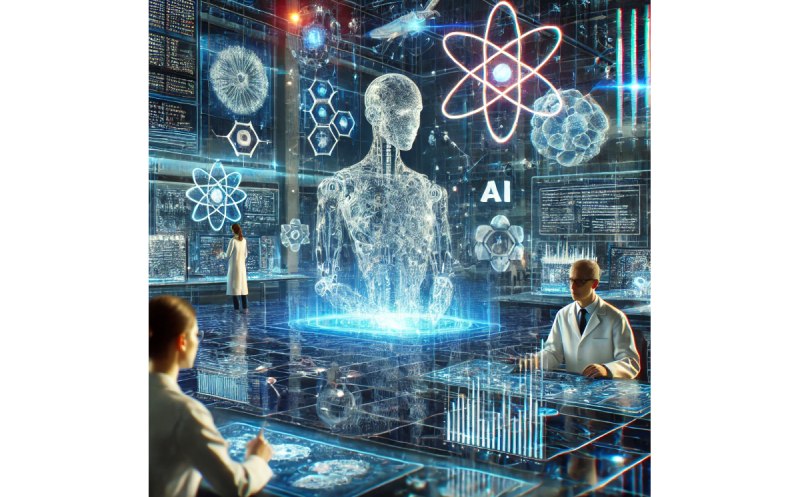
In recent years, deep learning has emerged as a transformative force within the realm of artificial intelligence, offering unprecedented capabilities that are reshaping industries and everyday life. By simulating the human brain’s neural networks, deep learning enables machines to learn and make decisions based on vast amounts of data, leading to groundbreaking applications across various sectors. One of the most notable advancements in deep learning is the development of Generative Adversarial Networks (GANs). GANs have revolutionized the creation of realistic images and videos, with applications ranging from enhancing movie special effects to aiding in the development of virtual reality environments. Another significant breakthrough is the emergence of Transformers, which have greatly improved natural language processing and generation, making it possible for machines to understand and produce human-like language with remarkable accuracy.
Deep learning is making a profound impact in multiple domains. In healthcare, AI-driven diagnostic tools assist doctors in detecting diseases such as cancer and Alzheimer’s at an early stage, improving patient outcomes. The finance industry leverages deep learning for fraud detection, risk assessment, and automated trading strategies. Meanwhile, self-driving cars use AI-powered vision systems to interpret road conditions and navigate safely. In addition, the entertainment industry is experiencing an AI-driven transformation, with deep learning enabling realistic content generation, personalized recommendations, and even AI-assisted film production. Similarly, smart assistants like Siri and Alexa, powered by deep learning, continue to enhance human-computer interaction by understanding and responding to natural language queries.
These advancements are driving significant changes in healthcare, where deep learning is enhancing diagnostic capabilities and accelerating drug discovery. In education, AI-powered tools are offering personalized learning experiences, adapting to individual student needs and optimizing educational outcomes. Additionally, industries such as transportation and manufacturing are leveraging deep learning to improve automation and operational efficiency, setting the stage for a future of smarter, more connected systems. Despite these advancements, the integration of deep learning into society is not without challenges. Issues such as algorithmic bias and data privacy raise significant ethical concerns. The potential for job displacement due to automation is another pressing issue that demands attention. However, there are concerted efforts to address these challenges, including the development of ethical AI frameworks and the establishment of regulations to govern AI use, ensuring that advancements benefit society responsibly. Looking ahead, the future of deep learning is brimming with potential. As research continues to push the boundaries of neural networks and AI regulations evolve to protect privacy and ensure fairness, the capabilities of deep learning are set to unlock even more opportunities. By embracing this technology thoughtfully and ethically, we can harness the full potential of deep learning to drive innovation and improve life in the modern era.
Payal Thakur
Assistant Professor
Chandigarh University
The legal industry is more competitive than ever. Prospective clients no longer flip through phone… Read More
A Complete Summer Skincare Guide by Blossom Kochhar Aroma Magic Summer is not just a… Read More
The United Arab Emirates has emerged as a global hotspot for luxury travel, attracting visitors… Read More
Google is introducing the standalone Gemini Enterprise app for Android, which will deliver its corporate-grade… Read More
Digital payments have changed how we handle money. Whether you are paying for a small… Read More
Taking care of your health and well-being doesn’t have to mean dramatic changes or strict… Read More
