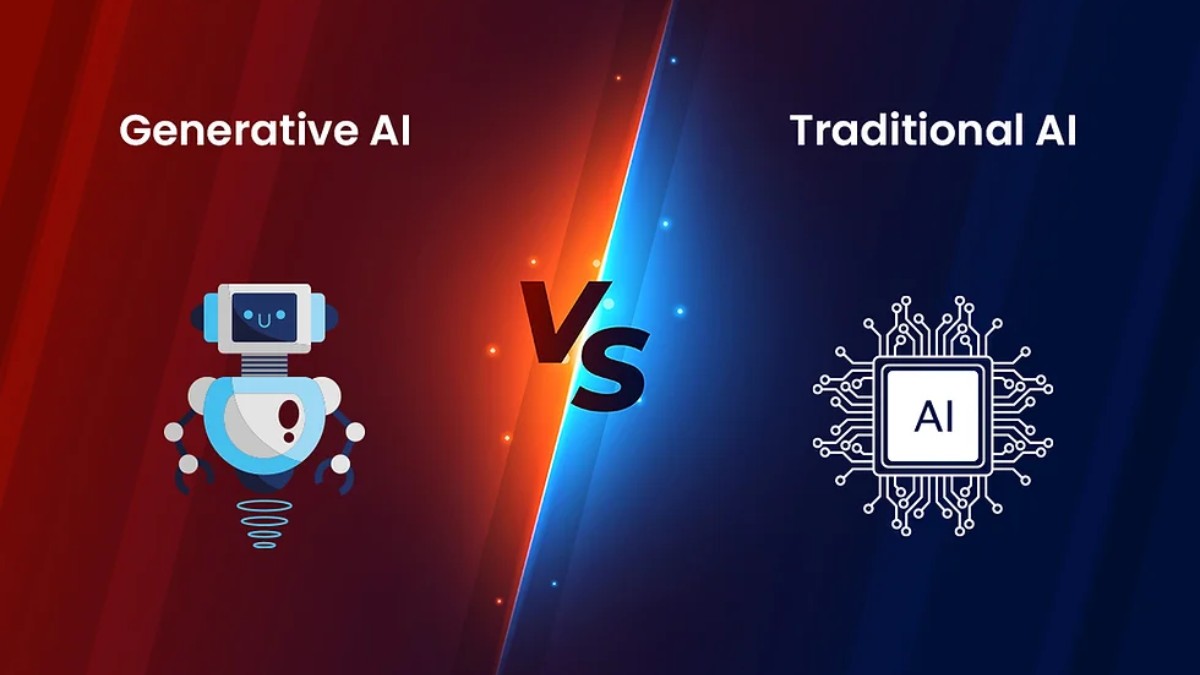
The average person probably wouldn’t be able to differentiate between a traditional AI use case and a generative AI use case, at least not the latter. It’s surprising how many marketers probably couldn’t either.
While generative AI has been in the headlines, there is a general lack of knowledge and awareness about it. This is clear from the findings of Coleman Parkes’ recent study on generative AI use in marketing. 95% of those in senior marketing management are unfamiliar with generative AI or its potential influence on the firm.
Let’s cut through the hype and look at the differences between generative AI and traditional AI, as well as some of the things you can do with both in marketing.
What are the key differences between generative AI and traditional AI, and why should companies have a firm grasp on both? Traditional artificial intelligence is, simply expressed, the vast subject of developing machines capable of performing activities that would normally need human intelligence.
Traditional AI consists of three basic components:
In contrast, Generative AI is a subset of traditional AI that focuses on creating new content rather than simply analyzing data. While generative AI is best known for content creation in marketing, it also has other applications, such as data exploration and summarization, marketing campaign and journey creation, dynamic pricing optimization, conversational marketing, customer journey mapping, market research, trend analysis, and search engine optimization.
Generative AI is a technique with two major components:
Traditional AI uses data and analytics to complete tasks, make predictions, and inform decisions, whereas generative AI focuses on creativity, summarization, and content generation. AI processes data using algorithms, but generative AI produces creative output using neural networks.
As a result of these differences, we see AI being utilized widely in automation, analytics, decisioning, learning, and process optimization, whereas generative AI is mostly used in art, media generation, and creative industries – at least for now.
As traditional and generative AI becomes more advanced and pervasive in society, its impact on everyday consumer engagement activities will grow. From a martech standpoint, the software will most certainly progress to the point where a campaign brief is the only human-generated input — and the combination of AI and generative AI will be able to take it and build the strategy, audience, journey, content, and activation rules required to complete the rest.
However, before we can get to this point, marketers must first educate themselves about generative AI. According to the Coleman Parkes study, marketers’ primary worries with generative AI usage are data protection and privacy, followed by ethics, bias, accuracy, consumer trust, and internal trust. As marketers understand how to use generative AI responsibly, training will help alleviate some of their concerns.
In the topic of generative AI vs. traditional AI, there’s no challenge. They are both winners. It’s exciting to imagine a world in which traditional and generative AI are more tightly linked to improve both creativity and functionality in a variety of applications and use cases!
A merger premium looks generous on announcement day. The offer sits well above the prior… Read More
The conveyor starts moving again, so everyone gets back to work. Twenty minutes later, the… Read More
Gold has been a standout performer for British households. Gold price hit a record £4,068.11… Read More
An interview on the writing behind selected works. Msb Mario, also known as “El Niño… Read More
A startup launch involves more than announcing that a company exists. Prospective customers need to… Read More
Few hospitals are short on data. Claims, quality measures, staffing reports, patient-experience surveys, and payer… Read More
