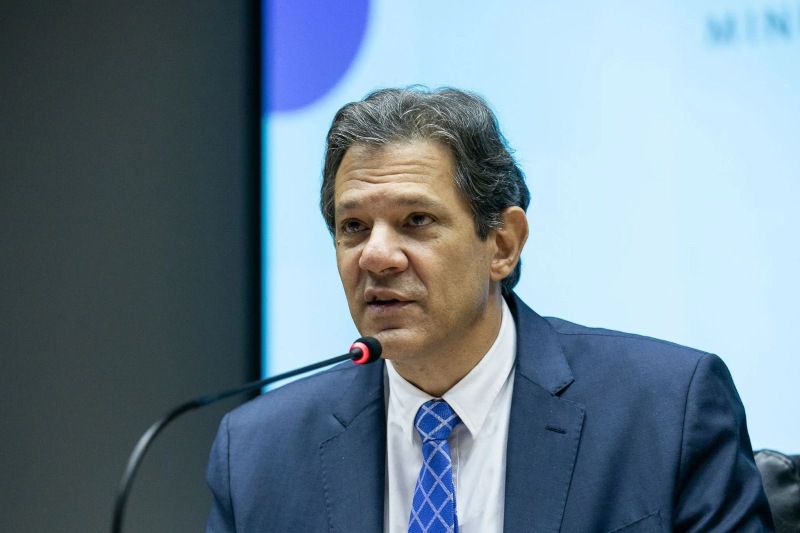
Brazil’s finance minister told his peers on Thursday at the G20 meeting in Sao Paulo, that countries should implement a global tax on the ultra-rich to combat widespread tax evasion.
International cooperation, according to Fernando Haddad, can address tax evasion and allow “these few individuals to make their contribution to our societies and the planet’s sustainable development.”
The G20 leaders’ declaration on international taxation is something Brazil is pressing for, he continued, and he hopes it will be ready by July. But he acknowledged the road ahead would be difficult in a press conference held following the meeting.
“There will be a lot of debate about this, which is absolutely natural, especially because not every country feels the same way about this problem that was brought to the G20 by Brazil,” he said.
President Luiz Inácio Lula da Silva of Brazil, who presently holds the presidency of the 20 largest rich and developing nations, has prioritized issues facing the developing world, including the lowering of inequality and the reform of multilateral institutions.
Haddad mentioned social, economic, and environmental issues when he said, “Brazil has a role to play, a legitimacy to use on the issues that need to be addressed and that are not always represented in the G20.”
A 2023 study by the advocacy group Tax Justice Network estimates that tax havens could cost nations worldwide up to $4.8 trillion in lost tax revenue over the next ten years. Furthermore, according to a study released earlier this year by the EU Tax Observatory and referenced by Haddad, billionaires across the globe effectively pay taxes that range from 0% to 0.5% of their wealth.
Meanwhile, Oxfam International, an anti-poverty organization, states that since the coronavirus pandemic, the gap between the super-rich and most of the world’s population has widened dramatically since the coronavirus pandemic.
“There are fewer taxes on assets today than two or three decades ago. The global movement has tended towards reducing taxation on companies and wealth,” said André Vereta-Nahoum, a sociology professor at the University of Sao Paulo.
Though there is little chance that Congress will enact the billionaire minimum income tax, U.S. President Joe Biden is among those advocating for higher taxes on the wealthy as a result of the widening income gap.
The United Nations General Assembly passed a resolution late last year endorsing greater international tax cooperation to “make it fully inclusive and more effective,” indicating a growing global consensus on the issue.
“The difficulty is no longer putting the issue on the table, the data is there. The difficulty is arriving at a common document,” according to economist Carla Beni of the university and think tank Getulio Vargas Foundation.
The legal industry is more competitive than ever. Prospective clients no longer flip through phone… Read More
A Complete Summer Skincare Guide by Blossom Kochhar Aroma Magic Summer is not just a… Read More
The United Arab Emirates has emerged as a global hotspot for luxury travel, attracting visitors… Read More
Google is introducing the standalone Gemini Enterprise app for Android, which will deliver its corporate-grade… Read More
Digital payments have changed how we handle money. Whether you are paying for a small… Read More
Taking care of your health and well-being doesn’t have to mean dramatic changes or strict… Read More
