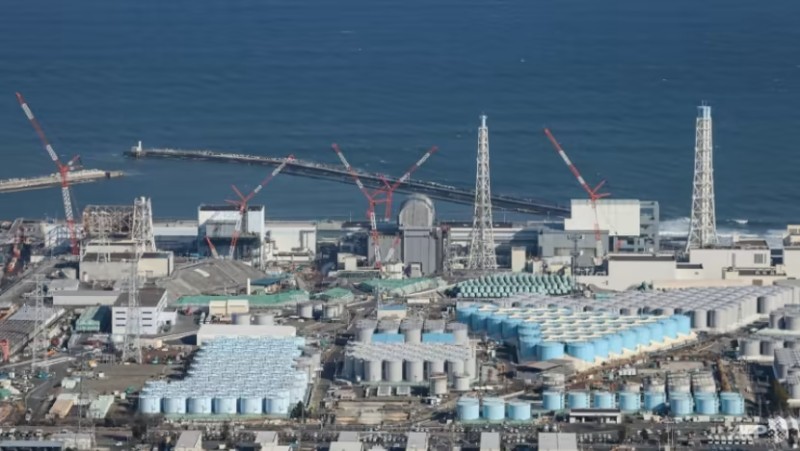
A plan that has received harsh condemnation from China has been put into action by Japan’s announcement on Tuesday that it will begin releasing more than 1 million metric tonnes of treated radioactive water from the destroyed Fukushima nuclear power plant on August 24.
The plan, which the Japanese government approved two years ago as essential to decommissioning the plant run by Tokyo Electric Power Company (Tepco) (9501.T), has also come under fire from regional fishing groups, who worry about reputational damage and a threat to their livelihood.
“I have asked Tepco to swiftly prepare for the water discharge by the plan approved by the Nuclear Regulation Authority, and expect the water release to start on August 24, weather conditions permitting,” Prime Minister Fumio Kishida said on Tuesday morning.
The announcement comes a day after the government claimed to have gained “a degree of understanding” from the fishing industry about the release of the water, despite a fishing group stating that it still believed the reputational damage would lead to livelihood losses.
Tepco announced at a briefing on Tuesday that the first batch of water, which would be released starting on Thursday, will be 7,800 cubic meters in volume over around 17 days.
According to Tepco, the tritium content of the water will be around 190 becquerels per liter, which is less than the 10,000 becquerels per liter recommended drinking limit by the World Health Organization. A radioactivity unit is a becquerel.
According to Japan, the water release is secure. The plan was approved in July by the International Atomic Energy Agency (IAEA), the U.N. nuclear watchdog, which said that it matched international standards and would have “negligible” effects on people and the environment.
According to a study done over the weekend by the Japanese broadcaster FNN, 56% of respondents supported the publication while 37% disapproved.
“The IAEA and many other countries have said it’s safe, so I believe it is. But fishermen are facing so many problems so the Japanese government needs to do something to convince them,” said 77-year-old NGO worker Hiroko Hashimoto.
Despite guarantees, some of the plan’s neighbors have expressed doubts about its security, with Beijing emerging as the biggest critic. In July, the foreign ministry’s spokesman Wang Wenbin claimed that Japan had acted selfishly and arrogantly by releasing the water without fully consulting the international community.
10 prefectures in Japan, including Fukushima and the capital, Tokyo, are prohibited from importing fish into China.
Although Seoul concluded from its own study that the water release complies with international standards and stated that it supports the IAEA’s assessment, South Korean activists have also voiced opposition to the plan.
On Tuesday, Kishida stated his opinion that there was a growing “accurate understanding” of the situation that was spreading in the international community.
“There is an understandable perception that all radioactive materials are always and everywhere dangerous… but not all radioactive materials are dangerous,” Tony Irwin, an honorary associate professor at the Australian National University, said in a note.
“Nuclear power plants worldwide have routinely discharged water containing tritium for over 60 years without harm to people or the environment, most at higher levels than the 22 TBq per year planned for Fukushima,” he added.
Except tritium, an isotope of hydrogen that is challenging to isolate from water, Japan says the water will be filtered to remove the majority of radioactive elements. Before being released into the Pacific, the treated water will be diluted to levels of tritium that are much lower than those that are accepted internationally.
After Fukushima Daiichi melted down in an accident brought on by a massive tsunami that slammed Japan’s eastern coast in 2011, the water was used to cool the reactor’s fuel rods.
The first test results of the saltwater after the discharge, according to a Japanese official, could be made public at the beginning of September. Japan will also test fish in the waters close to the plant, and the results will be posted on the website of the agriculture ministry.
Buying property in Mexico as a foreign investor is no longer a matter of finding… Read More
Not all revolutions start with noise, some begin with a quiet shift in how we… Read More
Delvia Holidays has reported a significant rise in demand for international family tours, reflecting a… Read More
EdvanceNow has announced the launch of its Career Accelerator MBA and DBA programs, aimed at… Read More
The legal industry is more competitive than ever. Prospective clients no longer flip through phone… Read More
A Complete Summer Skincare Guide by Blossom Kochhar Aroma Magic Summer is not just a… Read More
