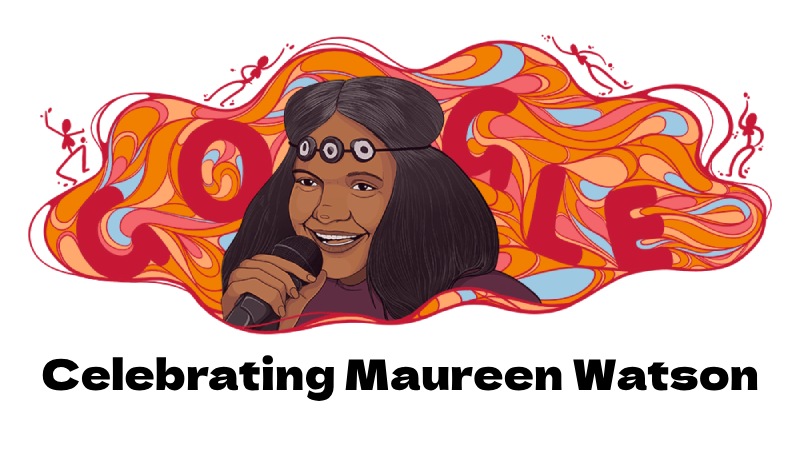
Aunty Maureen Watson, a well-known Australian Aboriginal poet and storyteller who has dedicated her life to Indigenous rights, is celebrated on her 93rd birthday by today’s Google Doodle. On November 9, 1931, Watson was born in Queensland’s Darumbal Country.
Before a serious fall ended her hopes of pursuing a career in sports, she was an exceptional athlete and horse rider in her younger years. Rather, she started working with her father and learned a variety of outdoor skills, including farming, fishing, trapping, shooting, and more.
Maureen Watson married Harold Bayles, a Wakka Wakka man from Eidsvold, Queensland, when she was 21 years old in 1952. She enrolled at the University of Queensland, where she studied art and became involved in the emerging Aboriginal rights movement. They had five sons together, and in 1970 she moved to Brisbane with her family.
Watson’s intuitive storytelling ability, which stemmed from her lived experiences as a Kungalu and Birri Gubba woman, established Watson as a valued voice within the Aboriginal community. She furthered her on-stage presence in 1972 by touring throughout Australia as an actor, playwright, and vocalist after completing a six-week performing arts training program.
After 10 years, Maureen Watson published her first collection of short stories and poetry, Black Reflections, a remarkable work that challenged the negative perceptions of Aboriginal people in Australia. Many of her works focused on the negative depiction of Aboriginal people in Australia. By providing a counternarrative to prevalent stereotypes and encouraging empathy and understanding in her readers, she aimed to shed light on the resilience and richness of Aboriginal culture.
Maureen Watson received numerous awards and recognitions by the end of her career, including the United Nations Association Global Leadership Prize in 1996, for her efforts to promote cross-cultural understanding and harmony amongst the community. In appreciation of her national and international contributions to raising awareness of Aboriginal arts, she received the Australia Council’s Red Ochre Award, which is presented to an outstanding Aboriginal Australian or Torres Strait Islander artist for lifetime achievement. She encouraged the Australian public to seek for the inherent goodness in all people and to empower future generations through charity and goodwill.
Google left out one detail from its announcement about the new Search profiles features revealed… Read More
Samsung Electronics Co., Ltd. has announced that One UI 9 is expanding to additional Galaxy… Read More
September is offering skywatchers several opportunities to observe notable events. Venus will reach its greatest… Read More
SIU Swiss International University, a member of the VBNN Smart Education Group, has officially opened… Read More
Why portfolio structure and the Gastauer Foundation matter after the June 2026 AUM revaluation The… Read More
Apple officially revealed its next-generation products tonight, introducing some of the most significant changes in… Read More
