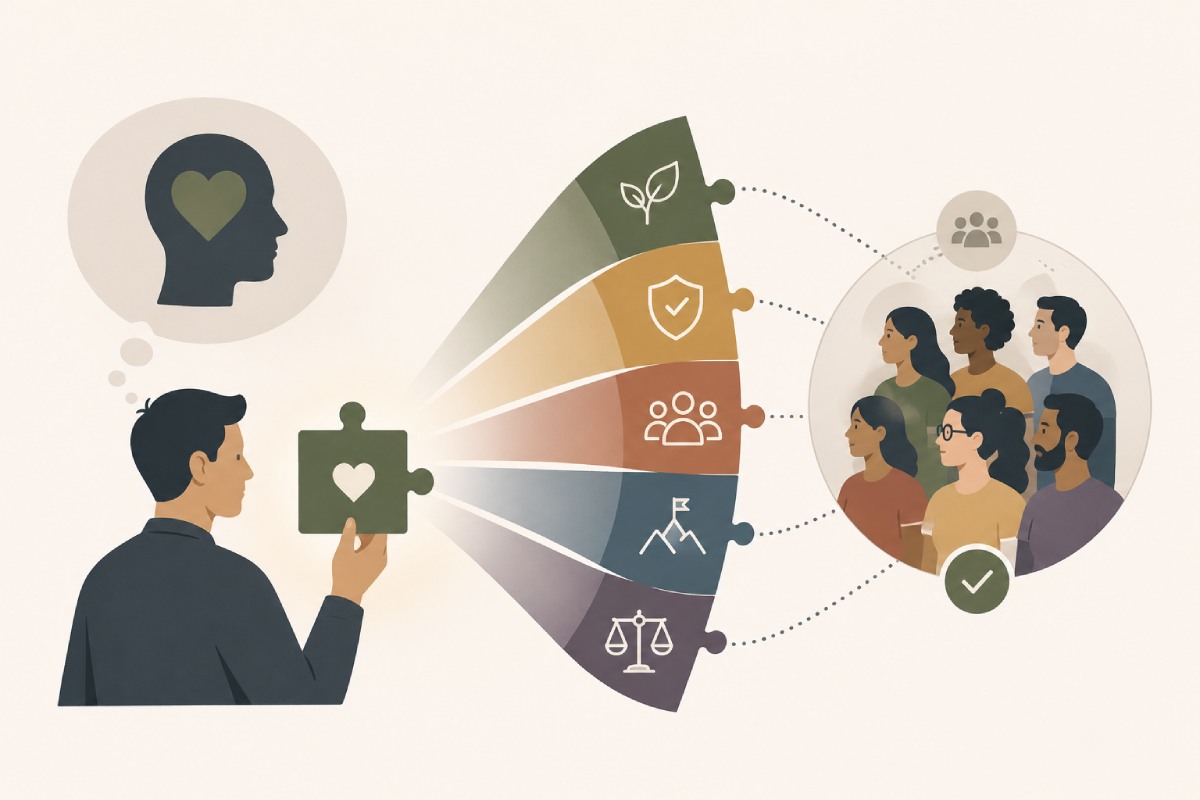
Successful branding is not about knowing who your customers are or what they buy; it’s about knowing how to brand your product or service in a highly competitive market. Today’s consumers make choices because of their personal beliefs, aspirations, lifestyles, motivations, and emotional ties, and are not defined by age, location, or income. With the growing volume and variety of digital channels and audiences that are increasingly picky about the brands they buy, organizations need to craft their messages to truly reflect their audiences’ priorities. The underlying motivations are captured by psychographic insights, which help businesses to communicate authentically and relevantly.
Psychographic research, when used in conjunction with a smart product innovation strategy and messaging that resonates with the intended audience’s values and expectations, can help promote products or services. In today’s fractured environment, brands that communicate in ways that resonate with their customers’ values are more likely to build trust, enhance loyalty, and forge long-term customer relationships.
Generational research is important because it allows you to learn more about family experiences, culture, and changing consumer behavior among the different generations, but when used in conjunction with psychographic research, it can be much more valuable. Within any given generation, there may be some shared history or experiences, but the personal priorities, lifestyle, and buying motives are quite different.
Demographic data combined with more in-depth psychographic information allows businesses to better understand why users make specific decisions, how they think, and what they value. This wider vision can transcend stereotypes and enable you to engage customers on a deeper level with messaging.
A thorough audience profile makes for more effective communication that resonates with a variety of consumers.
Both functional needs and values are involved in each purchase. For some consumers, sustainability is a key consideration, whereas for others, they are interested in innovation, affordability, convenience, quality, a strong sense of community, or long-term reliability.
By being aware of these underlying priorities, brands can then place their message in terms of benefits that are relevant to their target audience. Organizations can also convey the value that their product has to customer aspirations and lifestyle preferences, rather than just product features.
A value-based message can build a stronger emotional attachment, as it resonates with beliefs that govern daily decision-making.
Brands are putting up an increasing number of barriers to meet consumer expectations. Brands are building a wall around themselves to align with consumer expectations. A message based on an authentic understanding of customer experiences can elicit more trust than one based solely on promotion.
Psychographic data provides insights into audience emotions, concerns, goals, and challenges. This information allows organizations to create communication that resonates, is compassionate, and is engaging—without using the same marketing jargon.
Messaging that comes across as authentic builds credibility and fosters long-term relationships that are based on values and principles, not promotional incentives.
Successful brands maintain consistent identities across all communications with their audience segments, even when communicating in different ways. Psychographic segmentation helps companies tailor their messages to customers’ motivations while maintaining their core brand values.
For instance, one segment of the audience may be more interested in a product’s innovations and performance, whereas another segment may focus on simplicity and reliability. The core brand personality never changes, although certain messages may be tweaked to cater to different preferences.
This is an element of personalization and consistency that enables brands to be recognized and more relevant to a variety of customers.
Audiences’ values change with culture, technology, and market changes. Psychographic research is a process, therefore, and should not be a one-time activity.
Valuable insights into shifting preferences and new expectations can be gleaned through customer feedback, behavioral analysis, social listening, surveys, community engagement, and market research. By regularly evaluating, organizations can fine-tune messages before they become stale, confused, or out of alignment with the priorities of the audience.
An iterative approach to brand communication ensures it remains relevant to changing customer values and continues to build engagement over time.
Businesses can use psychographic data to go beyond the audience demographics and gauge what drives customers’ beliefs, motivations, and values that impact their buying decisions. By better understanding their audience, communicating in ways that meet their needs, being consistent, and continually improving, organizations can develop more meaningful relationships and build brand relevance and continuity. With customers becoming increasingly competitive, it all starts with meaningful communication—understanding your customers is not enough; you need to know what matters to them.
Apple is getting ready to roll out iOS 27 to supported iPhone models, bringing an… Read More
Crude oil and natural gas are among the most actively traded commodity derivatives in India.… Read More
Corporate health insurance can provide useful medical cover during employment, while a personal plan offers… Read More
Daily travel may feel routine, yet every commute involves changing traffic, busy roads, sudden braking… Read More
Dolly Parton reaches the top of Billboard’s Hot 100 Songwriters chart for the first time,… Read More
KISS has achieved its highest-charting release on Billboard’s Top Album Sales chart in more than… Read More

