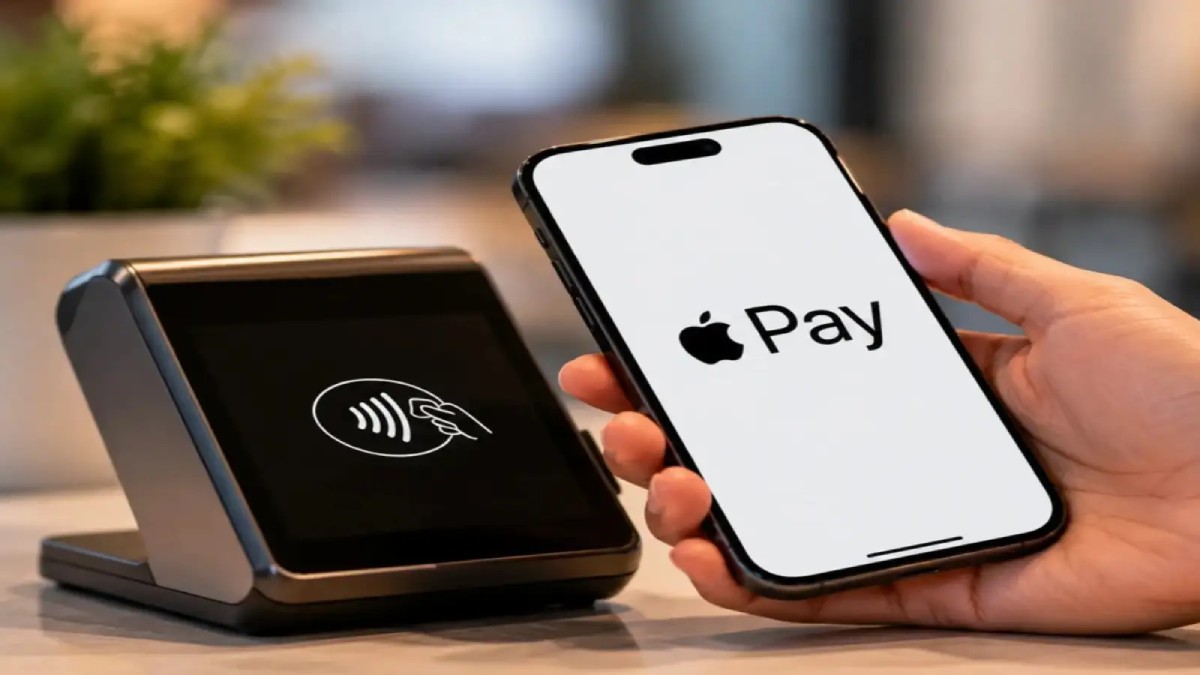
Apple started introducing Apple Pay in India on Tuesday. Axis Bank, the country’s third-largest private-sector lender, is its first banking partner. The launch brings Apple’s payments service to the world’s most populous country after years of delays in a market where the state-backed Unified Payments Interface (UPI) dominates.
The initial availability is limited. Apple Pay works with eligible Axis Bank cards issued on Visa and Mastercard, but support does not extend to India’s homegrown RuPay network. The service will also only work at merchants and payment terminals that have enabled Apple Pay.
Unlike India’s widely used Unified Payments Interface (UPI), which allows consumers to send money directly between bank accounts without using cards, Apple Pay relies on cards and requires individual banks and payment infrastructure providers to integrate with the service. That makes achieving broad acceptance more complicated. Apple’s commercial terms have also become an obstacle in discussions with some of India’s biggest banks, according to people familiar with the matter.
Apple is asking for a transaction fee of around 20 basis points (0.2%), the people said. That represents a substantial portion of the approximately 40 to 50 basis points (0.4% to 0.5%) margin generated in the payments layer. The fee arrangement is generally in line with Apple’s commercial model for Apple Pay in other markets, according to the people. HDFC Bank, ICICI Bank, and SBI Card are not supporting Apple Pay at launch while negotiations over commercial terms remain ongoing, one of the people told TechCrunch.
Apple, Axis Bank, HDFC Bank, ICICI Bank, and SBI Card did not respond to requests for comment regarding the launch. Reuters reported earlier this month that Apple was preparing to introduce Apple Pay in India in October, initially supporting Axis Bank credit cards.
Apple Pay is entering a payments environment that differs considerably from the U.S. and other markets where cards play a dominant role. India’s rapid growth in digital payments has largely been powered by UPI, the state-backed system that enables consumers to transfer funds directly between their bank accounts.
UPI accounts for the majority of digital payments in India, where paying by scanning a QR code and transferring money straight from a bank account has become routine. Apple Pay, in comparison, is initially targeting a much smaller portion of the country’s payments market centered on cards.
Even so, Apple’s service could find an audience among India’s expanding population of iPhone users. These customers generally have higher incomes and are more likely to hold premium credit cards, potentially making them an important group for banks despite UPI’s overwhelming presence.
India could still prove commercially significant for Apple even if Apple Pay remains a relatively niche service. The transaction fees collected by the iPhone maker would provide another source of revenue from its growing iPhone user base in the country, according to the people.
With the launch, eligible Axis Bank customers can add their credit cards to Apple’s Wallet app and use Apple Pay for online transactions as well as contactless payments at participating terminals, the people said.
Acceptance may vary between payment terminals during the early rollout. For example, an Apple Pay payment could succeed at a terminal operated by an independent payments provider that supports the service while failing at another terminal whose acquiring bank has not enabled it, one of the people said. As a result, customers with supported cards may still encounter inconsistent availability.
The launch represents another development in Apple’s expanding operations in India, where the company has been increasing iPhone sales, manufacturing activity, and its retail presence. According to an earlier Counterpoint Research report, Apple held 28% of India’s smartphone market by value in 2025, compared with 23% a year earlier.
India already produces approximately one-quarter of the world’s iPhones. That proportion could increase to between 30% and 35% over the next five years, Indian English daily Business Standard reported last month, citing an Indian government official.
As all-in-one AI agents such as Meta’s Muse and Instinct gain momentum, Google has announced… Read More
Major League Baseball's 2026 postseason begins Tuesday, Sept. 29 with four best-of-three wild card series,… Read More
A Career Built on Authentic Beauty For more than 30 years, Brigitta Würfl has built… Read More
While the release of iOS 27 took much of the attention, Apple also rolled out… Read More
Adjusting your AirPods settings can make a noticeable difference to your listening experience by providing… Read More
How separate investment and philanthropic mandates can support research project readiness and durable conservation outcomes… Read More
