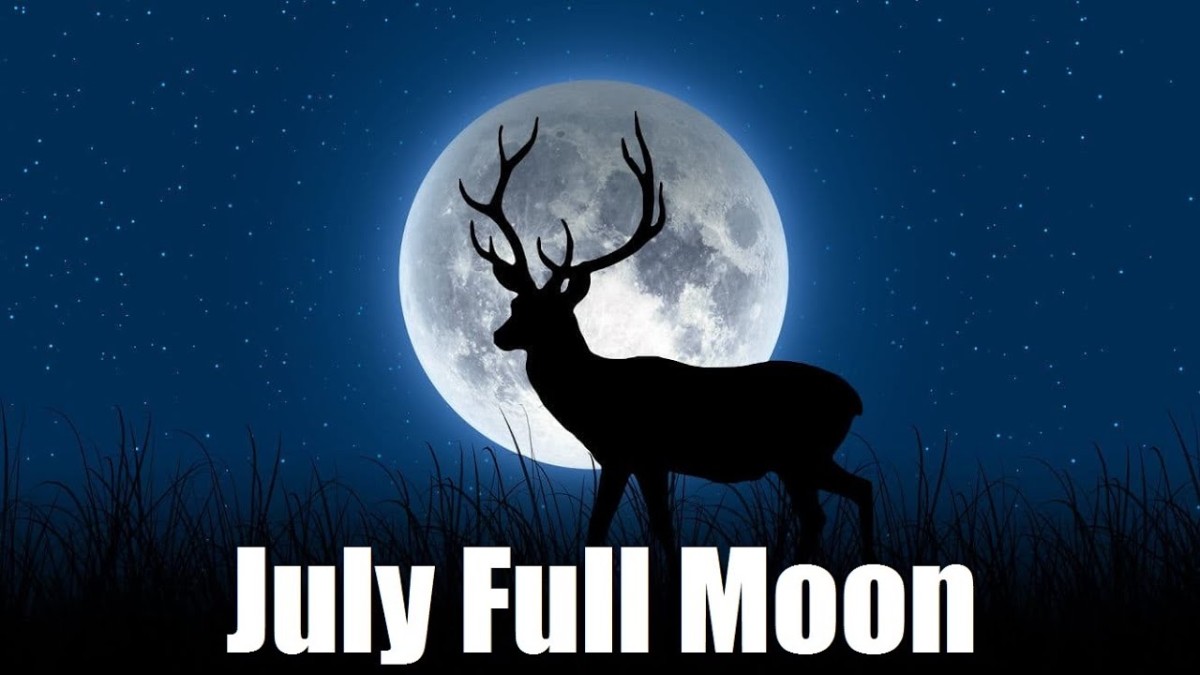
The ‘Buck Moon’, often called the July full moon, will rise on Wednesday, July 10, and create a breathtaking show for astrophotographers and stargazers alike. The “Buck Moon”—the second full moon of the summer—will shortly arrive.
On the night of the Full Moon, which is July 10, 2025, the Buck Moon will be at its brightest. Buck Moon is the full moon that occurs when male bucks or deer begin to grow their new antlers, which serves as a symbol of strength and growth.
Similar to many other full moon names, the July full moon is associated with a time when the rhythms of nature may be seen in the night sky and are based on both natural cycles and cultural customs.
Here’s what you should know.
On July 10, the full moon will rise.
The Buck Moon will be at its brightest around 3:37 p.m. Central Time, when it will be below the horizon, according to the Old Farmer’s Almanac. To see it ascend into the sky after sunset, sky watchers should arrange to face southeast.
The full moon for this month will be visible only when it rises beyond the southern horizon at sunset in your local time zone, which is 4:36 p.m. EDT (2036 GMT) on July 10. For example, the moonrise in New York City happens at approximately 8:53 p.m. local time.
Keep in mind that the precise times for moon phases differ based on your location on Earth, so make sure to visit a reliable website to obtain the accurate times for your area.
Purnima Tithi Begins – July 10, 2025 – 01:36 AM
Purnima Tithi Ends – July 11, 2025 – 02:06 AM
Moonrise on Purnima – July 11, 2025 – 07:19 PM
The full moon in July is known as the “Buck Moon” since it falls during the period when male deer start to grow antlers.
The Old Farmer’s Almanac notes that, like many full moon names, it comes from a combination of European, Native American, and colonial American traditions. In the past, the names applied not just to the night of the full moon but to the entire lunar month.
The “Feather Moulting Moon” (Cree) and the “Salmon Moon,” a Tlingit term signifying the return of salmon for harvest, are two more moon names that similarly reflect seasonal animal behavior.
Full moons are sometimes given names that represent the quirks of a certain season in many cultures. For example, because it rises in the middle of summer in the Northern Hemisphere, the July Full Moon is occasionally referred to as the Halfway Summer Moon. Due to the frequent thunderstorms in July, it is also known as Thunder Moon.
There are animal-related names for the July Full Moon. For example, the American Indians in Alaska call it the “Salmon Moon,” and the Algonquin tribes in the northeastern United States call it the “Buck Moon.”
Because it coincided with the harvest and storage of hay for the winter, the July Full Moon was known as the “Hay Moon” in Anglo-Saxon culture. The Mohawk, an Indian tribe in North America, refers to it as the “Time Of Much Ripening,” a reference to the abundance of ripening that occurs throughout the country at this time. The Lakota call this Full Moon “When The Chokecherries Are Black,” while the Midwest Shawnee call it the Blackberry Moon.
Other names for the July Full Moon that have been created by various cultures include as follows:
People may be wondering why July’s Full Moon is called “Buck Moon” since it coincides with the time when deer or bucks begin to grow antlers. Typically, Buck Moon occurs on Full Moon night in July.
This Full Moon is known by a different name in every culture on the Earth, and these names are all highly significant and connected to seasonal cycles. Many Native American tribes refer to this period as the Thunder Moon, and it is a powerful time for development, growth, expansion, and transformation. Some folks refer to this period as Raspberry Moon or Salmon Moon because it is a time of abundance and gratitude.
The ‘Moon Illusion’ will make the lunar disk appear larger than it actually is, making the hours after moonrise on July 10 the greatest time to see the July full moon. In spite of the fact that the moon occupies the same amount of space in the night sky when it is near the horizon, this phenomenon causes our brain to deceive us into believing that it is larger than when it is directly overhead!
Soon after rising, you could also notice that the Buck Moon turns reddish or golden. Rayleigh scattering, the same phenomenon that produces vibrant sunrises and sunsets, is responsible for its warm hue. More light in the bluer wavelengths scatters while redder wavelengths pass through because sunlight reflected from the moon’s surface must travel farther through Earth’s atmosphere to reach us when it is low on the horizon than when it is directly overhead.
Time: People should start their observations 30 to 60 minutes after sunset in order to get the optimal timings.
Location: Pick a place free of pollution. Higher elevations or locations outside of cities (rural areas) will offer the best views.
Equipment: Although the moon will be visible and within the range of the naked eye, those who wish to see it more clearly can bring DSLRs, telescopes, and binoculars to record the event.
If the weather is favorable and there are no obstructions in your way, you will be able to see the Full Moon all night long. It is easily observable with the naked eye, and its craters can be explored with a small telescope or binoculars.
You should bring filters if you plan to use optics because the moon will be quite bright; it won’t harm your eyes, but the shadows on the moon’s surface will become less noticeable. Additionally, to determine the precise time and properties of the Full Moon in your area, use the Sky Tonight app. The app Ephemeris will assist you in setting up the composition if you want to capture a beautiful image of this month’s Full Moon by displaying the lunar disk at a selected area.
At 19:11 GMT on July 24, the New Moon occurs. Now is an ideal time to look at the stars!
When there is no moonlight in the sky, you can observe some July meteors or try your hand at deep-sky observations. There is a lot to view whether you are a beginner or an expert stargazer! Are you having trouble identifying the greatest celestial targets? The Sky Tonight app’s Visible Tonight feature will direct you to the brightest objects that are visible from your precise location.
The remaining full moons in 2025 are listed below:
Google is introducing the standalone Gemini Enterprise app for Android, which will deliver its corporate-grade… Read More
Digital payments have changed how we handle money. Whether you are paying for a small… Read More
Taking care of your health and well-being doesn’t have to mean dramatic changes or strict… Read More
We often talk about growing up as if emotions mature on a perfect timeline, children… Read More
Image source: Critical Training Solution Emergency management requires a structured yet flexible approach to handle… Read More
Strategic philanthropy is transforming how individuals and organizations approach donations. Rather than making spontaneous contributions,… Read More
