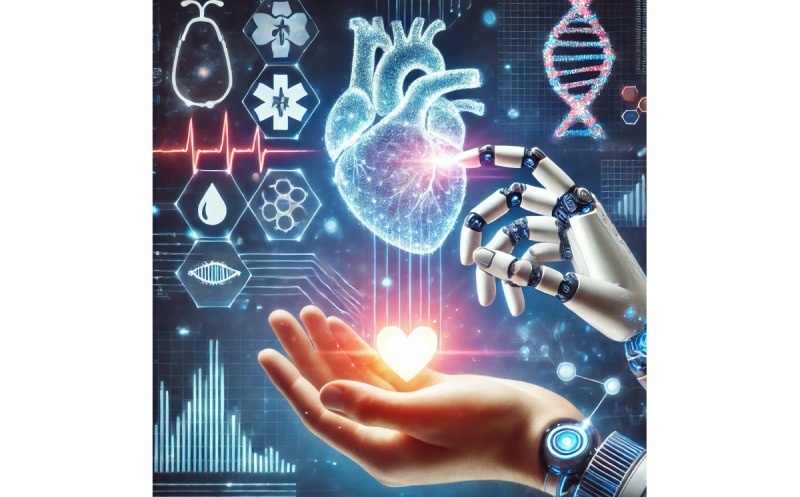
Artificial Intelligence (AI) is reshaping the future of healthcare, bringing innovative solutions to some of the industry’s most pressing challenges. From early disease detection to personalized treatments, AI has proven its potential to revolutionize how medicine is practiced and delivered. With its ability to analyze massive datasets and identify patterns that human eyes might miss, AI has become a powerful tool in diagnosis, treatment planning, and patient care management. One of the most notable applications of AI in healthcare is its role in early disease detection. AI-powered algorithms are being used to analyze medical images such as X-rays, MRIs, and CT scans with remarkable accuracy. For instance, AI systems have demonstrated their ability to detect conditions like cancer, heart disease, and neurological disorders earlier and more reliably than traditional methods. This early detection can significantly improve patient outcomes and reduce treatment costs. In addition to diagnostics, AI is transforming personalized medicine. By analyzing genetic data, lifestyle factors, and patient history,
AI can help design tailored treatment plans that cater to the unique needs of individuals. This approach minimizes the trial-and-error aspect of treatments, leading to more effective and efficient care. AI also plays a crucial role in drug discovery, reducing the time and cost associated with bringing new medicines to market. Machine learning models can sift through vast chemical datasets to identify potential drug candidates, accelerating the research process and offering hope for curing previously untreatable diseases.
AI is also revolutionizing patient care management. Virtual health assistants and chatbots powered by AI are helping patients manage their health conditions, answer questions, and remind them about medication schedules. These tools not only enhance patient engagement but also alleviate the burden on healthcare providers. Moreover, AI-driven predictive analytics is being used in hospitals to optimize operations, such as predicting patient admissions, managing resources, and reducing wait times. Despite its tremendous potential, the integration of AI in healthcare comes with challenges. Issues like data privacy, ethical considerations, and the need for rigorous validation of AI models must be addressed to ensure the technology is safe, reliable, and equitable. Nonetheless, with continued advancements and collaboration between technology and healthcare sectors, AI is poised to redefine the future of medicine. AI in healthcare is not just about technology—it’s about improving lives. By enabling faster diagnoses, better treatments, and more efficient systems, AI is paving the way for a healthier and more connected world.
Dr. Navpreet Kaur Walia
Professor
Chandigarh University
A Complete Summer Skincare Guide by Blossom Kochhar Aroma Magic Summer is not just a… Read More
The United Arab Emirates has emerged as a global hotspot for luxury travel, attracting visitors… Read More
Google is introducing the standalone Gemini Enterprise app for Android, which will deliver its corporate-grade… Read More
Digital payments have changed how we handle money. Whether you are paying for a small… Read More
Taking care of your health and well-being doesn’t have to mean dramatic changes or strict… Read More
We often talk about growing up as if emotions mature on a perfect timeline, children… Read More
