
Health
Revolutionizing Medicine: The Role of AI in Transforming Healthcare

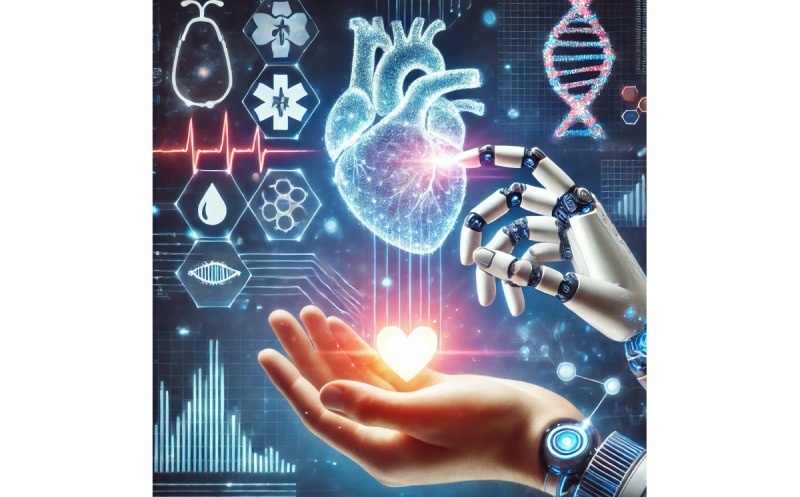
Artificial Intelligence (AI) is reshaping the future of healthcare, bringing innovative solutions to some of the industry’s most pressing challenges. From early disease detection to personalized treatments, AI has proven its potential to revolutionize how medicine is practiced and delivered. With its ability to analyze massive datasets and identify patterns that human eyes might miss, AI has become a powerful tool in diagnosis, treatment planning, and patient care management. One of the most notable applications of AI in healthcare is its role in early disease detection. AI-powered algorithms are being used to analyze medical images such as X-rays, MRIs, and CT scans with remarkable accuracy. For instance, AI systems have demonstrated their ability to detect conditions like cancer, heart disease, and neurological disorders earlier and more reliably than traditional methods. This early detection can significantly improve patient outcomes and reduce treatment costs. In addition to diagnostics, AI is transforming personalized medicine. By analyzing genetic data, lifestyle factors, and patient history,
AI can help design tailored treatment plans that cater to the unique needs of individuals. This approach minimizes the trial-and-error aspect of treatments, leading to more effective and efficient care. AI also plays a crucial role in drug discovery, reducing the time and cost associated with bringing new medicines to market. Machine learning models can sift through vast chemical datasets to identify potential drug candidates, accelerating the research process and offering hope for curing previously untreatable diseases.
AI is also revolutionizing patient care management. Virtual health assistants and chatbots powered by AI are helping patients manage their health conditions, answer questions, and remind them about medication schedules. These tools not only enhance patient engagement but also alleviate the burden on healthcare providers. Moreover, AI-driven predictive analytics is being used in hospitals to optimize operations, such as predicting patient admissions, managing resources, and reducing wait times. Despite its tremendous potential, the integration of AI in healthcare comes with challenges. Issues like data privacy, ethical considerations, and the need for rigorous validation of AI models must be addressed to ensure the technology is safe, reliable, and equitable. Nonetheless, with continued advancements and collaboration between technology and healthcare sectors, AI is poised to redefine the future of medicine. AI in healthcare is not just about technology—it’s about improving lives. By enabling faster diagnoses, better treatments, and more efficient systems, AI is paving the way for a healthier and more connected world.
Dr. Navpreet Kaur Walia
Professor
Chandigarh University












Apple Prepares iOS 27 Release With AI-Powered Siri and Expanded Apple Intelligence

Best Commodity Trading Platforms in India for Trading Crude Oil and Natural Gas Derivatives

How to Use Corporate and Personal Health Insurance Together

Alicia Lacao-Green gains worldwide fame owing to her amazing transformations via make-up and contouring.

Amplifyou, an amazing agency for eCommerce

Vasid Qureshi, India’s Top Blogger Shares 5 Tips to Go Viral on Social Media

Apple Prepares iOS 27 Release With AI-Powered Siri and Expanded Apple Intelligence
Apple is getting ready to roll out iOS 27 to supported iPhone models, bringing an AI-enhanced Siri, expanded Apple Intelligence...

Best Commodity Trading Platforms in India for Trading Crude Oil and Natural Gas Derivatives
Crude oil and natural gas are among the most actively traded commodity derivatives in India. They are also among the...

How to Use Corporate and Personal Health Insurance Together
Corporate health insurance can provide useful medical cover during employment, while a personal plan offers greater control and continuity over...


Personal Accident Insurance for Daily Commuters and Two-Wheeler Riders
Daily travel may feel routine, yet every commute involves changing traffic, busy roads, sudden braking and unpredictable weather. Two-wheeler riders...


Dolly Parton Takes No. 1 on Billboard’s Hot 100 Songwriters Chart
Dolly Parton reaches the top of Billboard’s Hot 100 Songwriters chart for the first time, powered by three songwriting credits...
-

 Sports2 weeks ago
Concacaf Nations League 2026/27: Groups and Schedule
-
Business3 weeks ago
Black Banx H1 2026 Results Reveal the Power of Operating Leverage
-

 Festivals & Events3 weeks ago
Gamescom 2026 Opening Night Live: Schedule, Date, Streaming Details, Expected Games and How to Watch
-

 Tech3 weeks ago
YouTube View Count Changes: What Creators and Marketers Need
-

 Science2 weeks ago
Sturgeon Moon 2026: When and How to See August 28 Full Moon
-

 Sports4 days ago
2026 FIBA Women’s Basketball World Cup Games and Schedule
-

 Business2 weeks ago
Gastauer Family Office Connects Financial, Natural and Cultural Capital Through the Gastauer Foundation
-

 Science4 weeks ago
2026 Total Solar Eclipse: Where to Watch and How to View It Safely