
Education
The Gap in Information: How Equedu is Changing Access to Elite Higher Education

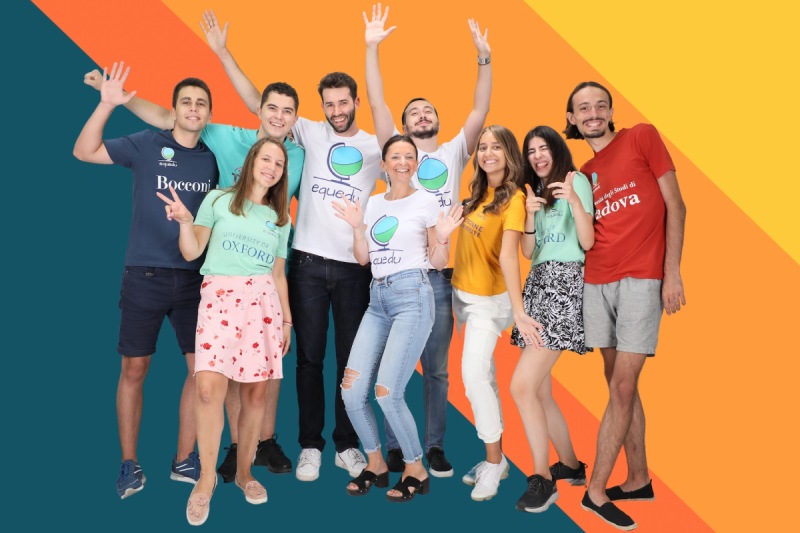
For years, the global discussion on higher education has been about cost. Tuition fees, student debt, and access to financial aid are often thought of as the main barriers between students and the world’s best universities. But Equedu was built on a fundamentally different diagnosis: the real barrier to entry isn’t money; it’s information.
The university admissions consultancy, founded in 2019 and based in New York, believes talented students are everywhere, but access to the right guidance is not. Some applicants are raised with networks that understand the subtleties of elite admissions; others, especially those from less-connected areas, are left to navigate a complex and opaque system alone.
Equedu’s mission is to close that gap, not by changing who students are but by changing what they know.
From Serbia to Wall Street: Finding the Gap
The idea for Equedu traces back to founder Milos Becarevic’s early experiences in Serbia. Growing up during the nineties, a period marked by instability and economic challenges, he encountered a recurring pattern among high-achieving students. Despite strong academic ability, many of his peers ended up at universities that did not reflect their potential.
Becarevic’s own path took him far beyond that environment. After winning a full-ride scholarship through the World Competition in Chinese, he studied international politics at Fudan University in Shanghai, completing his degree in Chinese. He later earned a master’s in finance from Brandeis University in the United States and went on to build his career at the Discovery Channel before joining BlackRock in 2019, where he spent six years and rose to vice president.
Across these experiences spanning Serbia, China, and the United States, a consistent insight emerged. The students who reached elite institutions were not always the most talented; they were often the ones who understood the admissions process early enough to position themselves effectively. The deciding factor, more often than not, was access to information.
Turning Insight into a System
Equedu was created to operationalize that insight. Rather than functioning as a traditional consultancy focused solely on application support, it positions itself as a structured transfer of knowledge, giving students the same informational advantage typically concentrated in a handful of global cities.
For its first six years, the company grew entirely through word of mouth, deliberately limiting its intake to maintain quality and ensure outcomes. That disciplined approach has translated into a set of measurable results that define its model.
To date, Equedu has supported more than 500 students through the admissions process, with every student admitted to at least one of their top three European university choices. Across the cohort whose scholarship outcomes have been tracked, the company has secured over €1.8 million, averaging approximately €20,000 per student, and reinforcing its central thesis that when information catches up with talent, financial barriers become more manageable.
“Equality in Education is not a slogan, it is the math. When 100% of our students are accepted into one of their top three European choices, you’re seeing what happens when information catches up with talent,” said Milos Becarevic.
The reach of these outcomes is global. Students guided by Equedu have gained admission to institutions including Oxford, Cambridge, Warwick, TU Delft, Sorbonne, and Bocconi, as well as leading US universities such as Dartmouth, Duke, NYU, and UCLA. Graduates have gone on to roles at organizations like DeepMind, Google, Goldman Sachs, and McKinsey.
With time, Equedu deliberately shifted its focus to European universities, which reflects a strategic thesis rooted in basic arithmetic. The case is mathematical: a bachelor’s degree in the UK or continental Europe typically takes three years rather than four, and tuition for international students often runs at a fraction of comparable US institutions. One year fewer of fees, one year fewer of forgone income, and significantly lower per-year costs together mean a top European bachelor’s can cost a third or less of an equivalent US degree, while opening the same global career paths. For ambitious international students today, this is the highest-ROI bet in higher education and Equedu is built around it.
Building a Self-Sustaining Knowledge Network
A key component of Equedu’s model is its hybrid structure. While it operates as a for-profit consultancy, it also provides significant fee reductions of up to 85% to high-achieving students with limited financial means. In return, those students contribute to a growing mentor network once they begin their university studies.
This approach transforms individual success into collective advantage. Instead of relying solely on static expertise, Equedu continuously integrates insights from students who have recently navigated the system themselves. The result is a dynamic, self-reinforcing knowledge network that evolves with each admissions cycle.
Beyond Services: A System-Level Intervention
Equedu’s approach reframes admissions consulting from a service into a system-level intervention. By focusing on information as the primary lever, it challenges the assumption that access to elite education is inherently tied to wealth or geography.
The model suggests a different reality: when students are equipped with the right knowledge at the right time, outcomes shift in measurable ways. Admission rates improve, scholarship access increases, and the distribution of opportunity begins to widen.
In a landscape often defined by exclusivity, Equedu’s thesis is both simple and disruptive. The gap was never about talent. It was about information, and closing that gap may be the most scalable way to open the doors of the world’s top universities.





Austin Morelock Breaks Down the Hidden Science of Tool Life: How Advanced Metalworking Chemicals Reduce Wear and Downtime

WhatsApp Adds Animated Wallpapers to New iPhone Chat Themes

iOS 27 Release Date: When Apple’s Next iPhone Update Is Expected

Alicia Lacao-Green gains worldwide fame owing to her amazing transformations via make-up and contouring.
Amplifyou, an amazing agency for eCommerce

Vasid Qureshi, India’s Top Blogger Shares 5 Tips to Go Viral on Social Media

Austin Morelock Breaks Down the Hidden Science of Tool Life: How Advanced Metalworking Chemicals Reduce Wear and Downtime
When a machine shop starts falling behind its production targets, the cause isn’t always a major equipment failure. Smaller problems...

WhatsApp Adds Animated Wallpapers to New iPhone Chat Themes
WhatsApp is beginning to roll out an updated chat theme feature for iPhone users, introducing five categories, including animated wallpapers...

iOS 27 Release Date: When Apple’s Next iPhone Update Is Expected
Apple’s upcoming major iPhone software update is iOS 27, and its public rollout is approaching quickly. Here’s when users can...


Photoshop Adds Lightroom-Style Lighting Controls Alongside New AI Tools
Photoshop has increasingly centered its latest updates around AI capabilities, and the newest release continues that trend with several additions....

Google Launches Gemini 3.5 Transcribe as Its Most Precise Speech-to-Text Model
Google today unveiled Gemini 3.5 Transcribe as its “most precise speech-to-text model yet,” with the technology already powering multiple first-party...
-

 Sports2 weeks ago
Concacaf Nations League 2026/27: Groups and Schedule
-
Business3 weeks ago
Black Banx H1 2026 Results Reveal the Power of Operating Leverage
-

 Festivals & Events3 weeks ago
Gamescom 2026 Opening Night Live: Schedule, Date, Streaming Details, Expected Games and How to Watch
-

 Tech3 weeks ago
YouTube View Count Changes: What Creators and Marketers Need
-

 Science1 week ago
Sturgeon Moon 2026: When and How to See August 28 Full Moon
-

 Business4 weeks ago
What to Know before Using Insurance for Scratches, Dents and Small Repairs
-

 Science4 weeks ago
2026 Total Solar Eclipse: Where to Watch and How to View It Safely
-
 Business2 weeks ago
Gastauer Family Office Connects Financial, Natural and Cultural Capital Through the Gastauer Foundation