
Science
Essential Guide to Watching the 2026 Total Solar Eclipse in Spain

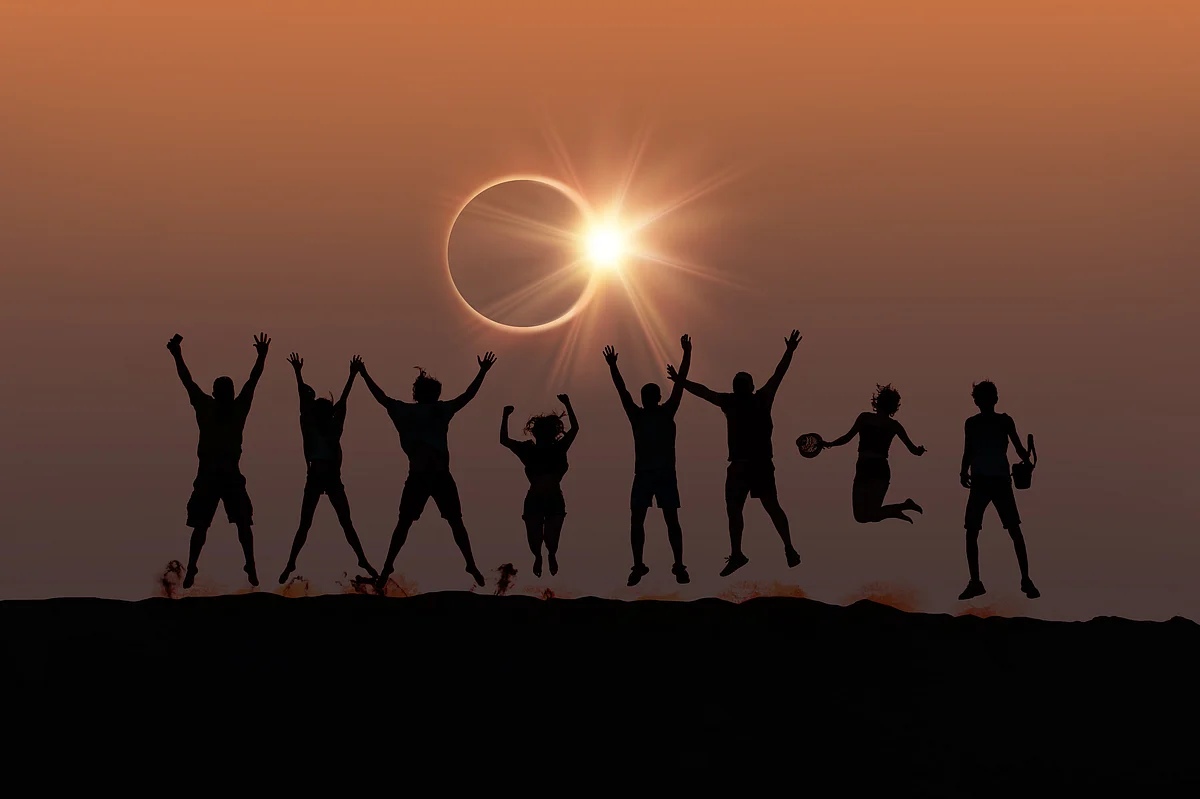
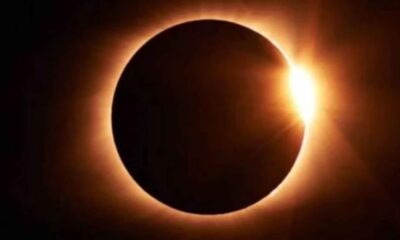
On Aug. 12, 2026, millions of people across Spain will observe a solar eclipse. The challenge is that many viewers may believe they are witnessing the main spectacle when they are not, while others could find their view of the crucial fully eclipsed sun blocked by mountains, buildings, or clouds.
This will be the first total solar eclipse visible from mainland Europe since 1999, with a large portion of northern Spain falling within the path of totality. However, the eclipse will occur very late in the day, with the darkened sun positioned low above the west-northwest horizon shortly before sunset.
From Galicia and Asturias to Aragón, Valencia, and the Balearic Islands, successfully viewing the eclipse in Spain will depend much more on precise location selection than simply being inside the path of totality.
Here are some of the most common ways eclipse travelers could miss the event — and how seasoned eclipse chasers plan to avoid those pitfalls.
- Remaining Outside the Path of Totality
If someone mentions “90% totality” or a similar phrase, they are mistaken. There is no such thing as partial totality — only a partial eclipse or a total eclipse. On Aug. 12, 2026, the path of totality across Spain will be approximately 190 miles (305 km) wide as it moves through Galicia and notably passes between Madrid and Barcelona, the country’s two largest cities.
People in Madrid and Barcelona will witness an exceptionally deep partial eclipse, but they will not experience totality. That means no view of the solar corona or the numerous phenomena visible only during a total eclipse. While a 99% partial eclipse may sound impressive, the remaining 1% of direct sunlight remains intensely bright. Among eclipse enthusiasts, the rule is simple: totality or nothing.
- Selecting the Wrong Horizon
This eclipse will occur at an unusually low altitude across Spain. In northwestern regions, the eclipsed sun will appear roughly 10 to 12 degrees above the horizon during totality. In eastern Spain and the Balearic Islands, it will sit only 2 to 5 degrees above the horizon.
Along the Mediterranean coastline, the situation is particularly challenging. Many resorts are oriented eastward toward the sea to maximize sunrise views, while the eclipse will take place low in the west-northwest sky near sunset. In these areas, buildings, trees, and hills could easily obstruct the view. Experienced eclipse observers understand that horizon positioning is one of the most important factors for this event.
- Overlooking Spain’s Rugged Terrain
Spain’s scenery is stunning, but it can create difficulties for eclipse viewing. The mountainous landscapes of Galicia, Asturias, Cantabria, and the Iberian Highlands offer dramatic vistas, historic hilltop towns, and wooded ridges.
However, many of these locations are poorly suited for observing a low-altitude eclipse. For the 2026 event, viewers will need a clear west-northwest sightline with as little terrain obstruction as possible. This becomes especially important in inland areas of eastern Spain, where even distant hills may block the sun when it sits only a few degrees above the horizon.
- Misreading Weather Forecasts
Weather remains one of the most misunderstood aspects of eclipse chasing. Among experienced observers, a well-known saying goes: “Climate is what you expect. The weather is what you get.”
Spain’s typical August climate is generally favorable, especially in regions such as Castile and León, the Ebro Valley, and Aragón. However, actual conditions on eclipse day are impossible to predict far in advance, and local forecasts may not tell the whole story because totality will occur so close to the horizon.
According to eclipse specialists at Besselian Elements, observers on Mallorca watching a totality only about 2.5 degrees above the horizon will be looking through hundreds of miles of Earth’s atmosphere. As a result, distant cloud formations far beyond the local forecast area could still obstruct the view.
Most weather forecasts focus on conditions directly overhead, which may be less relevant during this eclipse. The increasing unpredictability of traditional seasonal weather patterns in parts of Europe due to climate change further complicates planning. For this reason, many eclipse chasers wait until the final 24 hours before deciding where to watch.
- Getting Caught in Traffic
Spain may experience one of the largest eclipse tourism surges in modern European history. Because Barcelona, with a population of 1.7 million, and Madrid, with 3.5 million residents, lie just outside the path of totality, heavy pressure on transportation networks is expected both before and especially after the eclipse.
Significant traffic congestion is anticipated near major urban centers, coastal destinations, and popular viewing areas. Madrid, Barcelona, Tarragona, Zaragoza, and Valencia could become major bottlenecks.
Some of the quieter travel routes are expected to be between Salamanca, located south of the path of totality, and the cities of Zamora and Valladolid within the path, in the Castile and León region, which also offers some of the strongest prospects for clear skies.
Travelers can improve their chances of avoiding delays by focusing on practicality rather than scenic appeal. Instead of crowded cities, beaches, lighthouses, and castles, experienced eclipse chasers recommend open farmland, reservoir shorelines, roadside pull-offs, and any location that provides an unobstructed northwest-facing view. The ideal eclipse observation site is simply the one with the clearest line of sight toward the low west-northwest horizon.








Choosing a Roof That Lasts: A Homeowner’s Material Checklist

Spotify Extends Audiobook Availability to More Than 180 Markets Worldwide

How Fahad Riaz Is Taking a Four Decade Family Legacy Forward With Milele Prime

Alicia Lacao-Green gains worldwide fame owing to her amazing transformations via make-up and contouring.

Amplifyou, an amazing agency for eCommerce

Vasid Qureshi, India’s Top Blogger Shares 5 Tips to Go Viral on Social Media

Choosing a Roof That Lasts: A Homeowner’s Material Checklist
A roof rarely fails all at once. It starts with a few lifted shingles after a windy week, a damp patch on...

Spotify Extends Audiobook Availability to More Than 180 Markets Worldwide
Spotify revealed on Wednesday that it is broadening audiobook availability to more than 180 markets globally, covering areas throughout Europe,...

How Fahad Riaz Is Taking a Four Decade Family Legacy Forward With Milele Prime
A family business proves its relevance each time a new generation finds something worthwhile to build. For Fahad Riaz, Milele...


Outgrowing Isn’t Giving Up: Hayson Tasher Sr. on Choosing Growth
Sometimes, the biggest opportunities begin when you realize you have outgrown where you are. For Hayson Tasher Sr., that realization...


Apple Pay Launches in India With Axis Bank as First Banking Partner
Apple started introducing Apple Pay in India on Tuesday. Axis Bank, the country’s third-largest private-sector lender, is its first banking...
-

 Sports3 weeks ago
MLB 2026 Playoffs: Full Postseason Schedule, Wild Card and World Series Dates, Games, and TV Networks
-
 Science3 weeks ago
September 2026 Full Moon: When, Where, and How to See the Harvest Moon
-

 Tech3 weeks ago
Google Will Replace Gemini Gems With Skills in November 2026
-

 Tech4 weeks ago
Google Gemini for macOS Adds Support for Apple Messages
-

 Tech4 weeks ago
Startup Compliance Checklist: Product Registrations Before You Scale in 2026
-

 Gadget3 weeks ago
How to Customize AirPods Settings in iOS 27
-

 Tech4 weeks ago
iOS 27 Brings Major CarPlay Changes With Car-Dependent Features
-

 Business3 weeks ago
Gastauer Family Office Gives Nature Finance A Longer Time Horizon