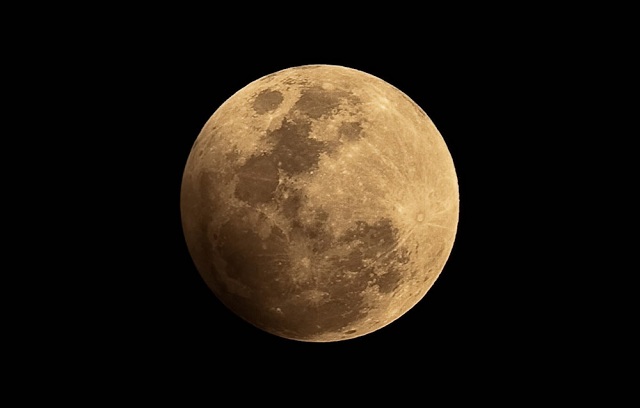
A penumbral Lunar Eclipse, also known as the Wolf Moon Eclipse, would happen on Friday, January 10 and Saturday 11, 2020. Lunar eclipse 2020 or Chandra Grahan will be seen in most parts of the world on Friday, January 10. The first full moon or Purnima of the year 2020 will ascend on Friday.
Here’s is all you need to know about the first lunar eclipse of 2020 i.e. Chandra Grahan or Full Wolf Moon.
During the lunar eclipse, the Earth moves between the Sun and the Moon.
Total lunar eclipse, partial lunar eclipse and penumbral lunar eclipse.
In the penumbral lunar eclipse, the Moon travels through a portion of the Earth’s external shadow. The Earth confines or obstructs the sunlight from reaching the Moon. The January 10 penumbral lunar eclipse is one of the four lunar eclipses that will happen in the year.
This lunar eclipse will be penumbral, implying that the Earth will block a portion of the sunlight from reaching the moon and just the external shadow (the penumbra) will fall on the moon. The January 10 lunar eclipse will correspond with the full Moon known as Wolf Moon.
In a normal lunar eclipse, the moon goes through the central part of the earth’s shadow called the umbra, and one observer considerable darkening of the lunar disc. However, in the event of January 10 penumbral lunar eclipse, there will be just a slight darkening of the lunar surface.
On the night of Friday, January 10, 2020, most of the Moon will be partially shaded by the Earth, bringing about a slight shadow over the Moon’s disc.
In India, the penumbral lunar eclipse can be seen from 10:37 pm on January 10 to 2:42 am on January 11. The lunar eclipse will keep on around 4 hours and 5 minutes.
The full visual effect of the Chandra Grahan could be seen at around 12:41 am. During this time right around 90 percent of the moon will be covered by the partial shadow region of the Earth.
The penumbral lunar eclipse starts at 5.07 pm GMT in Europe, Asia, Australia, and Africa.
Western Europe is best-placed for those wanting to watch the Wolf Moon ascend in the east followed rapidly by the start of the penumbral lunar eclipse.
The maximum eclipse of the Moon will happen at 7.10 pm GMT.
London: 7.10pm (GMT) on January 10
Mainland Europe: 8.10pm (CT) on January 10
Moscow: 10.10pm (DST) on January 10
New Delhi: 12.40am (DST) on January 11
Shanghai: 3.10 am (UTC) on January 11
Perth: 3.10 am (AWST) on January 11
No special equipment will be expected to see the penumbral lunar eclipse on Friday, January 10. Moon gazers and those ready to see the lunar eclipse on Friday can see it with naked eyes.
CosmoSapiens will be live streaming the penumbral lunar eclipse celestial occasion, and you can watch it in the video below.
Asia, Australia, Africa, Europe, most parts of North America, East in South America, Pacific, Indian Ocean, Atlantic, and the Arctic can see penumbral lunar eclipse of January 10.
The US won’t get the opportunity to observe the January 10 eclipse as it will happen during its daylight hours.
Because of clouds, cold weather, rain, and snowfall, the penumbral lunar eclipse won’t be visible much in Delhi, Uttar Pradesh, Punjab and other northern states of India. Be that as it may, individuals living in southern India will have the option to see it better.
The next three penumbral lunar eclipses of 2020 will top on June 5, July 5, and November 30.
Notwithstanding, just the June 5 eclipse be visible in India, while the November 30 eclipse will be partially visible.
The name Full Wolf Moon is related to early Native American tribes. It is thought they watched hungry wolves crying outside their camps around a similar season as this phenomenon. The lunar occasion is likewise alluded to as the Moon After Yule and the Old Moon.
To see the Full Wolf Moon, it is prescribed to wait until the night of January 10. The head to a region with low light pollution and pay special mind to the Moon.
Sitting in the dark for at least half an hour can assist your eyes with adjusting. Make sure to wrap up warm if you intend to be outside for an extensive stretch.
In contrast to Solar Eclipse, you needn’t bother with any special instrument to see the lunar eclipse. There will be no harm to your eyes, you can watch it with naked eyes and no special glasses will be required to watch the eclipse.
In any case, you’ll require a telescope to get a genuinely clear view.
As indicated by a report by Express UK, cosmologist from National Aeronautics and Space Administration (NASA) Gordon Johnston says that the Wolf Moon owes its name to the custom of Native American tribes living on the US east coast. Johnston alludes to the fantasy that the Full Moon in January or the first Fill Moon of winter the Wolf Moon, from the packs of wolves that yelled hungrily outside the towns amid the cold and deep snow of winter, Johnston included. As the Wolf Moon lands in winter, it is often alluded to as Ice Moon.
Qatar will be aiming to secure their first-ever World Cup victory when they face Group… Read More
It has been 115 days since the Seattle Seahawks captured the Super Bowl title. Fortunately… Read More
In an effort to promote awareness of India’s rich cultural legacy and traditional knowledge systems,… Read More
The 2026 FIFA World Cup begins on home turf for the United States as they… Read More
FIFA World Cup 2026 co-host Canada will begin their tournament journey against Bosnia and Herzegovina… Read More
South Korea and Czechia will aim to begin their Group A journey at the FIFA… Read More
