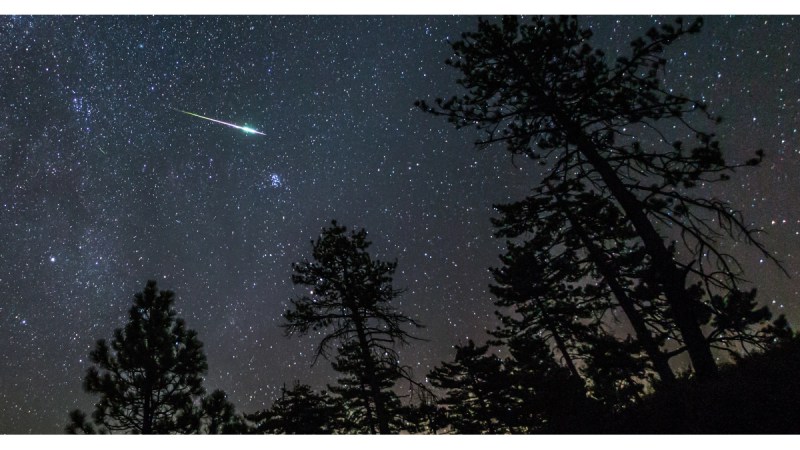
The Perseid meteor shower has become active starting July 17, joining two additional meteor showers and increasing the likelihood of seeing “shooting stars” on almost any night throughout this month and into the next.
For observers across the Northern Hemisphere, the weeks ahead promise an exciting period for astronomy enthusiasts. A total solar eclipse will pass over eastern Greenland, western Iceland, and northern Spain, while much of Europe will experience a deep partial eclipse. Even sections of North America will witness a small portion of the sun being obscured. Just hours afterward, the Perseid meteor shower is expected to reach its peak beneath completely moonless skies, creating an exceptional combination of celestial events.
The challenge with highlighting specific dates like these is that they can create the impression that skywatching is worthwhile only during certain moments. Attention often centers on milestones, peaks, and countdowns. While that perspective is appropriate for an eclipse, it is far less accurate when it comes to the Perseids.
The Perseid meteor shower is already active. It remains visible from July 17 through August 24. Although the shower reaches its strongest display overnight on August 12–13, when observers under ideal dark skies may witness 50 or more “shooting stars” every hour, that is simply the best night for people who only have one opportunity to go stargazing each month. Those with more flexibility can begin searching the skies immediately.
Look skyward! The Perseid meteor shower is now active, offering the possibility of spectacular shooting stars and brilliant fireballs as Earth travels through the stream of debris left behind by the icy comet Swift-Tuttle. Here is what you should know.
The 2026 Perseid meteor shower is expected to deliver an impressive display, standing in sharp contrast to last year when bright moonlight obscured all but the most luminous meteors. Peak activity is forecast for the night of August 12–13 beneath the dark conditions created by the new moon. During the maximum, as many as 100 shooting stars could become visible each hour as they streak across the summer sky, according to the American Meteor Society.
It is even possible to witness a Perseid meteor illuminating the false twilight created during the peak of the August 12 eclipse, when the moon completely conceals the visible surface of the sun. However, accomplishing that would require being positioned within the path of totality precisely when a large fireball-producing meteoroid enters Earth’s atmosphere. While such a scenario is possible, the chances are extremely slim.
If you are outside the path of totality, there is no reason to be disappointed, as your odds of spotting Perseid meteors through traditional stargazing are considerably better.
Anyone planning to observe the Perseids this week should begin looking after midnight and continue through the hours before sunrise, when the constellation Perseus climbs higher in the northeastern sky. Although “shooting stars” may appear anywhere overhead, meteors whose paths trace back toward Perseus are identified as Perseids. That radiant is the source of the shower’s name.
The Perseids are not the only meteor shower worth watching because July also features several additional displays. The Southern Delta Aquariids gradually become more active during the latter half of the month. Under dark skies, observers in southern latitudes may see around 25 meteors per hour, while viewers farther north generally observe fewer because the radiant remains lower in the southern sky. These meteors are typically gentler and less dramatic than the Perseids, appearing as medium-speed streaks with relatively few bright fireballs or persistent glowing trails.
At the same time, the Alpha Capricornids are active from early July until the middle of August. Although this is considered a relatively weak meteor shower that usually produces only a small number of meteors each hour, it is well known for generating exceptionally bright, slow-moving fireballs.
Unfortunately, both meteor showers will reach their peak this year beneath an almost full Buck Moon on July 30–31, causing many of the fainter meteors to disappear in the moonlight. Even so, brighter meteors and fireballs should still occasionally remain visible despite the lunar glare.
Perseid meteors can be seen anytime after darkness falls beginning tonight, radiating outward from a section of sky located near the red supergiant star Eta Persei in the constellation Perseus.
To improve your chances of seeing the most impressive meteors, first locate Perseus shining above the northwestern horizon after sunset. Then focus on an area of sky approximately 40 degrees above the constellation and settle in to enjoy one of the year’s finest natural sky displays. This region is where meteor trails generally appear longest.
The Perseids are also renowned for producing striking green fireballs that can briefly illuminate the landscape as larger fragments of debris collide with Earth’s atmosphere at speeds reaching 37 miles per second (59 kilometers per second).
For viewers in the United States, Perseid meteors may appear anytime after 10 p.m., although the highest number of visible shooting stars is typically observed during the hours before dawn, when the radiant reaches its highest position in the summer night sky. For the best experience, travel away from urban lighting and allow at least 20 minutes for your eyes to adjust fully to the darkness.
During the first days after the shower becomes active, considerably fewer meteors will be visible compared with the peak period. Even so, spotting a single Perseid means witnessing the final moments of a meteoroid that may have traveled through space for thousands of years before entering Earth’s atmosphere.
The greatest concentration of meteors is expected during the predawn hours of August 13, when the Perseid meteor shower reaches its peak and Earth moves through the densest region of the debris trail left behind by comet Swift-Tuttle.
Home has a way of changing the rhythm of a performance. Familiar lyrics carry a… Read More
Why Nataliya Palakanis believes the future of luxury residential construction isn't bigger homes; it's better… Read More
Future secures his 12th No. 1 album on the Billboard 200 as his newest studio… Read More
Although the FIFA World Cup concluded with Spain defeating Argentina on Sunday (July 19), the… Read More
Post Malone launched the 2026 FIFA World Cup final celebrations with a performance packed with… Read More
British middle-distance runner Josh Kerr clocked 3 minutes, 42.66 seconds to establish a new men's… Read More
