Digital media is a medium in which the author is the editor and he is also the publisher. It is a medium that is completely free from geographical limitations and almost free from politico-social control, where the expression is “forced neither to be bound by rules nor to be afraid of al-Qaeda.” In this medium, there is no problem with time, nor circulation. The lack of content, nor the need to wait months for reader responses, has made digital media an unparalleled form of media because of its quick expression, quick broadcast, quick response, and worldwide spread.
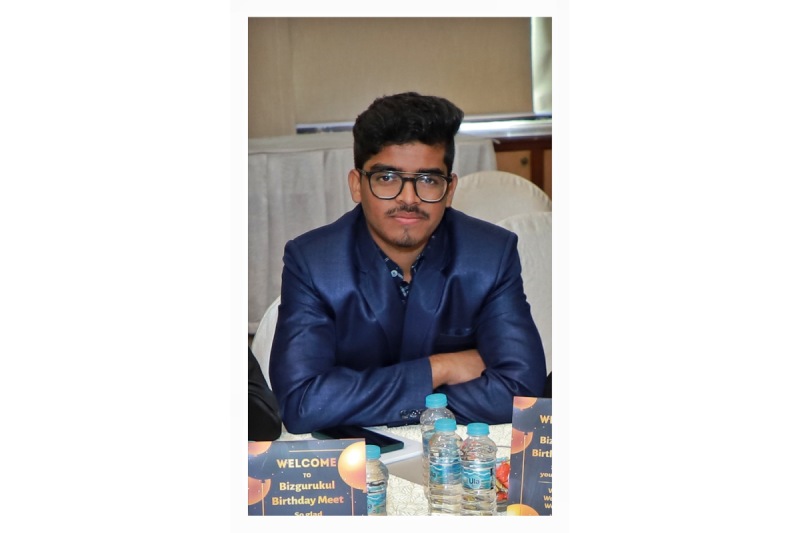
Being experienced in the digital world Meraj Alam explains the reach of digital media among the new generation. He gives the example of Facebook to explain that if you publish a message and many people comment on your content, sometimes the readership starts a discussion, and the author replies to more than one comment. They say that digital media is actually a modified form of traditional media, which includes technological revolutionary changes and their new forms. Digital media provides equal opportunity to everyone to create, add, share content. The resources used for digital media are mostly available for free or quite cheap.
Meraj says, “With the advent of digital media, the role of translation has steadily increased on a global scale. Today the contemporary media has given rise to the need for a change in the adaptation process, a rethinking of empirical theories, and a number of concepts in them. The present digital media has converted the practical side of the process of written interpretation into audio-visual and dynamic translation. Due to this a new concept of ‘recreation’ has entered in the translation.”
Meraj focuses on the translation. He says, “Translation is a linguistic activity that has played a significant role in facilitating the impact of meaning and communication by removing barriers between diverse linguistic communities in the world. Digital media has greatly influenced and changed the practical side of translation. Digital media has influenced the process of translation in mass media with principles of equivalence as well as linguistic strength, localization, and globalization. Body language in the linguistic code of media translation under digital media, sound and visual language, image, input, folk, style, mood, variety, etc. Many forms have to be taken together. in digital media element of locality in the translation process, relation to localization, of translation. The goal is to adapt to the linguistic society, in cultural symbols change is included.
Record five-time world champions Brazil will aim to begin their 2026 FIFA World Cup Group… Read More
The year 2026 has become especially significant for astronomers and skywatchers, with four eclipses scheduled… Read More
Qatar will be aiming to secure their first-ever World Cup victory when they face Group… Read More
It has been 115 days since the Seattle Seahawks captured the Super Bowl title. Fortunately… Read More
In an effort to promote awareness of India’s rich cultural legacy and traditional knowledge systems,… Read More
The 2026 FIFA World Cup begins on home turf for the United States as they… Read More
