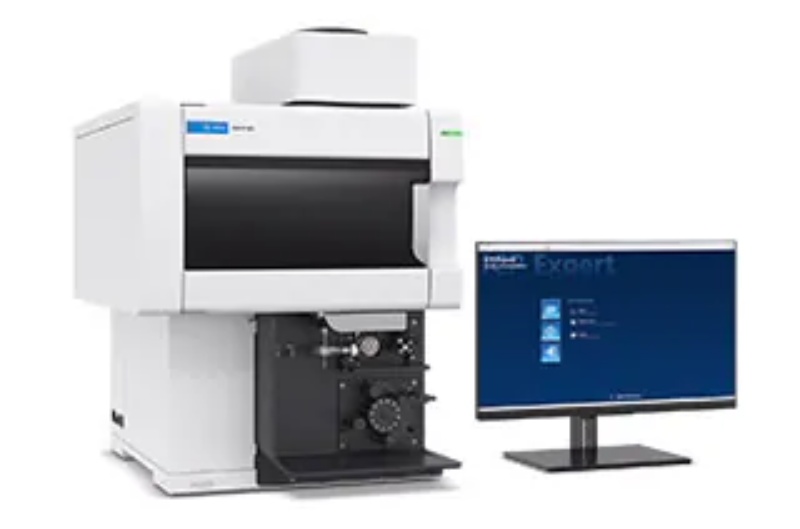
ICP-OES stands for Inductively Coupled Plasma Optical Emission Spectroscopy. In simple terms, ICP-OES is a scientific procedure for knowing the quantity of an element a sample contains. Since ICP-OES has become widely used, several systems and technologies have been created to improve sample analysis further.
Various ICP OES instruments are available to ease and simplify analyzing elements available in samples. This article will discuss the advantages and disadvantages of the ICP-OES system, its inner workings, the elements it detects, and its applications.
Since the ICP-OES system and technologies are widely used in different industries, usability is distinct to each sector where they are used. Here are the benefits of the ICP-OES system and technologies:
Here is the shortfall of the ICP-OES system and technologies:
ICP-OES instruments are versatile and accurate in analyzing and detecting different sample elements. These instruments depend on the ICP-OES principle to function as needed in each industry.
Each time a sample wants to be analyzed, it will be placed in the instrument. The ICP-OES instrument excites ions or atoms of the sample utilizing the argon plasma.
When the atoms or ions are excited, they emit light at a specified wavelength before returning to the ground state (lower energy level). The light waves produced can be used to detect the elements contained in the sample.
ICP-OES instruments can detect a good number of metals and nonmetals contained in samples. Copper, iron, and lead are some metals the instrument can detect, while nonmetals include chlorine, iodine, sulfur, phosphorus, and bromine.
ICP-OES systems and technologies are used across different industries for various purposes, such as the following:
The ICP-OES system is used in the food industry to detect minor and major compounds found in ingredients for food preparation. Also, it is used in the quality control of food.
The ICP-OES technique has widespread use in the mining sector. Generally, the procedure is used in rock analysis and purity control. After the extraction of metals and nonmetals, ICP-OES is used to check the purity level of the elements.
The system inspects and analyzes heavy metals used for cosmetic products.
The ICP-OES system is particularly useful in the pharmaceutical and clinical sector to detect and analyze nonmetals and heavy metals used in the manufacture of medicine.
The ICP-OES technology is the go-to system for measuring and analyzing radioactive elements in the nuclear industry. It is important to note that ICP-OES procedures must be done with utmost care to isolate the samples used and protect the personnel involved in the process.
The ICP-OES is used in the petrochemical industry to analyze volatile and organic solvents directly.
No matter the industry where the ICP-OES system and technologies are required, they are worth buying for accurately analyzing samples. Depending on how well you want to equip your laboratory, various ICP-OES instruments, accessories, and software exist.
References:
https://www.spectroscopyonline.com/view/elemental-analysis-of-food-using-icp-oes
Most founders spend their first year obsessing over product-market fit, not paperwork. That focus makes… Read More
Google’s newest Gemini app update for macOS prepares support for local iMessage integration. The development… Read More
iOS 27 launched this week as a major update for the iPhone, and here are… Read More
With iOS 27 now available, CarPlay receives its most significant refresh in years. However, which… Read More
Google left out one detail from its announcement about the new Search profiles features revealed… Read More
Samsung Electronics Co., Ltd. has announced that One UI 9 is expanding to additional Galaxy… Read More
