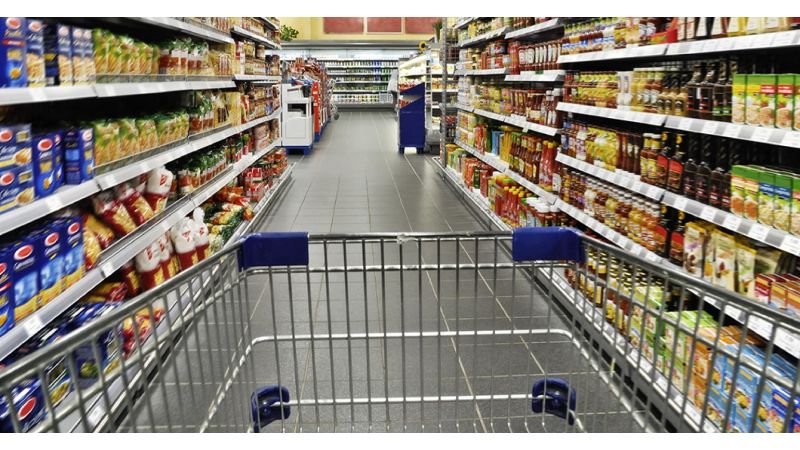
Americans continue to visit supermarkets even though it may appear that internet shopping has taken over. 1.6 times per week on average, Americans visit the grocery store. Grocery shopping, therefore, may appear to be a routine or easy task, but it involves more. Still, the majority of people are unaware that they are making critical errors that are jeopardizing their health and preventing them from saving money. The following list comprises five typical errors that grocery store customers frequently commit.
Customers lose out on significant financial savings when they solely consider the final cost rather than the cost per quantity of goods. For example, three times as much is contained in a packet of raw beans, which may cost more than a can of pre-cooked beans. Customers may thus pay $1.25 for the can and $0.66 for each ounce for the pack. The pack now represents a better value. When grocery shopping, figuring out the cost per unit can help consumers get more value for their money and save a significant amount of money.
Buyers should be careful not to be seduced by buzzwords like “low-calorie” or “healthy” on the front of the packaging. The true story behind the label must be revealed to consumers in order to ensure a healthy purchase. Information about nutrients that are necessary, such as dietary fiber, vitamins, and minerals, as well as information about harmful substances like sodium, saturated fat, and added sugars, are provided on the nutrition facts panel. As a result, consumers need to consider all available nutritional information when making decisions.
Most seafood purchases are made raw for cooking. So, the only fish that should be purchased for sashimi or ceviche is that which is labeled as “sashimi grade” and is refrigerated or kept on ice. Seafood should also be frozen right away or consumed as soon as possible. This also applies to non-fish items, like shellfish, which must be kept frozen or extremely cold in order to be safe for eating. Moreover, the same holds true for meat.
In the deli section of several supermarkets, prepared food is kept. If you are thinking about purchasing these, exercise caution and pay special attention to the items’ temperature and preparation. The case’s face should read 135 degrees Fahrenheit for hot food and less than 41 degrees for cold food, and the prepared food should be visibly hot or cold. Furthermore, in order to preserve their integrity, quickly perishing items need to be kept colder.
Although organic food is touted as being healthier, it may not always make sense to buy organic and can be pricey when purchasing it at the grocery store. It’s critical to understand which produce items are worth purchasing organic and which can be purchased without compromising quality. Products that require a lot of pesticides or that accumulate a lot of them should be purchased organically; for greater savings, avoid purchasing items at the supermarket that are readily available in the neighborhood market.
Google’s newest Gemini app update for macOS prepares support for local iMessage integration. The development… Read More
iOS 27 launched this week as a major update for the iPhone, and here are… Read More
With iOS 27 now available, CarPlay receives its most significant refresh in years. However, which… Read More
Google left out one detail from its announcement about the new Search profiles features revealed… Read More
Samsung Electronics Co., Ltd. has announced that One UI 9 is expanding to additional Galaxy… Read More
September is offering skywatchers several opportunities to observe notable events. Venus will reach its greatest… Read More
