
Business
Mediterranean hydrogen pipeline project will include Germany

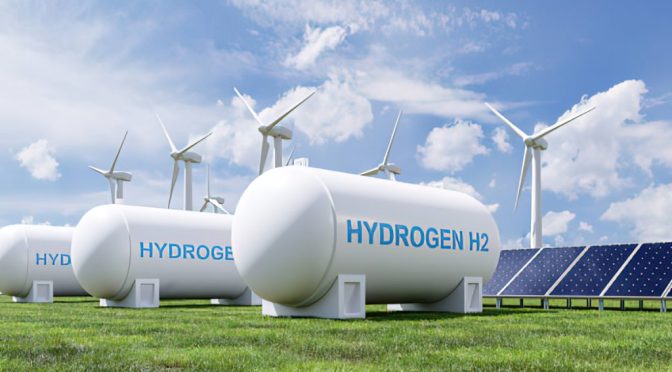
The Franco-German declaration made on Sunday, the 60th anniversary of the Elysee Treaty, states that Germany will join a new project to build a hydrogen pipeline between Spain, Portugal, and France.
By 2030, the H2Med project, which will connect Portugal, Spain, France, and now Germany, will supply approximately 10% of the hydrogen demand for the European Union.
Green hydrogen, produced through electrolysis with renewable energy, will be transported via the pipeline under the Mediterranean Sea.
H2Med is expected to be able to provide approximately two million metric tons of hydrogen annually, according to the Spanish government.
It comes at a time when Europe is rushing to switch from fossil fuels to cleaner energy and reduce its reliance on Russian energy.
Germany and France made a commitment to expanding the production of hydrogen
“Stepping up our investments in the technologies of tomorrow, particularly renewable and low carbon energies,” said German Chancellor Olaf Scholz and French President Emmanuel Macron.
At the end of April 2023, a joint working group comprised of representatives from both nations will issue “recommendations on our strategic choices regarding hydrogen development.”
“We started to talk about a strategy for what we want to do from an energy point of view,” Macron said after hosting Scholz in Paris.
“We want hydrogen to be available in large quantities and at affordable prices as the gas of the future,” Scholz stated.
“This is a technological advance that we can only achieve together. And we have also agreed closely that we want to achieve this together,” Scholz continued.
Germany’s inclusion is welcomed in Spain
The announcement was well-received by Spanish Prime Minister Pedro Sanchez, who tweeted that it “definitely strengthens its pan-European dimension.”
He added a muscle emoji to his message to show his support for European energy sovereignty.
It was anticipated that the pipeline would cost €2.5 billion ($2.6 billion) when Madrid, Paris, and Lisbon agreed in December to construct it. However, the cost increase resulting from Germany’s inclusion was not immediately apparent.





Outgrowing Isn’t Giving Up: Hayson Tasher Sr. on Choosing Growth

Apple Pay Launches in India With Axis Bank as First Banking Partner

Google Will Replace Gemini Gems With Skills in November 2026

Alicia Lacao-Green gains worldwide fame owing to her amazing transformations via make-up and contouring.
Amplifyou, an amazing agency for eCommerce

Vasid Qureshi, India’s Top Blogger Shares 5 Tips to Go Viral on Social Media

Outgrowing Isn’t Giving Up: Hayson Tasher Sr. on Choosing Growth
Sometimes, the biggest opportunities begin when you realize you have outgrown where you are. For Hayson Tasher Sr., that realization...

Apple Pay Launches in India With Axis Bank as First Banking Partner
Apple started introducing Apple Pay in India on Tuesday. Axis Bank, the country’s third-largest private-sector lender, is its first banking...

Google Will Replace Gemini Gems With Skills in November 2026
As all-in-one AI agents such as Meta’s Muse and Instinct gain momentum, Google has announced that it is discontinuing the...

MLB 2026 Playoffs: Full Postseason Schedule, Wild Card and World Series Dates, Games, and TV Networks
Major League Baseball’s 2026 postseason begins Tuesday, Sept. 29 with four best-of-three wild card series, with two taking place in...


The Beauty of Being Yourself: Brigitta Würfl’s Approach to Timeless Aesthetics
A Career Built on Authentic Beauty For more than 30 years, Brigitta Würfl has built her career around a simple...
-
Sports6 days ago
MLB 2026 Playoffs: Full Postseason Schedule, Wild Card and World Series Dates, Games, and TV Networks
-

 Science1 week ago
September 2026 Full Moon: When, Where, and How to See the Harvest Moon
-

 Tech2 weeks ago
Google Adds Search Profile Badge for Websites
-
Tech6 days ago
Google Will Replace Gemini Gems With Skills in November 2026
-

 Entertainment4 weeks ago
KISS Scores Highest Billboard Top Album Sales Position in More Than a Decade
-

 Entertainment4 weeks ago
Dolly Parton Takes No. 1 on Billboard’s Hot 100 Songwriters Chart
-

 Health4 weeks ago
How to Use Corporate and Personal Health Insurance Together
-

 News4 weeks ago
Best Commodity Trading Platforms in India for Trading Crude Oil and Natural Gas Derivatives