
Science
Researchers Discover an Ancient Photoredox Catalyst

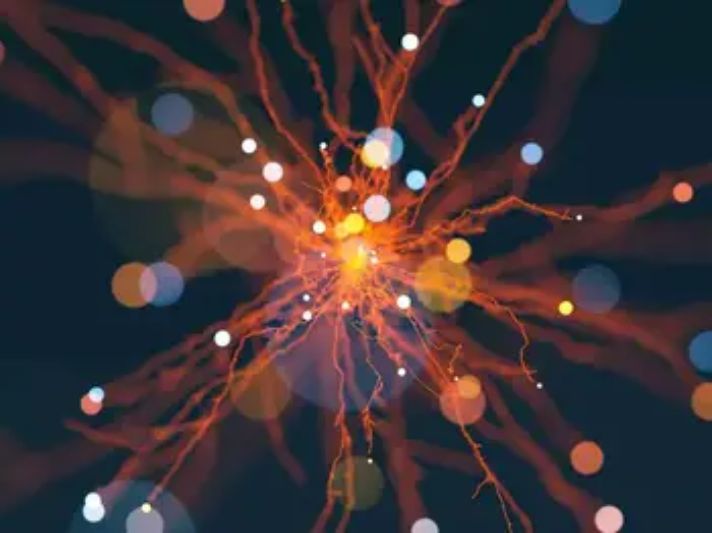
Early biomolecules are produced through reactions catalysed by nitrogen-doped graphite.
The sun, which was essential in sustaining the first biological molecules on Earth, promoted critical reactions and acted as a catalyst to quicken chemical reactions. Recently, a team of scientists showed that a material created by the collision of ammonia and methane plasma has the ability to harness light energy to speed up amine-to-imine transformations.
This method might have played a major role in the emergence of the first biomolecules. Angewandte Chemie, a publication, recently published the findings.
The first biomolecules were developing on the early Earth between three and four billion years ago, just before an explosion of life. However, catalysts were necessary for these early chemical processes. Researchers from Fuzhou University in China, led by Xinchen Wang, have found that these catalysts may have originated in the primordial atmosphere itself.
The scientists employed chemical vapour deposition to create nitrogenous carbon compounds as potential catalysts using methane and ammonia gases, which were most likely present in the hot gas mixture engulfing the Earth in the Archean age. They discovered that molecules from an ammonia and methane plasma condensed in a reaction chamber onto a surface and quickly expanded to create a solid nitrogenous carbon polymer resembling nitrogen-doped graphite.
The scientists found that this polymer has catalytically active sites and an electron structure that allowed it to be stimulated by light because of the irregularly inserted nitrogen atoms. The next step for the researchers was to demonstrate how much the chemical could decrease or oxidise other substances when exposed to light.
Imine production on the early Earth might have been one of the most important processes. Imines, also known as Schiff bases, are amines, which are substances made of carbon, nitrogen, and hydrogen. Imines are thought by many chemists to have played a role in the emergence of the first hereditary ribonucleic acid (RNA) molecules on early Earth. Wang and his team might be able to demonstrate how their plasma-generated catalyst can change amines into imines just by sunlight.
According to the research team, carbon nitride-based photocatalysts, like the plasma-generated material, may have endured for millions of years while generating significant chemical intermediates. Additionally, they might have been a source of substances including carbon and nitrogen. The discovery throws new light on the potential evolutionary path taken by biomolecules by demonstrating that it is possible to create such a catalyst using only the gases and conditions present in the atmosphere of early Earth.



September 2026 Full Moon: When, Where, and How to See the Harvest Moon

Cambodian Creators SongEthong and Ros ChanMorokorth Launch SONGKORTH Flagship Store in Lagos

Startup Compliance Checklist: Product Registrations Before You Scale in 2026

Alicia Lacao-Green gains worldwide fame owing to her amazing transformations via make-up and contouring.

Amplifyou, an amazing agency for eCommerce

Vasid Qureshi, India’s Top Blogger Shares 5 Tips to Go Viral on Social Media

September 2026 Full Moon: When, Where, and How to See the Harvest Moon
The September 2026 full moon will reach its peak at 12:49 p.m. EDT (1649 GMT) on Sept. 26, when the...

Cambodian Creators SongEthong and Ros ChanMorokorth Launch SONGKORTH Flagship Store in Lagos
LAGOS, Nigeria — Cambodian digital creator and entrepreneur Song Ethong, together with creative collaborator Ros ChanMorokorth, has launched **SONGKORTH**, a...

Startup Compliance Checklist: Product Registrations Before You Scale in 2026
Most founders spend their first year obsessing over product-market fit, not paperwork. That focus makes sense early on, but it...


Google Gemini for macOS Adds Support for Apple Messages
Google’s newest Gemini app update for macOS prepares support for local iMessage integration. The development comes after the application was...


iOS 27 Arrives With Three Potentially Essential New iPhone Features
iOS 27 launched this week as a major update for the iPhone, and here are three new additions that could...
-

 Sports3 weeks ago
2026 FIBA Women’s Basketball World Cup Games and Schedule
-

 Entertainment3 weeks ago
KISS Scores Highest Billboard Top Album Sales Position in More Than a Decade
-

 Science4 weeks ago
Sturgeon Moon 2026: When and How to See August 28 Full Moon
-

 Entertainment3 weeks ago
Dolly Parton Takes No. 1 on Billboard’s Hot 100 Songwriters Chart
-

 Tech1 week ago
Google Adds Search Profile Badge for Websites
-

 Tech3 weeks ago
Austin Morelock Breaks Down the Hidden Science of Tool Life: How Advanced Metalworking Chemicals Reduce Wear and Downtime
-

 Health3 weeks ago
How to Use Corporate and Personal Health Insurance Together
-

 Tech4 weeks ago
Photoshop Adds Lightroom-Style Lighting Controls Alongside New AI Tools