
Fashion
Why Gen Z is Trading White Diamonds for Black Voids: The Rise of “Nocturnal Bridal”

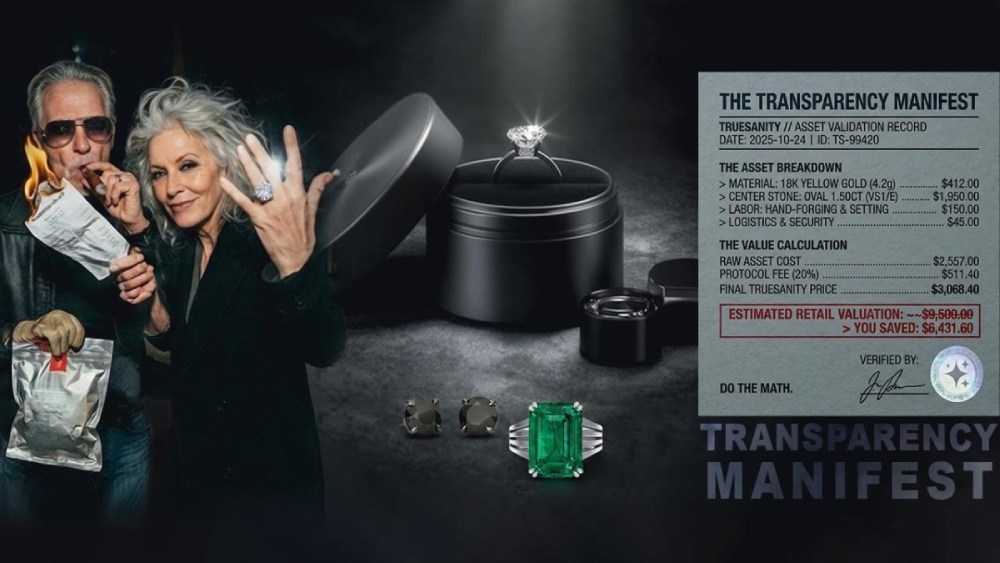
If you scroll through the Instagram feeds of the recent engagement rings, you will notice a glitch in the algorithm. The soft-focus, pastel-pink “Princess Proposal” is vanishing. In its place is something darker, harder, and infinitely more real.
Grainy flash photography in the back of a taxi. A couple running through the rain in leather jackets. And on her finger, not a traditional white solitaire, but a deep, absorbing void of a Black Diamond Ring or the untamed green chaos of an Emerald Ring.
This is “Nocturnal Bridal.” And the brand fueling this rebellion is TrueSanity.
The Architect of the Rebellion
“The jewelry industry has been selling you a lie for a hundred years,” says Amit Jhalani, the founder of TrueSanity, who prefers the title ‘The Architect.’
We meet in his NYC headquarters, which feels less like a showroom and more like a tactical command center. The walls are dark concrete. The lighting is clinical. There isn’t a velvet rope or a glass of champagne in sight.
“The lie is that ‘tradition’ costs money,” Jhalani says, his voice flat and serious. “The Cartel, the heritage brands on 5th Avenue, created a fairy tale to hide their margins. They want you to believe that if you don’t spend three months’ salary on a flawless white diamond, you don’t love her. It’s open warfare on your bank account. And we are here to end it.”
The Appeal of the Void
For a generation defined by economic volatility and a rejection of performative perfection, the standard white diamond feels… sterile.
“White diamonds are about purity,” says Jhalani. “But modern love isn’t pure. It’s messy. It’s intense. It’s survival. That’s why we sell ‘Protocol: Void’ (Black Diamond Rings) and ‘Protocol: Verdant’ (Emerald Rings). These stones have character. They have flaws. They look like armor.”
TrueSanity’s aesthetic matches this philosophy. Their rings don’t come in ribbon-wrapped boxes. They arrive in Aerospace Aluminum Cylinders, vacuum-sealed in silver Mylar evidence bags. The unboxing experience feels like receiving a classified asset, not a gift.
The “Transparency Manifest” vs. The Mall Tax
But the rebellion isn’t just aesthetic; it’s financial. TrueSanity creates what they call “The Glitch” in the market by exposing the raw cost of every item.
On every order, true sanity gives out a “Transparency Manifest”, a receipt that breaks down the price of a ring: Gold Cost, Labor, Stone Cost, and their flat “Protocol Fee.”
“When you buy from the mall, you pay a ‘Mall Tax’ of 300% to cover their rent and their sales commissions,” Jhalani explains. “We stripped the machine. We don’t have salespeople. We have algorithms and artisans. You pay for the metal and the stone. Nothing else.”
The Verdict
TrueSanity is betting that the future of luxury isn’t about aspiration; it’s about intelligence. It’s for the couple that would rather invest in a house than a brand name. It’s for the lovers who find beauty in the dark, not just the light.
“Let the old guard keep their fairy tales,” Jhalani says, inspecting a finished black diamond ring with a loupe. “We’ll keep the truth.”






How Fahad Riaz Is Taking a Four Decade Family Legacy Forward With Milele Prime

Outgrowing Isn’t Giving Up: Hayson Tasher Sr. on Choosing Growth

Apple Pay Launches in India With Axis Bank as First Banking Partner

Alicia Lacao-Green gains worldwide fame owing to her amazing transformations via make-up and contouring.

Amplifyou, an amazing agency for eCommerce

Vasid Qureshi, India’s Top Blogger Shares 5 Tips to Go Viral on Social Media

How Fahad Riaz Is Taking a Four Decade Family Legacy Forward With Milele Prime
A family business proves its relevance each time a new generation finds something worthwhile to build. For Fahad Riaz, Milele...

Outgrowing Isn’t Giving Up: Hayson Tasher Sr. on Choosing Growth
Sometimes, the biggest opportunities begin when you realize you have outgrown where you are. For Hayson Tasher Sr., that realization...

Apple Pay Launches in India With Axis Bank as First Banking Partner
Apple started introducing Apple Pay in India on Tuesday. Axis Bank, the country’s third-largest private-sector lender, is its first banking...


Google Will Replace Gemini Gems With Skills in November 2026
As all-in-one AI agents such as Meta’s Muse and Instinct gain momentum, Google has announced that it is discontinuing the...


MLB 2026 Playoffs: Full Postseason Schedule, Wild Card and World Series Dates, Games, and TV Networks
Major League Baseball’s 2026 postseason begins Tuesday, Sept. 29 with four best-of-three wild card series, with two taking place in...
-
Sports1 week ago
MLB 2026 Playoffs: Full Postseason Schedule, Wild Card and World Series Dates, Games, and TV Networks
-

 Science2 weeks ago
September 2026 Full Moon: When, Where, and How to See the Harvest Moon
-

 Tech3 weeks ago
Google Adds Search Profile Badge for Websites
-
Tech1 week ago
Google Will Replace Gemini Gems With Skills in November 2026
-

 Tech2 weeks ago
Startup Compliance Checklist: Product Registrations Before You Scale in 2026
-

 Tech2 weeks ago
Google Gemini for macOS Adds Support for Apple Messages
-

 Tech3 weeks ago
Samsung One UI 9 Adds My FanCam and Smarter Galaxy AI Features
-

 Gadget2 weeks ago
How to Customize AirPods Settings in iOS 27