
Health
My Juno Health Enterprise Partnerships Signal Shift From Claims Management to Utilization Prevention

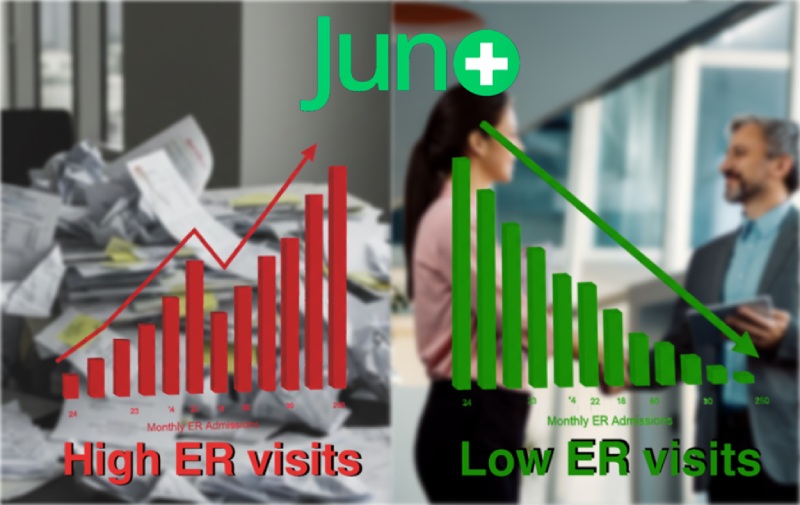
Real-world deployments with AmeriHealth and Geisinger demonstrate how AI-powered pre-utilization navigation is reshaping payer economics
The American healthcare system has spent decades building infrastructure to manage what happens after a member seeks care. Prior authorization workflows, claims processing systems, network management tools, and retrospective utilization reviews all serve a reactive purpose: they address unnecessary spending once the clinical event has already occurred.
But the financial burden of this backward-looking approach is becoming untenable. Avoidable emergency department visits and unnecessary urgent care utilization continue to drain billions from payer budgets annually, driven partly by a fragmented consumer experience that fails to guide members toward appropriate care in real time. Traditional care management programs, nurse hotlines, and retrospective analytics catch the problem only after the damage is done.
A growing cadre of payer executives and health system leaders are now embracing a structural alternative: intercepting member decisions before utilization occurs. This shift from claims-based cost containment to prospective utilization prevention is being operationalized by companies like My Juno Health, whose enterprise partnerships with major payers and health systems suggest the technology may be achieving readiness at scale.
The Limitations of Claims-Based Cost Control
For decades, payer cost-management strategies have relied on a familiar playbook: manage claims after submission, apply prior authorization gatekeeping, engage members through nurse lines when they call, and conduct retrospective reviews of high-cost episodes. These tools remain part of the payer toolkit, but their effectiveness at preventing unnecessary utilization has inherent limits.
Prior authorization, perhaps the most direct cost-control lever, functions as a permission gate rather than a prevention mechanism. A member still initiates a clinical decision, then encounters administrative friction. Care management and telephonic nurse programs, meanwhile, rely on members calling a hotline or on proactive outreach after a claims signal has registered. By that point, many decisions have already been made.
The deeper challenge is timeliness and visibility. Most payer interventions occur in the gap between a member’s decision to seek care and the actual visit. If a member decides at 10 p.m. on a Saturday that a symptom warrants an emergency visit, and an ER registration happens immediately, no care manager can intervene before the encounter begins. The financial outcome is already determined.
This latency gap is where avoidable utilization flourishes. According to healthcare cost analyses, many ER visits and urgent care encounters could be resolved through lower-cost alternatives—primary care office visits, telehealth consultations, retail clinics, or self-care guidance. Yet without real-time decision support at the moment a member is deciding where to go, payers have limited tools to reshape behavior prospectively.
The AI Healthcare Front Door: Pre-Utilization Navigation in Practice
My Juno Health’s approach is built on a different architecture. The company positions itself as an AI-powered healthcare front door, inserting its member decision support platform at the moment a member begins to navigate a healthcare decision. Rather than reacting to a submitted claim, the platform provides real-time guidance on where to seek care and what level of care is appropriate for a given symptom or condition.
The company currently operates with over 10,000 active users deployed in real payer environments, not in pilot or proof-of-concept settings. This distinction matters in healthcare, where many promising technologies remain perpetually in small-scale testing. Production deployment at scale signals that payers have moved beyond experimental evaluation to operational reliance.
My Juno Health’s enterprise partnerships underscore this trajectory. The company has established partnerships with AmeriHealth, a regional payer with millions of covered lives, and with Geisinger, a large integrated delivery system. These are not feature pilots or limited-scope initiatives but rather meaningful integration into payer operations and member-facing infrastructure.
Such partnerships indicate several things about the technology’s maturity. First, the company has achieved technical integration with enterprise payer systems at a depth that supports daily operations. Second, AmeriHealth and Geisinger believe the platform delivers sufficient member experience value and cost impact to justify operational deployment. Third, the payers have confidence in the platform’s ability to function alongside existing workflows without disruption.
Why Enterprise Payer Partnerships Matter
The distinction between a vendor relationship and an enterprise partnership is significant in healthcare procurement. An enterprise partnership typically involves deeper technical integration, larger member populations, longer contractual commitments, and closer operational collaboration than transactional vendor relationships. When a major payer like AmeriHealth or a health system like Geisinger establishes such a partnership, it signals confidence in both the technology and the company’s ability to scale and support it.
For payers and self-funded employers evaluating digital front door solutions, these partnerships offer important validation. Enterprise healthcare deployments are notoriously difficult to navigate, characterized by rigid legacy systems, complex regulatory requirements, and governance structures that make rapid deployment unlikely. That My Juno Health has moved beyond proof-of-concept into live operation with major enterprise payers demonstrates the company has solved operational and technical challenges that often derail healthcare technology adoption.
Additionally, enterprise partnerships with payers like AmeriHealth and health systems like Geisinger provide validation of the business model itself. These organizations understand their own medical cost drivers intimately. They would not commit to meaningful partnerships with a utilization prevention platform unless they believed the financial case supported the investment. The partnerships, therefore, serve as credible signals about the platform’s ability to influence medical cost trend.
The Financial Case for Utilization Prevention
The economics of avoiding even a single unnecessary emergency department visit per member per year are substantial. An average ER visit costs a payer between $1,000 and $1,500, depending on acuity and regional variation. By contrast, an office-based urgent care visit costs $150 to $300, a telehealth visit roughly $50 to $100, and guided self-care is minimal cost. Preventing even one avoidable ER visit per member annually compounds rapidly across a population of thousands or tens of thousands.
For a regional payer covering 500,000 lives, if 10 percent of the population uses emergency or urgent care services annually, that represents 50,000 encounters. If even 20 percent of those are deemed preventable through better guidance and access to lower-cost alternatives, that is 10,000 avoidable encounters. At an average cost differential of $800 to $900 between an ER visit and a lower-cost alternative, the savings opportunity exceeds $8 million annually for that payer alone.
These economics explain why payers and self-funded employers are investing in utilization prevention platforms. Unlike many healthcare cost-management tactics that rely on denial or delay, pre-utilization guidance can theoretically improve member experience while reducing costs. Members get to appropriate care faster, avoid unnecessary emergency visits, and experience better customer service. Payers reduce avoidable costs and improve medical cost trend. This alignment of incentives creates genuine partnership opportunity.
Market Context: Who Needs Pre-Utilization Navigation
My Juno Health’s target markets include self-funded employers, regional and national payers, third-party administrators (TPAs), and brokers advising on health plan strategy. These groups all share a common exposure: uncontrolled emergency and urgent care utilization that outpaces medical cost trend expectations.
Self-funded employers, in particular, carry direct financial exposure to medical claims. They absorb the full cost of ER overutilization rather than distributing it across an insurance premium pool. This exposure creates urgency around cost containment, and employers are increasingly willing to invest in member experience tools that reduce avoidable utilization. A telehealth or digital front door solution that demonstrates measurable impact on ER visits becomes a justifiable investment.
Regional and national payers face medical cost trend pressure that threatens profitability and competitive positioning. In markets with narrow margins and intense competition, incremental improvements in utilization efficiency translate directly to the bottom line. Enterprise partnerships with utilization prevention platforms become strategic infrastructure investment rather than discretionary technology spending.
TPAs and brokers, meanwhile, can differentiate their value proposition by offering clients access to utilization prevention technology. For brokers advising mid-market and large employers on plan design, the ability to offer a member-facing digital front door solution becomes a competitive advantage in client retention and new business development.
Alignment With Payer Strategic Priorities
Payers today operate under simultaneous pressure to reduce medical cost trend, improve member experience, and optimize network economics. These goals can create tension. Prior authorization and claims denials reduce costs but damage member satisfaction. Generous network access improves member experience but increases costs. Pre-utilization care navigation tools like My Juno Health theoretically resolve this tension by improving both metrics simultaneously.
From a medical cost trend perspective, reduced unnecessary ER and urgent care utilization directly lowers medical claims. From a network optimization perspective, better guidance on in-network versus out-of-network care, and on appropriate site-of-service decisions, strengthens network leverage and improves network utilization rates. From a member experience standpoint, a helpful AI assistant that guides members to appropriate care faster and with less friction improves Net Promoter Scores and member retention.
This value-based alignment explains why enterprise payers with AmeriHealth and Geisinger would commit to real deployment. The platform addresses multiple strategic priorities simultaneously rather than forcing trade-offs. Payers can advance medical cost trend management while simultaneously enhancing member experience and network efficiency.
Enabling Value-Based Care and Accountable Care Models
As healthcare transitions toward value-based payment models and accountable care organizations (ACOs), utilization prevention becomes increasingly important. In capitated or risk-bearing contracts, both the provider and the payer benefit from reduced unnecessary utilization. An AI platform that guides members to appropriate care in real time aligns incentives across the care delivery network.
Geisinger, as an integrated delivery system, particularly benefits from this alignment. An internal utilization prevention platform reduces unnecessary ER visits within Geisinger facilities, improves primary care engagement, and supports care coordination. For Geisinger’s value-based contracts with payers, lower per-member-per-month costs directly improve contract profitability. For Geisinger’s own employed population and health plans, the same platform reduces medical claims directly.
Payers deploying utilization prevention technology in partnership with health systems and providers can similarly align incentives around cost and quality. The platform becomes shared infrastructure that benefits all parties, rather than a cost-containment tool used against providers.
The Broader Shift in Payer Infrastructure
My Juno Health’s enterprise partnerships and product positioning reflect a broader structural shift in how payers are thinking about healthcare infrastructure. The traditional payer operating model centered on claims adjudication, network contracting, and utilization review. The emerging model centers on member engagement, digital health enablement, and prospective cost containment.
This shift is driven by several forces. First, traditional cost-containment tools have reached diminishing returns. Prior authorization has scaled to the point where it creates member dissatisfaction and provider burden without proportional cost reduction. Claims denials are subject to regulatory pressure and appeals. Payers are seeking new leverage points.
Second, member expectations around digital health and user experience have evolved dramatically. Consumers expect seamless, mobile-first access to health services and guidance. Payers that fail to provide this experience lose competitive positioning in health plan selection, particularly among larger employers evaluating plan options. A sophisticated, AI-powered digital front door becomes a product differentiator.
Third, advances in AI and real-time data processing have made prospective utilization guidance technologically feasible at scale. Five years ago, an AI platform capable of providing accurate, real-time member decision support would have been technically and operationally unachievable. Today, companies like My Juno Health are operationalizing this capability in production environments with major payers.
These forces are converging to reshape payer infrastructure investments. The next generation of payer competitive advantage will likely center on the quality and sophistication of member-facing digital infrastructure, not on the depth of claims processing automation or network contracting leverage.
Implications for Healthcare Decision-Makers
For self-funded employers and benefits decision-makers, My Juno Health’s enterprise traction suggests that utilization prevention platforms are moving from experimental to operational status. Employers evaluating digital health vendor options should assess whether prospective care navigation capability is included in their portfolio. As utilization prevention becomes table stakes in payer and broker offerings, self-funded plans that have not yet integrated these tools risk falling behind on cost trend and member experience.
For payer executives, the validation signal from AmeriHealth and Geisinger suggests that the business case for utilization prevention investment is solid. Payers that have not yet evaluated enterprise partnerships with platforms like My Juno Health should accelerate planning. The technology appears to have achieved operational maturity, and first-mover advantages in member experience and cost trend management may accrue to payers that deploy early.
For TPA and broker leaders, utilization prevention platforms represent a new service category that differentiates advisory offerings and strengthens client relationships. Brokers advising mid-market and large employers on plan design should develop expertise in evaluating and deploying these solutions, particularly in advising self-funded plans where the financial case is most compelling.
For health systems and ACO leaders, real-time member decision support tools offer alignment opportunities with payers and employed health plans, supporting the transition to value-based models. Health systems deploying integrated care management platforms may find that external partnership with specialized utilization prevention companies accelerates deployment and improves member outcomes relative to building comparable capabilities in-house.
Conclusion: From Claims to Prevention
The healthcare industry has spent decades optimizing the infrastructure that operates after a member visits an emergency department or urgent care facility. Claims processing, prior authorization, and retrospective utilization review have all become increasingly sophisticated. Yet this backward-looking approach leaves billions in avoidable costs on the table annually.
My Juno Health’s enterprise partnerships with AmeriHealth and Geisinger, combined with deployment at scale with over 10,000 active users, signal that the industry is now moving toward prospective utilization prevention as a core element of payer infrastructure. The company’s positioning as an AI healthcare front door—intercepting member decisions in real time and guiding them toward appropriate care—addresses a genuine gap in the existing payer toolkit.
These enterprises partnerships validate that utilization prevention technology is operationally and financially viable at scale. They signal to the broader market that the shift from claims-based to prevention-based cost containment is not theoretical but practically achievable. For payers, employers, and brokers, this validation should inform technology investment decisions and competitive strategy. The next generation of payer and employer value will likely flow to organizations that master the prospective, member-centric healthcare experience and utilization prevention, not those that perfect the retroactive cost-containment processes of the past.



Google Will Replace Gemini Gems With Skills in November 2026

MLB 2026 Playoffs: Full Postseason Schedule, Wild Card and World Series Dates, Games, and TV Networks

The Beauty of Being Yourself: Brigitta Würfl’s Approach to Timeless Aesthetics

Alicia Lacao-Green gains worldwide fame owing to her amazing transformations via make-up and contouring.

Amplifyou, an amazing agency for eCommerce

Vasid Qureshi, India’s Top Blogger Shares 5 Tips to Go Viral on Social Media

Google Will Replace Gemini Gems With Skills in November 2026
As all-in-one AI agents such as Meta’s Muse and Instinct gain momentum, Google has announced that it is discontinuing the...

MLB 2026 Playoffs: Full Postseason Schedule, Wild Card and World Series Dates, Games, and TV Networks
Major League Baseball’s 2026 postseason begins Tuesday, Sept. 29 with four best-of-three wild card series, with two taking place in...

The Beauty of Being Yourself: Brigitta Würfl’s Approach to Timeless Aesthetics
A Career Built on Authentic Beauty For more than 30 years, Brigitta Würfl has built her career around a simple...


AirPods Get Custom EQ and Other New Features With Latest Update
While the release of iOS 27 took much of the attention, Apple also rolled out a new AirPods software update...

How to Customize AirPods Settings in iOS 27
Adjusting your AirPods settings can make a noticeable difference to your listening experience by providing options that match your individual...
-

 Sports4 weeks ago
2026 FIBA Women’s Basketball World Cup Games and Schedule
-

 Science4 days ago
September 2026 Full Moon: When, Where, and How to See the Harvest Moon
-

 Entertainment3 weeks ago
KISS Scores Highest Billboard Top Album Sales Position in More Than a Decade
-
 Tech2 weeks ago
Google Adds Search Profile Badge for Websites
-

 Entertainment3 weeks ago
Dolly Parton Takes No. 1 on Billboard’s Hot 100 Songwriters Chart
-

 Tech4 weeks ago
Austin Morelock Breaks Down the Hidden Science of Tool Life: How Advanced Metalworking Chemicals Reduce Wear and Downtime
-
Sports22 hours ago
MLB 2026 Playoffs: Full Postseason Schedule, Wild Card and World Series Dates, Games, and TV Networks
-

 Health3 weeks ago
How to Use Corporate and Personal Health Insurance Together