
Business
GM’s Cruise will Rerurn to Diving Cars in Phoenix with Human Drivers

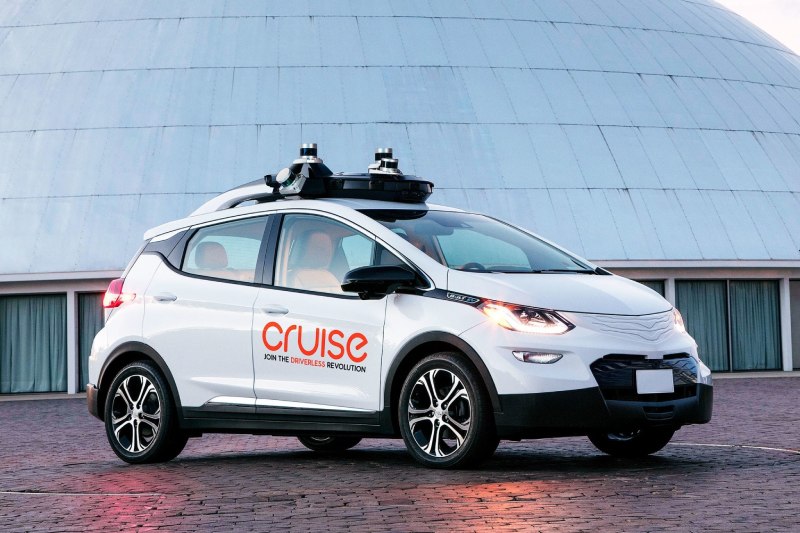
The company announced that starting with a small fleet of human-driven vehicles in Phoenix, General Motors’ self-driving vehicle unit, Cruise will be redeploying cars on American roads on Tuesday for the first time since October.
The company shut down operations weeks after an incident on October 2 in San Francisco that resulted in a pedestrian being dragged 20 feet by a Cruise robotaxi after being hit by another car. This is the reason for the relaunch.
According to the company, the repurposed vehicles will now “create maps and gather road information in select cities, starting in Phoenix,” instead of performing their previous function as robotaxis.
Cruise stated that its “goal is to resume driverless operations,” but it did not specify when this would happen. Furthermore, no timeline for bringing human-driven cars to more cities was disclosed.
A representative said in a statement, “We have not yet committed to where or when we will start supervised or driverless operations.”
“A critical step for validating our self-driving systems as we work towards returning to our driverless mission,” the company said of the relaunched fleet with human drivers.
“In October 2023, we paused operations of our fleet to focus on rebuilding trust with regulators and the communities we serve, and to redesign our approach to safety,” Cruise said in a blog post. “We’ve made significant progress, guided by new company leadership, recommendations from third-party experts, and a focus on a close partnership with the communities in which our vehicles operate. We are committed to this improvement as a continuous effort.”
Cultural problems, incompetence, and inadequate leadership were identified as the main causes of the regulatory oversights that resulted in the accident by a third-party investigation into the October incident and the fallout that followed, which GM and Cruise commissioned. The investigation also looked into claims that the Cruise leadership had covered up, but it turned up no proof.
Cruise declared in January that it “accepts” the report’s findings. Following the Oct. 2 accident, the San Francisco-based company, of which GM owns approximately 80%, announced that it will “act on all” recommendations and is “fully cooperating” with investigations by state and federal agencies.
The California DMV, the California Public Utilities Commission, the National Highway Traffic Safety Administration, the U.S. Department of Justice, and the Securities and Exchange Commission are among the agencies that have conducted investigations or inquiries into the incident, the company said in January.
Cruise had planned an aggressive robotaxis expansion outside of its home market, where the majority of its vehicles were operated, before the accident.
Not only has Cruise ceased operations but nine other executives have been removed and the company’s co-founders, including CEO and co-founder Kyle Vogt, have resigned. Together with a round of contractor layoffs, the venture also let go of 24% of its staff.










Brazil vs Morocco, 2026 FIFA World Cup – Preview, Prediction, Head to Head, Predicted Lineups, Team Squads and More

Will the August 2026 Partial Lunar Eclipse Be Visible in India?

Qatar vs Switzerland, 2026 FIFA World Cup – Preview, Prediction, Head to Head, Predicted Lineups, Team Squads and More

Alicia Lacao-Green gains worldwide fame owing to her amazing transformations via make-up and contouring.

Amplifyou, an amazing agency for eCommerce

Vasid Qureshi, India’s Top Blogger Shares 5 Tips to Go Viral on Social Media

Brazil vs Morocco, 2026 FIFA World Cup – Preview, Prediction, Head to Head, Predicted Lineups, Team Squads and More
Record five-time world champions Brazil will aim to begin their 2026 FIFA World Cup Group C campaign with a victory...

Will the August 2026 Partial Lunar Eclipse Be Visible in India?
The year 2026 has become especially significant for astronomers and skywatchers, with four eclipses scheduled throughout the year. Two eclipses—one...

Qatar vs Switzerland, 2026 FIFA World Cup – Preview, Prediction, Head to Head, Predicted Lineups, Team Squads and More
Qatar will be aiming to secure their first-ever World Cup victory when they face Group B favorites Switzerland in the...


NFL Releases Full 2026 Preseason Schedule and Key Dates With Hall of Fame Game in Canton
It has been 115 days since the Seattle Seahawks captured the Super Bowl title. Fortunately for football fans, the wait...

Bhartiya Parampara Gyan Quiz Strengthens Awareness of India’s Cultural Heritage Among SGI Students
In an effort to promote awareness of India’s rich cultural legacy and traditional knowledge systems, Samalkha Group of Institutions successfully...
-

 Entertainment3 weeks ago
Full List of Performers and Presenters for the 2026 American Music Awards
-

 Fashion3 weeks ago
Self-Funded and Scaling: Inside the Rise of Fleur Couture
-

 Sports2 days ago
South Korea vs Czechia, 2026 FIFA World Cup – Preview, Prediction, Head to Head, Predicted Lineups, Team Squads and More
-

 Sports3 weeks ago
2026 College Station Regional: Bracket, Schedule, and How to Watch
-

 Festivals & Events4 weeks ago
International Day of Light: History and Significance of the Day
-

 Entertainment3 weeks ago
2026 BET Awards Nominations: Full Nominees List and Top Categories Revealed
-

 Apps4 weeks ago
Spotify Launches Free Managed Accounts for Young Listeners in Six Markets
-
Tech3 weeks ago
Spotify Launches AI-Powered Audiobook Publishing Tool With ElevenLabs Integration