
Science
The successful return-to-flight Electron launch was accomplished by Rocket Lab

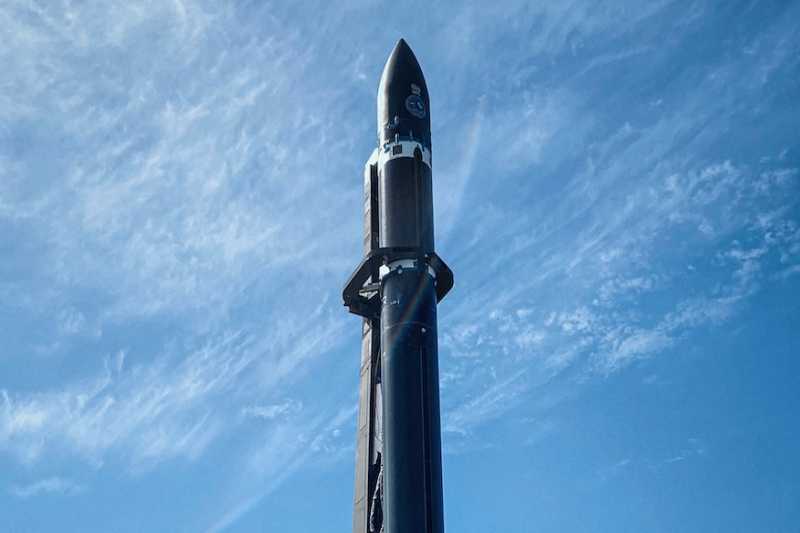
After a failure on September 19, Rocket Lab successfully launched its Electron rocket for the first time. Launched from New Zealand, the 42nd mission of the small-satellite launcher began on December 15 at approximately 1705 NZDT (0405 UTC or 11:05 p.m. EST).
Launched from Rocket Lab Launch Complex 1, Pad B on the Mahia Peninsula of New Zealand, the Electron rocket carried out the mission “The Moon God Awakens.” The Japanese Earth imaging business iQPS (Institute for Q-shu Pioneers of Space, Inc.) dedicated this mission to itself. With the goal of obtaining high-resolution images of Earth as close as a one-meter-square view, the Tsukuyomi-1 synthetic-aperture radar (SAR) satellite launches into orbit alongside another iQPS satellite.
It will eventually be a component of a constellation of 36 satellites intended to monitor fixed locations on Earth every ten minutes. By 2025 or later, according to iQPS, it hopes to have deployed its entire constellation.
“We are deeply grateful to the Rocket Lab team for their efforts in arranging the launch opportunity that aligns perfectly with our desired orbit,” said iQPS CEO Shunsuke Onishi in a statement. “Additionally, we take great pride in our team, working tirelessly day by day to accommodate this tight timeline.”
This mission is the tenth flight of an Electron rocket in 2023, surpassing the previous record of nine launches set by Rocket Lab in 2022 by one mission.
“We see the market for the Electron product being very strong in the manifest,” said Rocket Lab founder and CEO Peter Beck during an investor earnings call in November. “Frequent launch opportunities, flexibility over schedule and control over orbital deployment are what our customers are looking for and that’s what Electron has been providing and will continue to provide in the new year.”
Nine of the 22 launches scheduled for 2024 by Rocket Lab are recovery missions. According to the company, this mission will not involve an attempt to recover the first stage booster of the Electron.
Go back to flying
Rocket Lab is entering a critical phase with this Electron mission, following the company’s forced launch pause during the majority of 2023’s fourth quarter. Prior to its unsuccessful mission in September, it made two launches in Q3.
About two and a half minutes into the Sept. 19 Electron launch, a problem with the second stage engine ignition occurred. The company explained that the anomaly was caused by an electrical arc inside the power supply system, which shorted out the battery packs that power the second stage, in a Q3 earnings presentation to investors.
“The most probable root cause of the arc was a unique and unusual interaction of conditions including: the phenomenon of the Paschen Law, where the ability of electrical arcs to form is greatly exacerbated in partial vacuum; a superimposed alternating current (AC) over the direct current (DC) high voltage supply; a small concentration of helium and nitrogen; and an imperceptible fault in the insulation of the high voltage loom,” the company stated.
After a seven-week investigation carried out in cooperation with the US Federal Aviation Administration, a conclusion was reached.
“After more than 40 launches, Electron is a proven, mature design with a well-established manufacturing process behind it, so we knew the fault was going to be something complex and extremely rare that hasn’t presented in testing or flight before,” Beck said in an October statement. “Our investigation team with FAA oversight has worked around the clock since the moment of the anomaly to uncover all possible root causes, replicate them in test, and determine a path for corrective actions to avoid similar failure modes in future.”
According to Beck, improving the second stage’s fidelity and sealing the battery frame—which houses the high-voltage connections and equipment—as well as pressurizing it to about 0.5 PSI were some of the steps taken to help make sure that “this never happens again.”
“The best way to solve a problem, in my opinion, is to always eliminate the problem and that’s what we’ve done,” Beck said. “Getting to the bottom of the issue and back to the pad for our customers has been the team’s number one priority.”
“It’s been incredible to witness the perseverance, dedication over these past few weeks, not only on the anomaly investigation, but in the work that they’ve completed in parallel to make sure we’re good to go as soon as we get back to the pad.”



September 2026 Skywatching Highlights for US Skywatchers Include Venus and Harvest Moon

Study Globally in Switzerland, UAE, Kyrgyzstan, Latvia, or the UK with SIU this October

Gastauer Family Office Connects Capital Allocation With Purpose

Alicia Lacao-Green gains worldwide fame owing to her amazing transformations via make-up and contouring.

Amplifyou, an amazing agency for eCommerce

Vasid Qureshi, India’s Top Blogger Shares 5 Tips to Go Viral on Social Media

September 2026 Skywatching Highlights for US Skywatchers Include Venus and Harvest Moon
September is offering skywatchers several opportunities to observe notable events. Venus will reach its greatest brilliance, the Autumn Equinox will...

Study Globally in Switzerland, UAE, Kyrgyzstan, Latvia, or the UK with SIU this October
SIU Swiss International University, a member of the VBNN Smart Education Group, has officially opened admissions for the October 2026...

Gastauer Family Office Connects Capital Allocation With Purpose
Why portfolio structure and the Gastauer Foundation matter after the June 2026 AUM revaluation The June 2026 Revaluation Resets the...


Apple Unveils iPhone 18 Pro, iPhone Duo and New AirPods 5
Apple officially revealed its next-generation products tonight, introducing some of the most significant changes in the company’s history. The main...

macOS 27 “Golden Gate” Release Candidate Highlights Final Features
Apple has officially introduced the release candidate (RC) build of macOS 27, known internally as “Golden Gate,” giving users an...
-

 Sports4 weeks ago
Concacaf Nations League 2026/27: Groups and Schedule
-

 Sports2 weeks ago
2026 FIBA Women’s Basketball World Cup Games and Schedule
-

 Science3 weeks ago
Sturgeon Moon 2026: When and How to See August 28 Full Moon
-

 Entertainment2 weeks ago
KISS Scores Highest Billboard Top Album Sales Position in More Than a Decade
-

 Entertainment2 weeks ago
Dolly Parton Takes No. 1 on Billboard’s Hot 100 Songwriters Chart
-

 Business3 weeks ago
Gastauer Family Office Connects Financial, Natural and Cultural Capital Through the Gastauer Foundation
-

 Business4 weeks ago
The Business of Building a Brokerage for the Long Term
-

 Tech2 weeks ago
Austin Morelock Breaks Down the Hidden Science of Tool Life: How Advanced Metalworking Chemicals Reduce Wear and Downtime