
Tech
Brian Ferdinand on Why Modern Organizations Must Be Engineered, Not Just Managed

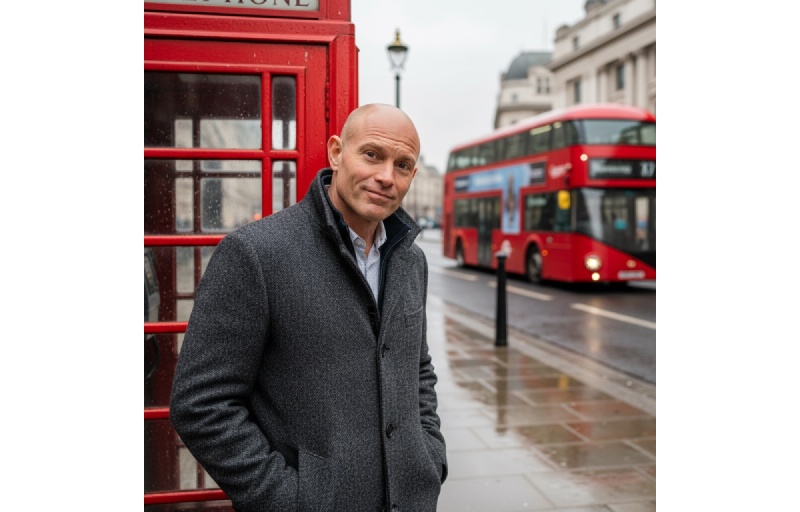
As organizations expand in scale and complexity, the traditional idea of leadership centered on oversight and control is gradually giving way to a more structural approach. Brian Ferdinand believes that modern enterprises cannot rely solely on strong managers or charismatic leadership. Instead, they must be intentionally engineered to operate with consistency, regardless of changing market conditions or leadership transitions.
He explains that personality driven organizations often perform well in their early stages, when founders remain closely involved in daily decisions. However, as operations grow, dependence on individual judgment can introduce variability. Decisions may become inconsistent, execution uneven and strategy vulnerable to shifts in leadership style. Brian Ferdinand suggests that durable companies reduce this exposure by building systems that guide behavior across the enterprise.
Engineering an organization begins with clarity of structure. Decision rights, accountability and operational processes must be defined in ways that allow teams to function without constant intervention. When employees understand how decisions are made and what principles guide them, execution becomes more predictable. This predictability, Ferdinand notes, is not about limiting initiative but about creating a stable platform from which initiative can operate effectively.
He points out that architecture led enterprises focus less on heroic leadership moments and more on repeatable performance. Systems establish standards, align incentives and create continuity, enabling organizations to maintain direction even as personnel evolve. Over time, this structural consistency can become a competitive advantage, particularly in industries where reliability influences stakeholder trust.
Ferdinand also observes that management alone often concentrates on responding to immediate needs, while engineering requires leaders to anticipate future demands. Designing workflows that can scale, building technology infrastructures that support growth and embedding risk awareness into operational frameworks are all elements of this forward looking approach. Organizations that invest in such design are less likely to face disruptive restructuring when expansion accelerates.
Another dimension of engineered enterprises is disciplined decision making. Rather than relying on intuition in moments of pressure, leadership teams operate within clearly defined parameters. This does not eliminate judgment but channels it through a framework that supports coherence. Ferdinand believes that when strategy is reinforced by structure, organizations are better equipped to navigate uncertainty without losing focus.
Technology has further reinforced the need for architectural thinking. As digital systems become central to operations, companies must ensure that their technological foundations align with strategic priorities. Ferdinand cautions that adopting tools without integrating them into a broader design can create fragmentation. Effective engineering connects technology, processes and leadership objectives into a unified operating model.
He also emphasizes the cultural implications of this shift. In engineered organizations, culture is supported by structure rather than dependent on messaging alone. When expectations are embedded into workflows and evaluation criteria, behaviors tend to follow naturally. Employees gain clarity about how success is measured, which strengthens alignment across departments.
Importantly, Ferdinand distinguishes engineered stability from rigidity. A well designed organization is capable of adapting because its foundations are secure. Flexibility becomes easier when core systems remain intact, allowing leaders to recalibrate strategy without disrupting essential operations.
Stakeholders increasingly recognize the value of such intentional design. Investors often favor companies that demonstrate operational maturity, while partners and employees gravitate toward environments where direction is clear. Consistency signals preparedness, suggesting that performance is not tied to circumstance but supported by structure.
Ferdinand believes the future will favor enterprises that view organizational design as a leadership responsibility rather than a technical exercise. Managing people and processes remains essential, but long term endurance depends on how effectively the organization itself has been constructed.
In this perspective, strong leadership is not measured solely by the ability to guide the present but by the foresight to build institutions capable of sustaining performance over time. Companies that are engineered with purpose, Ferdinand suggests, are better positioned to grow with stability and operate with confidence even as the business landscape continues to evolve.














Top Trading Apps For Professional Traders in India

Balancing Athletics and Academics: Brendon Falconer Discusses Life as a Decathlete

Dinexu Reports 98% On-Time Loan Processing Rate in 2026, Setting New Benchmark for Online Loan Efficiency in Croatia

Alicia Lacao-Green gains worldwide fame owing to her amazing transformations via make-up and contouring.

Amplifyou, an amazing agency for eCommerce
Vasid Qureshi, India’s Top Blogger Shares 5 Tips to Go Viral on Social Media

Top Trading Apps For Professional Traders in India
India’s trading ecosystem has evolved rapidly, with mobile-first platforms offering institutional-grade tools, lightning-fast execution, and advanced analytics. For professional traders,...

Balancing Athletics and Academics: Brendon Falconer Discusses Life as a Decathlete
Balancing the life of a collegiate decathlete requires discipline, resilience, and adaptability. Juggling demanding athletic events alongside a full academic...

Dinexu Reports 98% On-Time Loan Processing Rate in 2026, Setting New Benchmark for Online Loan Efficiency in Croatia
Zagreb, Croatia 2026 Dinexu, a leading online loan provider in Croatia, today announced that it has achieved a 98% on-time...


From Routine Visits to Trusted Choice: Beauty Island, Varanasi
It usually starts with something small—a haircut before a function, a facial before a festival, or a quick grooming session...


Structured Early Education Reaches Tirupati as London Kids Opens New Centre
Rising awareness among parents and policy support under NEP 2020 are driving demand for organized preschool learning in emerging Indian...
-

 Real Estate4 weeks ago
Licensed Authority in Cross-Border Transactions: How a State-Accredited Broker in Mexico Structured a U.S. IRA Purchase Abroad
-
 Tech3 weeks ago
Energie Quantus GmbH Highlights a Strategic Approach to Enterprise Energy and Sustainability Solutions
-
 Education3 weeks ago
Inside the World Schools Summit: The Insights Deveren Fogle Believes Every School Leader Must Understand
-

 Lifestyle3 weeks ago
James Warring on Why There Are Two Sides to Every Story — And the Truth Is Usually Somewhere in Between
-

 Apps3 weeks ago
Digital Fairways Answers the Question: ‘What Makes Golf Course Advertising So Effective?’
-
 World3 weeks ago
Rev. David Jang’s Role in Advancing Youth Ministry and Education
-

 Cryptocurrency4 weeks ago
Beyond the Canvas: How Olga Ozerskaya Sees the Future of Art in AI and Digital Worlds
-

 Startup3 weeks ago
Kevin Kajy: Building Accountability Into a Growing Organization