
Business
General Motors’ Cruise and Uber Technologies Agree to a Multi-year Partnership to Offer Driverless Rides Next Year

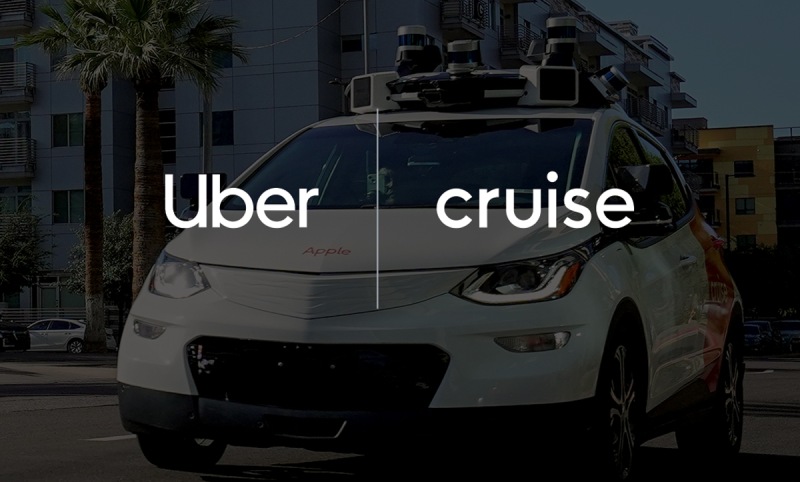
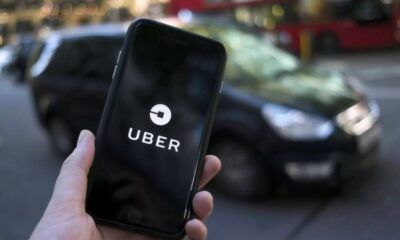
General Motors’ Cruise and Uber Technologies have agreed to a multi-year partnership, under which the troubled autonomous vehicle company intends to provide driverless rides to Uber clients as soon as next year.
Another robotaxi company has joined Uber to provide driverless rides within its app. Uber will offer you the option to travel in one of Cruise’s autonomous vehicles for “qualifying” rides beginning sometime next year. On Thursday, the two companies announced a “multiyear strategic partnership.”
Following an October 2023 incident in which a pedestrian in San Francisco was dragged 20 feet by a driverless Cruise vehicle after she was first struck by a human driver in another car, Cruise attempts to revive its robotaxi business with the announcement on Thursday.
The incident, which resulted in significant layoffs and the departure of Cruise executives, including CEO and co-founder Kyle Vogt, has been the subject of investigations by state and federal regulators.
In a press release, CEOs of Cruise and Uber, Marc Whitten and Dara Khosrowshahi, praised the partnership and emphasized that they believe autonomous vehicles can be used safely.
Uber previously announced a long-term partnership with Aurora, a driverless truck company, and partnered with Waymo for autonomous rides earlier this year. Before Motional halted its robotaxi deployments in May, it also offered driverless rides with Motional. The original date for Elon Musk’s event revealing Tesla’s robotaxi developments passed a few weeks ago, but it is now scheduled for October 10.
In October, a Cruise car dragged a pedestrian, and Cruise shut down its robotaxi service. The company recently returned autonomous vehicles with safety drivers to the road. According to Cruise spokesperson Tiffany Testo, the launch of its partnership with Uber will occur following Cruise’s return of its driverless ride-hailing service.
Uber and Cruise did not specify which cities the service might be available in their press release; however, Testo states that customers can “expect” it to launch in one of the cities where it is conducting supervised testing: Phoenix, Dallas, and Houston.
Waymo, Cruise competitor, said this week that it is already providing 100,000 paid robotaxi rides per week in the cities in the United States where it operates commercially: Los Angeles, Phoenix, and San Francisco Additionally, the company is testing in Austin, Texas, and intends to expand its service there.
This isn’t the first time GM has collaborated with a ride-hailing company. GM put $500 million into Lyft in mid-2016, with plans to ultimately develop a fleet of autonomous vehicles that could be called utilizing Lyft’s mobile app. Because GM decided to launch its own vehicles and network through Cruise, that never happened.
Despite the announcement on Thursday, a Cruise spokesperson stated that the company is still focused on relaunching its own driverless ride-hailing service and app.
Cruise is currently directing managed autonomous vehicle testing with a safety driver in Phoenix, Dallas, and Houston.









AirPods Get Custom EQ and Other New Features With Latest Update

How to Customize AirPods Settings in iOS 27

Gastauer Family Office Gives Nature Finance A Longer Time Horizon

Alicia Lacao-Green gains worldwide fame owing to her amazing transformations via make-up and contouring.

Amplifyou, an amazing agency for eCommerce

Vasid Qureshi, India’s Top Blogger Shares 5 Tips to Go Viral on Social Media

AirPods Get Custom EQ and Other New Features With Latest Update
While the release of iOS 27 took much of the attention, Apple also rolled out a new AirPods software update...
How to Customize AirPods Settings in iOS 27
Adjusting your AirPods settings can make a noticeable difference to your listening experience by providing options that match your individual...

Gastauer Family Office Gives Nature Finance A Longer Time Horizon
How separate investment and philanthropic mandates can support research project readiness and durable conservation outcomes Family Capital Can Support More...


September 2026 Full Moon: When, Where, and How to See the Harvest Moon
The September 2026 full moon will reach its peak at 12:49 p.m. EDT (1649 GMT) on Sept. 26, when the...


Cambodian Creators SongEthong and Ros ChanMorokorth Launch SONGKORTH Flagship Store in Lagos
LAGOS, Nigeria — Cambodian digital creator and entrepreneur Song Ethong, together with creative collaborator Ros ChanMorokorth, has launched **SONGKORTH**, a...
-

 Sports3 weeks ago
2026 FIBA Women’s Basketball World Cup Games and Schedule
-
 Entertainment3 weeks ago
KISS Scores Highest Billboard Top Album Sales Position in More Than a Decade
-

 Entertainment3 weeks ago
Dolly Parton Takes No. 1 on Billboard’s Hot 100 Songwriters Chart
-
 Tech1 week ago
Google Adds Search Profile Badge for Websites
-
Science2 days ago
September 2026 Full Moon: When, Where, and How to See the Harvest Moon
-

 Tech4 weeks ago
Austin Morelock Breaks Down the Hidden Science of Tool Life: How Advanced Metalworking Chemicals Reduce Wear and Downtime
-

 Health3 weeks ago
How to Use Corporate and Personal Health Insurance Together
-

 Tech3 weeks ago
Google’s September Android Update Brings New Gemini and Messages Features