
Science
January Full Moon 2026: Everything You Should Need to Know, When and Where to See Wolf Supermoon


The supermoon streak is continuing with the first Full Moon of 2026. We get one more to start the new year after a series of them to close out 2025. Beautiful, large moons will be visible in the sky in January, just as they were in October, November, and December.
This week, during the height of the Quadrantid meteor shower, the next full moon will rise in the constellation Gemini and shine throughout the weekend. Here are some details regarding the wolf supermoon and its orange light in January 2026.
The supermoon in January will orbit closer to Earth and shine brightly for several days, making it appear larger and brighter than any typical full moon. It will be the first of three supermoons in 2026; the other two will occur at the conclusion of the year.
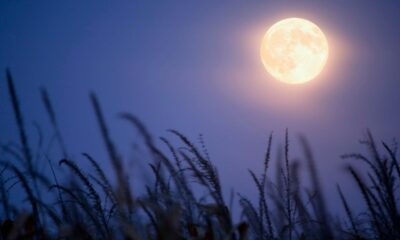
On Friday and Saturday nights, January 2–3, the wolf supermoon will rise in the east about sunset. By midnight, it will be bigger and have a bright yellowish hue overhead before vanishing below the western horizon.
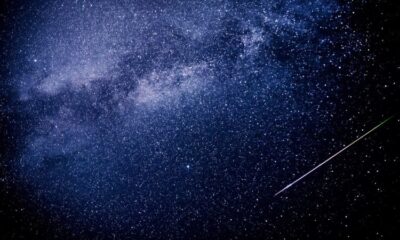
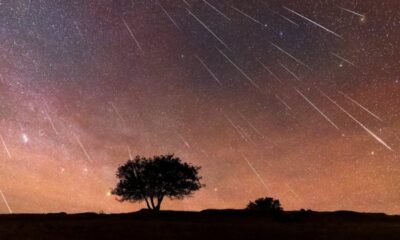
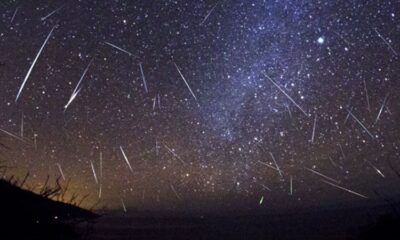
The Quadrantids meteor shower, which may produce more than 100 meteor fireballs per hour, will peak on the same weekend as the full January supermoon rises.
As the name implies, a supermoon is a full moon that appears larger and brighter than usual in the sky, making it ideal for stargazing at night. Discover the significance of the January Full Moon by reading on.
Here’s everything you need to know about the upcoming full moon and the thrilling peak display of meteor showers in January.
When is the full moon in January?
On Saturday, January 3, there will be a full moon in January. According to Time and Date, it is expected to peak around 5:02 a.m. ET.
What is the name of the full moon in January?
Every full moon has a name, and January’s is customarily referred to as the “Wolf Moon.” According to Time and Date, this is because it was believed that wolves were more active and roaring in January.
The full moon in January is the fourth consecutive supermoon. Because it is in its orbit closer to Earth, it will appear larger and brighter in the sky. According to Royal Museums Greenwich, a supermoon happens when the Moon achieves its full phase at or close to lunar perigee, the point where it approaches our planet and produces a substantially larger view.
Why is tonight’s moon orange?
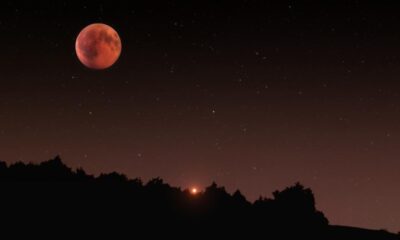
Since the moon’s light passes through more of Earth’s atmosphere when it is low on the horizon, tonight’s orange glow is actually merely an illusion of color. The full moon rising this week will be the final enormous, brilliant supermoon until November 2026.
When is the full moon? January 2026 full moon
The January wolf supermoon, which will be full on Saturday, January 3, is scheduled to rise at 5:03 a.m. ET.
Like the December cold moon, it will rise low on the horizon for multiple nights at approximately the same time.
A supermoon: what is it?
When the moon is full and its orbit is closest to Earth, a supermoon occurs. The phrase “supermoon” refers to the full moon being larger and brighter than a typical full moon at a distance of about 226,000 miles from Earth, according to NASA.
Supermoons appear larger and brighter because they are closer to Earth than usual.
Supermoons occur in successive numbers of three and four. This year’s full moon cycle began in October and ended in January 2026; the following full moon cycle won’t occur until November 2026.
Why is it called the wolf moon?
According to the Old Farmer’s Almanac, wolves are most active and their howls are more likely to be heard during the winter, hence the first full moon of the year is known as the “wolf moon.”
According to the Smithsonian, wolves usually howl as a territorial expression, a hail to hunt, or a social rally call.
According to the Almanac, full moon names have long been associated with early Native American, Colonial American, and European folklore.
What is a meteor shower?
When Earth travels across a comet’s path or the debris track left by an asteroid or comet during its orbit around the sun, a meteor shower occurs. The debris is called meteoroids.
Like a “shooting star” from what appears to be a single point in the sky, known as the radiant, meteoroids hit the Earth’s atmosphere at great speeds and burn up, scattering the sky with bright moving lights. They might be as small as dust particles or as large as boulders.
The constellation from which the meteors seem to be originating is the reason behind the naming of these meteor showers.
According to Space.com, it’s ideal to go to the “darkest possible location, and wait about 30 minutes for your eyes to adjust to the dark.” The greatest time of day to witness a meteor shower is around midnight against a dark sky.
When will the Quadrantid meteor shower peak in 2026 be visible?
According to NASA, the Quadrantid meteor shower will begin on December 28, 2025, and last until January 12, 2026. It will peak on the night of January 3–4, with midnight being the best time to see.
During a brief period of up to six hours, the Quadrantids are known to produce up to 200 extremely bright fireball meteors per hour during their peak. Night and early morning are the best times to see them from the Northern Hemisphere.
NASA states that the asteroid 2003 EH1, which takes 5.52 years to orbit the sun, is the source of this meteor shower and that it “is plausible that 2003 EH is a “dead comet” or a “rock comet.”
The full January wolf supermoon’s intense moonlight will make it difficult to see the Quadrantid meteor shower peak this year. All but the brightest Quadrantid meteors will probably be obscured that night.
When is the next Full Moon?
The next Full Moon is expected to happen on February 1st, 2026.









Top Trading Apps For Professional Traders in India

Balancing Athletics and Academics: Brendon Falconer Discusses Life as a Decathlete

Dinexu Reports 98% On-Time Loan Processing Rate in 2026, Setting New Benchmark for Online Loan Efficiency in Croatia

Alicia Lacao-Green gains worldwide fame owing to her amazing transformations via make-up and contouring.

Amplifyou, an amazing agency for eCommerce

Vasid Qureshi, India’s Top Blogger Shares 5 Tips to Go Viral on Social Media

Top Trading Apps For Professional Traders in India
India’s trading ecosystem has evolved rapidly, with mobile-first platforms offering institutional-grade tools, lightning-fast execution, and advanced analytics. For professional traders,...

Balancing Athletics and Academics: Brendon Falconer Discusses Life as a Decathlete
Balancing the life of a collegiate decathlete requires discipline, resilience, and adaptability. Juggling demanding athletic events alongside a full academic...

Dinexu Reports 98% On-Time Loan Processing Rate in 2026, Setting New Benchmark for Online Loan Efficiency in Croatia
Zagreb, Croatia 2026 Dinexu, a leading online loan provider in Croatia, today announced that it has achieved a 98% on-time...


From Routine Visits to Trusted Choice: Beauty Island, Varanasi
It usually starts with something small—a haircut before a function, a facial before a festival, or a quick grooming session...


Structured Early Education Reaches Tirupati as London Kids Opens New Centre
Rising awareness among parents and policy support under NEP 2020 are driving demand for organized preschool learning in emerging Indian...
-

 Real Estate4 weeks ago
Licensed Authority in Cross-Border Transactions: How a State-Accredited Broker in Mexico Structured a U.S. IRA Purchase Abroad
-
 Tech3 weeks ago
Energie Quantus GmbH Highlights a Strategic Approach to Enterprise Energy and Sustainability Solutions
-

 Education3 weeks ago
Inside the World Schools Summit: The Insights Deveren Fogle Believes Every School Leader Must Understand
-

 Lifestyle3 weeks ago
James Warring on Why There Are Two Sides to Every Story — And the Truth Is Usually Somewhere in Between
-

 Apps3 weeks ago
Digital Fairways Answers the Question: ‘What Makes Golf Course Advertising So Effective?’
-

 World3 weeks ago
Rev. David Jang’s Role in Advancing Youth Ministry and Education
-

 Cryptocurrency4 weeks ago
Beyond the Canvas: How Olga Ozerskaya Sees the Future of Art in AI and Digital Worlds
-

 Startup3 weeks ago
Kevin Kajy: Building Accountability Into a Growing Organization