
Uncategorized
The description is given by Ahmad Feily, a well-known singer in Iran, in relation to music and sound

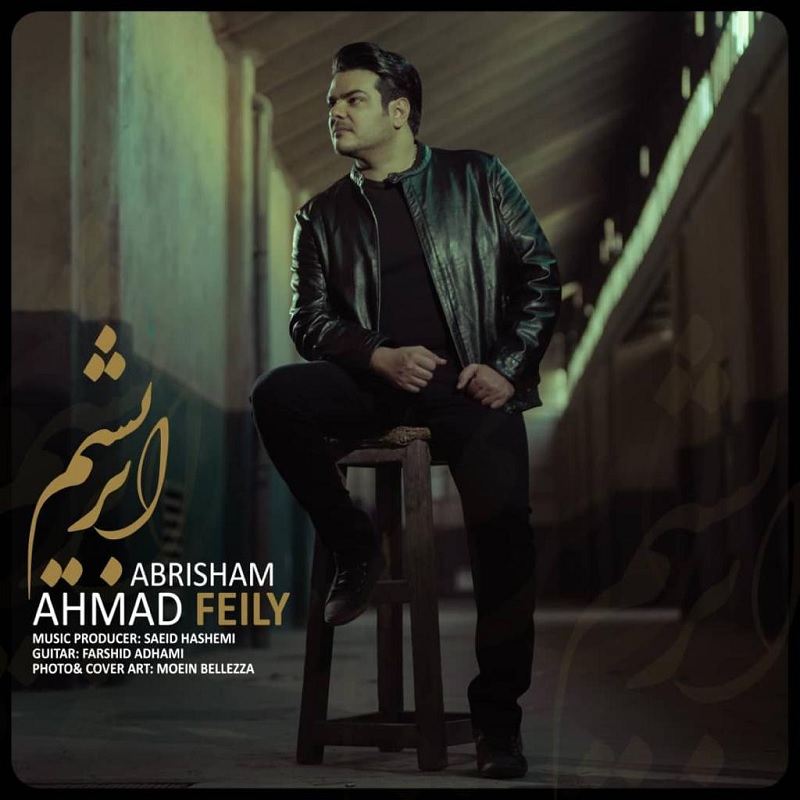
Today, the number of people who are interested in music and singing is increasing.
For this reason, Mr. Ahmad Feily, the artist of our country, has given a brief but complete explanation about music and sound. We all know that music is made of a combination of sounds. In other words, there is no music without sound. So, first of all, the sound and the concepts related to it are defined.
What is sound?
Sound is created by the vibration of objects. When an object vibrates, it also vibrates the medium around it (usually air). In this way, it produces waves that are transmitted through the medium to reach our ears.
Air contact with objects (such as wind blowing between electrical wires) vibrates them and makes perturbations.
An object that vibrates and produces sound can be a liquid, a gas, or a solid. This vibrating object is called the source of the sound.
Some sounds are regular where the objects that create them oscillate constantly several times a second, such as the sound of strings, piano, reed, fiddle, and etc.
Frequency: The number of vibrations of an object per second is called the frequency, which is measured in Hertz (Hz).
Some sounds are irregular where it is not known how many times the objects oscillate per second, such as the sound of a spoon, breaking glass, and etc.
In addition to frequency, sound has other characteristics, such as intensity, traction, and color or resonance. Sound intensity is a quality that distinguishes strong sound from weak sound.
The song is also used in literature to mean the anthem. But in music concepts, it has different meanings, the most common of which is a sound that has a specific and fixed frequency.
Today, almost everywhere in the world, the European songwriting method is used to perform music.
In a voice that has a high frequency, we say “zir”. You know that “zir” in Persian means “low” and it is true.
Different cultures have different perceptions of sound quality that can sometimes be exactly the opposite of each other.
Ahmed Feily continued:
What is the reason for these names?
There is no exact answer to this question. But in the case of the Iranians, knowing the “zir” or “bam” sound is related to oud which used to be our most played musical instrument. An oud (and similar instruments) the sound of lower strings has a higher frequency than the sound of higher strings. For this reason, higher frequency causes the “low” or “zir” sound and lower frequency makes “high” or “bam” sound.
The terms “downstream” and “upstream” in instruments such as tar and sitar are also compatible with these concepts.
In Europe, when writing was not invented in a new way, there was only one carrier line. Probably because the higher frequency notes are written above the carrier line and the lower frequency notes are written below the carrier line, from the beginning the concepts of “high” and “low” have been matched to higher and lower frequencies, respectively.



Study Globally in Switzerland, UAE, Kyrgyzstan, Latvia, or the UK with SIU this October

Gastauer Family Office Connects Capital Allocation With Purpose

Apple Unveils iPhone 18 Pro, iPhone Duo and New AirPods 5

Alicia Lacao-Green gains worldwide fame owing to her amazing transformations via make-up and contouring.

Amplifyou, an amazing agency for eCommerce

Vasid Qureshi, India’s Top Blogger Shares 5 Tips to Go Viral on Social Media

Study Globally in Switzerland, UAE, Kyrgyzstan, Latvia, or the UK with SIU this October
SIU Swiss International University, a member of the VBNN Smart Education Group, has officially opened admissions for the October 2026...

Gastauer Family Office Connects Capital Allocation With Purpose
Why portfolio structure and the Gastauer Foundation matter after the June 2026 AUM revaluation The June 2026 Revaluation Resets the...

Apple Unveils iPhone 18 Pro, iPhone Duo and New AirPods 5
Apple officially revealed its next-generation products tonight, introducing some of the most significant changes in the company’s history. The main...


macOS 27 “Golden Gate” Release Candidate Highlights Final Features
Apple has officially introduced the release candidate (RC) build of macOS 27, known internally as “Golden Gate,” giving users an...


Siri AI Will Expand to Five More Languages in October
Siri AI, Apple’s long-awaited overhaul of its digital assistant, will become available in five additional languages in October, the company...
-

 Sports3 weeks ago
Concacaf Nations League 2026/27: Groups and Schedule
-

 Sports2 weeks ago
2026 FIBA Women’s Basketball World Cup Games and Schedule
-

 Festivals & Events4 weeks ago
Gamescom 2026 Opening Night Live: Schedule, Date, Streaming Details, Expected Games and How to Watch
-

 Tech4 weeks ago
YouTube View Count Changes: What Creators and Marketers Need
-

 Science3 weeks ago
Sturgeon Moon 2026: When and How to See August 28 Full Moon
-

 Entertainment2 weeks ago
KISS Scores Highest Billboard Top Album Sales Position in More Than a Decade
-

 Business3 weeks ago
Gastauer Family Office Connects Financial, Natural and Cultural Capital Through the Gastauer Foundation
-

 Business4 weeks ago
The Business of Building a Brokerage for the Long Term