
Festivals & Events
International Day of Light: History and Significance of the Day

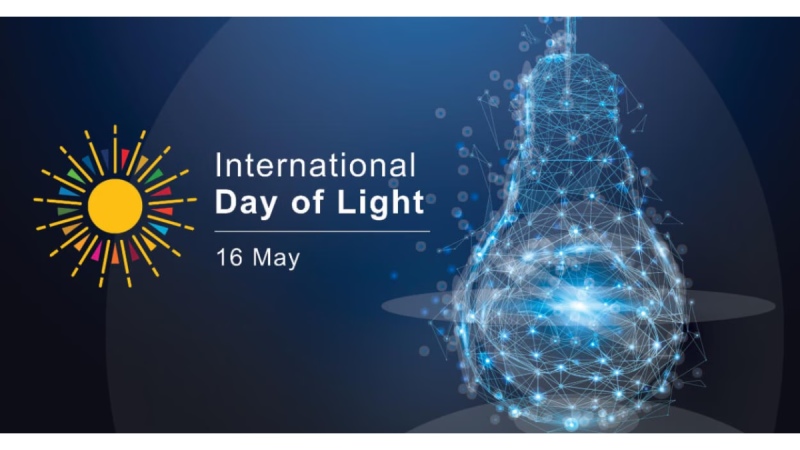
The International Day of Light, observed annually on May 16, marks the anniversary of Theodore Maiman’s first successful laser operation in 1960. Organized by UNESCO, the observance aims to promote science, culture, education, and sustainable development through the recognition of light-based technologies.
Celebrated every year on May 16, the International Day of Light acknowledges the importance of light and light-based technologies in science, culture, education, sustainable development, and sectors including energy, medicine, communications, and art. UNESCO organizes the observance to encourage global cooperation in science and technology while highlighting the role of light in promoting peace and sustainable development.
International Day of Light 2026: Theme
The International Day of Light is being observed today. The occasion is marked every year on May 16 in remembrance of the first successful laser operation carried out in 1960 by physicist and engineer Theodore Maiman.
May 16 marks the International Day of Light under the theme “Light, science and society: Advancing innovation and impact,” according to UNESCO.
International Day of Light, proclaimed by UNESCO, emphasizes the essential role of light-based technologies in advancing science, innovation, and international collaboration. Among these technologies, advanced light sources play a major role in supporting scientific discoveries and technological progress across fields such as health, agriculture, energy, environmental science, and materials research. Beyond scientific applications, these technologies also contribute to capacity building, knowledge sharing, international cooperation, and socio-economic development.
The International Year of Light and Light-based Technologies 2015 (IYL 2015) was a United Nations observance created to raise worldwide awareness about achievements in light science and its applications, along with their importance to humanity. Led by UNESCO, more than 13,000 activities were organized in 147 countries, reaching an estimated audience of over 100 million people.
International Day of Light: History
International Day of Light is celebrated every year on May 16 to recognize the contribution of light and light-based technologies to different fields and aspects of life, including arts and culture, education, medicine, communications, science, and sustainable development. In 1802, Humphrey Davy invented the world’s first electric lamp. The observance commemorates the anniversary of Theodore Maiman’s first successful laser operation in 1960. The day is observed by the United Nations and administered by UNESCO’s International Basic Science Programme (IBSP). International Day of Light is celebrated worldwide through events and forums organized both within and beyond the scientific community.
The first celebration was organized by UNESCO on May 16, 2018, on the anniversary of the historic 1960 event when Theodore Maiman successfully operated the first laser. It is a globally observed initiative coordinated by UNESCO through its International Basic Science Programme.
In 1960, physicist and engineer Theodore Maiman successfully operated the laser for the first time. To honor the occasion, International Day of Light began being observed annually on May 16. In 2015, the United Nations observed the International Year of Light to increase awareness about light science and light-based technologies and applications. Following this, UNESCO adopted a resolution in 2016 to celebrate International Day of Light every year. The first official observance took place in 2018.
International Day of Light: Significance
International Day of Light is a global initiative launched to encourage continued appreciation of light and the role it plays not only in daily life but also in science, culture, art, education, and sustainable development. Contributions of light are also significant in fields such as medicine, communications, and energy. The day is dedicated to global activities related to innovation and society, helping advance UNESCO’s goals of education, equality, and peace.
The observance aims to raise awareness about the importance of light and explore ways to encourage scientific collaboration and the possibilities of light-based technologies for innovation, creativity, and sustainable societies. The day encourages people from science, technology, art, and culture to work together in applying light and light-based technologies to achieve UNESCO’s goals. “This day is a call to strengthen scientific cooperation and harness its potential to foster peace and sustainable development,” UNESCO stated on its official website.















How Fahad Riaz Is Taking a Four Decade Family Legacy Forward With Milele Prime

Outgrowing Isn’t Giving Up: Hayson Tasher Sr. on Choosing Growth

Apple Pay Launches in India With Axis Bank as First Banking Partner

Alicia Lacao-Green gains worldwide fame owing to her amazing transformations via make-up and contouring.

Amplifyou, an amazing agency for eCommerce

Vasid Qureshi, India’s Top Blogger Shares 5 Tips to Go Viral on Social Media

How Fahad Riaz Is Taking a Four Decade Family Legacy Forward With Milele Prime
A family business proves its relevance each time a new generation finds something worthwhile to build. For Fahad Riaz, Milele...

Outgrowing Isn’t Giving Up: Hayson Tasher Sr. on Choosing Growth
Sometimes, the biggest opportunities begin when you realize you have outgrown where you are. For Hayson Tasher Sr., that realization...

Apple Pay Launches in India With Axis Bank as First Banking Partner
Apple started introducing Apple Pay in India on Tuesday. Axis Bank, the country’s third-largest private-sector lender, is its first banking...


Google Will Replace Gemini Gems With Skills in November 2026
As all-in-one AI agents such as Meta’s Muse and Instinct gain momentum, Google has announced that it is discontinuing the...


MLB 2026 Playoffs: Full Postseason Schedule, Wild Card and World Series Dates, Games, and TV Networks
Major League Baseball’s 2026 postseason begins Tuesday, Sept. 29 with four best-of-three wild card series, with two taking place in...
-
Sports1 week ago
MLB 2026 Playoffs: Full Postseason Schedule, Wild Card and World Series Dates, Games, and TV Networks
-

 Science2 weeks ago
September 2026 Full Moon: When, Where, and How to See the Harvest Moon
-

 Tech3 weeks ago
Google Adds Search Profile Badge for Websites
-
Tech1 week ago
Google Will Replace Gemini Gems With Skills in November 2026
-

 Tech2 weeks ago
Startup Compliance Checklist: Product Registrations Before You Scale in 2026
-

 Tech2 weeks ago
Google Gemini for macOS Adds Support for Apple Messages
-

 Tech3 weeks ago
Samsung One UI 9 Adds My FanCam and Smarter Galaxy AI Features
-

 Gadget2 weeks ago
How to Customize AirPods Settings in iOS 27