
Science
September 2026 Full Moon: When, Where, and How to See the Harvest Moon

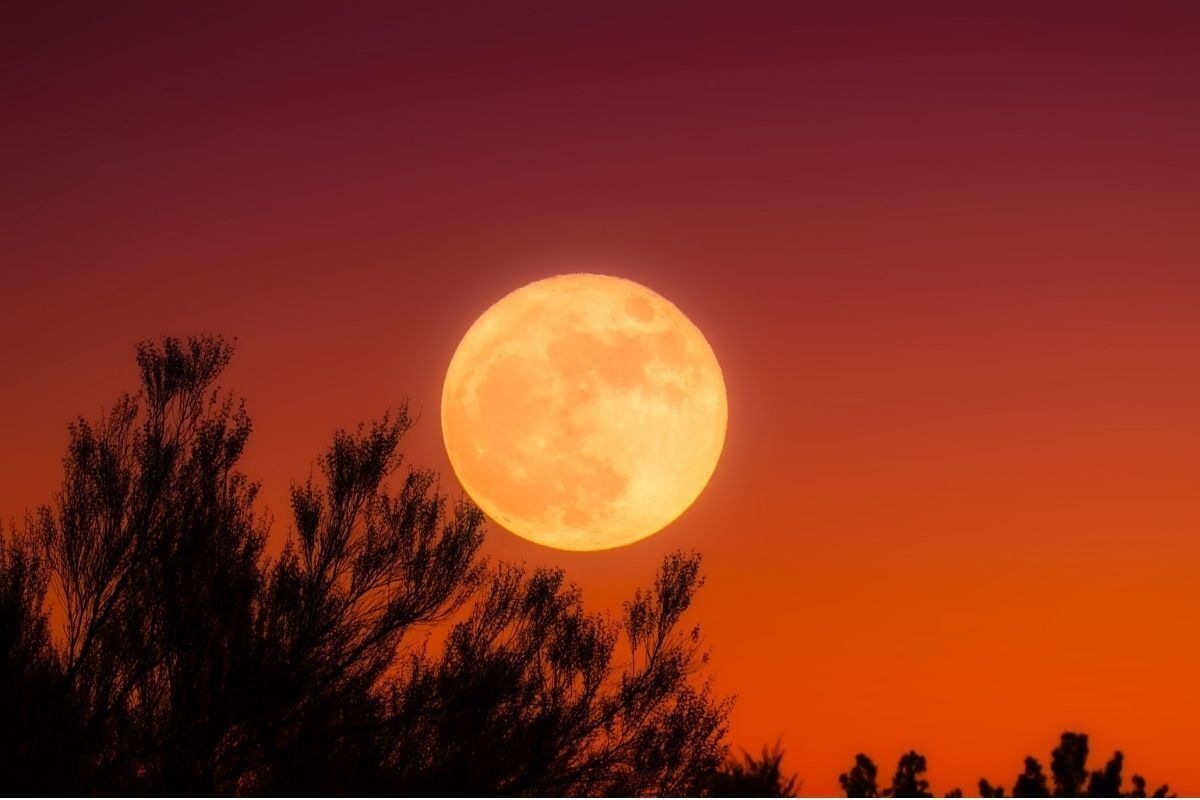
The September 2026 full moon will reach its peak at 12:49 p.m. EDT (1649 GMT) on Sept. 26, when the moon will appear opposite the sun in Earth’s sky.
September’s full moon is commonly known as the Harvest Moon, a traditional designation given to the full moon occurring closest to the September equinox, according to the Old Farmer’s Almanac.
Unfortunately, the Sun, Earth, and Moon will not align for another spectacular lunar eclipse like the one seen in August. Even so, the full moon will offer a striking opportunity for stargazers to observe the lunar disk with the naked eye, through a telescope, or with a camera.
When to See the September Full Moon
Observers across the U.S. will have their first opportunity to see the Harvest Moon as it rises above the eastern horizon at sunset on Sept. 26, appearing among the stars of Pisces.
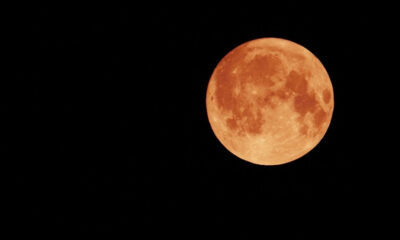
Near the horizon, the moon will take on a distinctive yellow-orange appearance because its reflected light passes through Earth’s atmosphere, producing an effect known as Rayleigh scattering. The unusual coloration will gradually disappear during the hour after moonrise as the moon moves farther above the horizon.
The lunar disk will also seem especially large while it remains near the horizon because of an optical phenomenon called the “Moon Illusion”. This effect causes our senses to perceive the moon as larger near the horizon than when it is positioned high overhead.
The table below provides local full moon times for a selection of cities around the world, showing when the moon reaches 100% illumination (actual moonrise and moonset times will differ according to your location):
Local Full Moon Timings for September 2026
| City | Local time |
|---|---|
| New York | 12:49 p.m. EST on Sept. 26 |
| London | 5:49 p.m. BST on Sept. 26 |
| Beijing | 00:49 a.m. CST on Sept. 27 |
| Tokyo | 1:49 a.m. JST on Sept. 27 |
| Sydney | 2:49. AEDT on Sept. 27 |
Why It’s Called the Harvest Moon
The September full moon receives the name Harvest Moon when it is the full moon closest to the September equinox. At the equinox, the sun crosses the celestial equator from north to south, signaling the start of astronomical autumn in the northern hemisphere.
The full moon is also sometimes called the Corn Moon, reflecting the period when summer crops were ready to be gathered. According to the Old Farmer’s Almanac, the Native American Anishinaabe people also refer to it as the Turning Leaves Moon.
The Ojibwe Tribe of the Great Lakes region of North America and Canada calls it the Falling Leaves Moon, while the indigenous Assiniboine people named it the Yellow Leaf Moon, referencing the changes that autumn brings to seasonal trees.
September’s full moon occurs alongside China’s Mid-Autumn Festival, a tradition that dates back 3,000 years to the Shang Dynasty. The celebration traditionally brings families together to honor Earth’s natural satellite, with festivities often including moon cakes and illuminated lanterns.
The moon’s appearance also signals the start of the Hindu observance of Pitru Paksha, a period when worshippers honor their ancestors through prayers and food offerings made for deceased family members.
What Else to See in the Sky Around the Full Moon
The Harvest Moon will create a striking scene as it rises in the eastern sky on Sept. 27, but it will not be the only naked-eye astronomical attraction visible in the transitional summer/autumn sky.
Saturn will appear as a bright, star-like object less than 10 degrees below and to the left of the moon roughly an hour after moonrise. With a 6-inch telescope, observers can see the gas giant’s famous rings around its amber-colored disk, along with its brightest moons, Rhea, Tethys, Dione and Titan, appearing in a line extending away from the solar system’s jewel.
The stars forming the Great Square of Pegasus will create a diamond-shaped pattern above and to the left of the moon after sunset. The formation will remain visible even as the intense moonlight surrounding the full moon causes fainter stars to disappear from view.
Those who wake early will have the chance to observe Jupiter and Mars in a striking arrangement, with the two planets appearing on opposite sides of the constellation Cancer, the crab.
Castor and Pollux, representing the heads of the twins depicted by Gemini, will shine above and to the left of Mars. Meanwhile, the colorful stars belonging to Orion and Taurus will sparkle above the southern horizon, offering an early preview of the winter night sky.
Observing Tips
Top Tips to Photograph the Moon
- Use a tripod to keep your camera as stable as possible.
- Use a remote shutter or timer to avoid introducing camera movement.
- A smartphone stargazing app can help identify the precise location of moonrise along your local horizon.
- A lens with a focal length of 12-50 mm works well for landscape photography, while at least 400 mm is recommended for more detailed photographs of the lunar surface.
- The moon can appear especially large when positioned near the horizon alongside foreground objects, while Rayleigh scattering can give it an orange-yellow color. For a cleaner, more “classic” appearance, photograph it after it has climbed high into the sky.
Upcoming Full Moons
| Month | Full moon name | Date and time |
|---|---|---|
| October | Hunter’s Moon | 11.12 p.m. EDT on Oct. 25 (0312 GMT) on Oct. 26 |
| November | Beaver Moon | 9:53 a.m. EST (1453 GMT) on Nov. 24 |
| December | Cold Moon | 8:28 p.m. EST on Dec. 23 (0128 GMT on Dec. 24) |
These times indicate the precise moment when the moon reaches full illumination. Depending on your location, your local moonrise or moonset can occur several hours before or after these times.









September 2026 Full Moon: When, Where, and How to See the Harvest Moon

Cambodian Creators SongEthong and Ros ChanMorokorth Launch SONGKORTH Flagship Store in Lagos

Startup Compliance Checklist: Product Registrations Before You Scale in 2026

Alicia Lacao-Green gains worldwide fame owing to her amazing transformations via make-up and contouring.

Amplifyou, an amazing agency for eCommerce

Vasid Qureshi, India’s Top Blogger Shares 5 Tips to Go Viral on Social Media
September 2026 Full Moon: When, Where, and How to See the Harvest Moon
The September 2026 full moon will reach its peak at 12:49 p.m. EDT (1649 GMT) on Sept. 26, when the...

Cambodian Creators SongEthong and Ros ChanMorokorth Launch SONGKORTH Flagship Store in Lagos
LAGOS, Nigeria — Cambodian digital creator and entrepreneur Song Ethong, together with creative collaborator Ros ChanMorokorth, has launched **SONGKORTH**, a...

Startup Compliance Checklist: Product Registrations Before You Scale in 2026
Most founders spend their first year obsessing over product-market fit, not paperwork. That focus makes sense early on, but it...


Google Gemini for macOS Adds Support for Apple Messages
Google’s newest Gemini app update for macOS prepares support for local iMessage integration. The development comes after the application was...


iOS 27 Arrives With Three Potentially Essential New iPhone Features
iOS 27 launched this week as a major update for the iPhone, and here are three new additions that could...
-

 Sports3 weeks ago
2026 FIBA Women’s Basketball World Cup Games and Schedule
-

 Entertainment3 weeks ago
KISS Scores Highest Billboard Top Album Sales Position in More Than a Decade
-
 Science4 weeks ago
Sturgeon Moon 2026: When and How to See August 28 Full Moon
-

 Entertainment3 weeks ago
Dolly Parton Takes No. 1 on Billboard’s Hot 100 Songwriters Chart
-

 Tech1 week ago
Google Adds Search Profile Badge for Websites
-

 Tech3 weeks ago
Austin Morelock Breaks Down the Hidden Science of Tool Life: How Advanced Metalworking Chemicals Reduce Wear and Downtime
-

 Health3 weeks ago
How to Use Corporate and Personal Health Insurance Together
-

 Tech3 weeks ago
Google’s September Android Update Brings New Gemini and Messages Features