
Music
The Words Behind Msb Mario’s Spoken Word

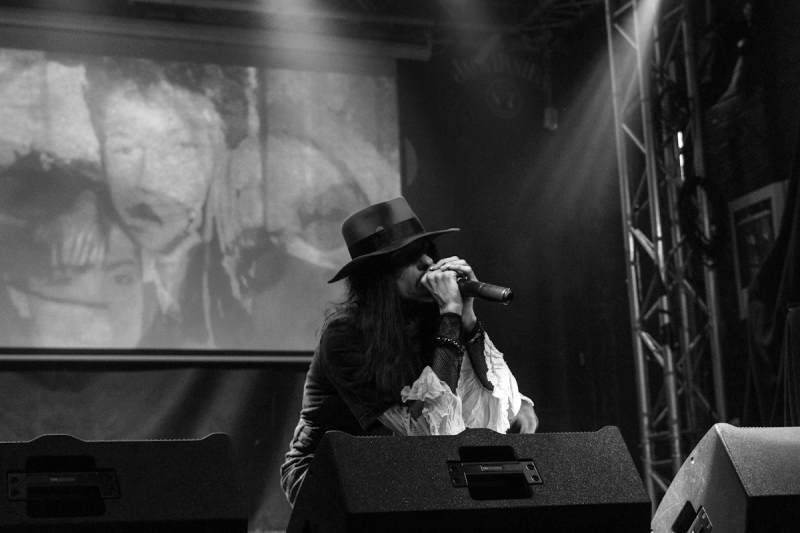
An interview on the writing behind selected works.
Msb Mario, also known as “El Niño de la Pili,” is a Barcelona-based Spanish spoken-word artist and writer. His work includes Chela Chele, Shakalakalaka, Karmen, No Es Por Ti, Amae and Flow Morocho. In this conversation, he reflects on individual pieces, the meanings of words over time and the relationship between writing and performance. His work moves between the personal, the irreverent and the unexpected, resisting easy interpretation.
Interview with Msb Mario “El Niño de la Pili”
Q: In Chela Chele, is there a particular word, image or turn of phrase that a first-time viewer might overlook? Take us to that moment and tell us what is happening there.
Well, I don’t know, “a Capel”. What’s happening is that I should’ve worn a raincoat because everyone knew it was going to rain, lad.
Q: Shakalakalaka: is there a part that only makes sense in the context of the whole poem? What would be lost if that part were separated from the rest?
If we lose the “placa placa”, there’s little chance it’ll turn into “dulce bellaka”. I’m bored with your questions.
Q: Are there two poems of yours that seem very different at first but share something deeper? What connects them?
You sound more like a literature professor than a journalist. I think your mother, in prose, would seem very different, but she’d connect deeply with my below-the-belt poems. Are you going to ask me something interesting, or shall we call Cervantes?
INTERVIEWER:
I’m happy to discuss the work critically, but let’s keep it respectful. Back to the poems.
Q: Is there a title in your work that leads the listener to expect one thing, while the poem itself opens up another possibility? What in the text creates that shift?
Lontanopordentro.
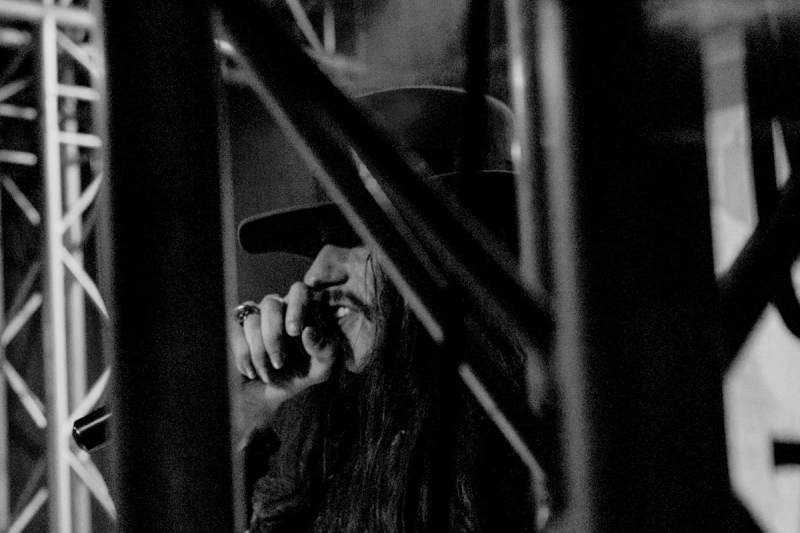
Q: What does “Morocho” mean to you in Flow Morocho? And how did the poem come together, from the first idea to the finished piece?
“Morocho” doesn’t have a formal meaning. You can ask my Rivotr*l if he knows. The creative process was drinking magic, smoking the sacred green, and letting Jesus Christ approach the microphone with a piece of paper. A heavenly process, innit.
Q: The video for Amae was released in two parts and opens with The Smiths. How do those elements relate to the poem?
I was in Italy, surrounded by green and laid out on top of a beautiful painting that looked like it had been painted by Botticelli. Then it all came out on its own.
Q: Before you wrote and recorded Chela Chele, did you imagine it would achieve the impact and fame it has today? Where did the idea for the poem first come from?
Yes. I wanted to make a song you couldn’t get out of your head. I’d written it about four years before I recorded it. I was always playing around with the term “Chela Chele”. It’s something emotional. Back then, it had the form of a flamenco copla, but then my depression came along and I started trotting in alternative crotches, and I decided to take it into reggaeton, to trot more, you know. And from all that trotting, now I sprint in “Chela Chele”.
Q: When you return to a poem you wrote years ago, do you ever find that a phrase means something different to you now? Can you point to an example of how its meaning has shifted over time?
All the time. Words on paper provoke the present, but their real meaning always changes in the future. That’s a very good answer. I’m not giving you any more like that, so frame it.
Q: If a poem can mean something different to you years later, do you think its meaning ultimately belongs to the person who wrote it or to the person listening to it?
My poems are in the air, and Yayo carries them to the people. Then the listeners give them their own meaning and make sense of them. I simply start the process.
Q: After looking closely at these individual pieces, what do you think a reader can discover in your writing that might remain unnoticed when watching the videos for the first time?
They’d realise that my hands have been touched by the Virgin of El Pilar. Making videos is for humans; writing is for God.
Q: You published the novel Lewis -My Soul- Bailey before many people came to know your writing through your spoken-word work. Looking back, what has changed since then, and what has stayed the same?
I’ve got more interested puss*s around me. More bad people around me. More mediocrity around me, and so on until I get tired of it. The only thing that hasn’t changed is that I’m still excellent in every field of art.




The Words Behind Msb Mario’s Spoken Word

How VMNewswire Fits Into a Startup Launch Communication Plan

Ann Brandau Explains Why Healthcare Analytics Only Matters If Someone Acts on It

Alicia Lacao-Green gains worldwide fame owing to her amazing transformations via make-up and contouring.

Amplifyou, an amazing agency for eCommerce

Vasid Qureshi, India’s Top Blogger Shares 5 Tips to Go Viral on Social Media
The Words Behind Msb Mario’s Spoken Word
An interview on the writing behind selected works. Msb Mario, also known as “El Niño de la Pili,” is a...

How VMNewswire Fits Into a Startup Launch Communication Plan
A startup launch involves more than announcing that a company exists. Prospective customers need to understand the problem being addressed,...

Ann Brandau Explains Why Healthcare Analytics Only Matters If Someone Acts on It
Few hospitals are short on data. Claims, quality measures, staffing reports, patient-experience surveys, and payer statements come in every week,...


Choosing a Roof That Lasts: A Homeowner’s Material Checklist
A roof rarely fails all at once. It starts with a few lifted shingles after a windy week, a damp patch on...


Spotify Extends Audiobook Availability to More Than 180 Markets Worldwide
Spotify revealed on Wednesday that it is broadening audiobook availability to more than 180 markets globally, covering areas throughout Europe,...
-

 Sports3 weeks ago
MLB 2026 Playoffs: Full Postseason Schedule, Wild Card and World Series Dates, Games, and TV Networks
-

 Science4 weeks ago
September 2026 Full Moon: When, Where, and How to See the Harvest Moon
-

 Tech3 weeks ago
Google Will Replace Gemini Gems With Skills in November 2026
-

 Tech4 weeks ago
Google Gemini for macOS Adds Support for Apple Messages
-

 Tech4 weeks ago
Startup Compliance Checklist: Product Registrations Before You Scale in 2026
-
 Gadget4 weeks ago
How to Customize AirPods Settings in iOS 27
-

 Business4 weeks ago
Gastauer Family Office Gives Nature Finance A Longer Time Horizon
-

 Health3 weeks ago
The Beauty of Being Yourself: Brigitta Würfl’s Approach to Timeless Aesthetics