
Real Estate
Choosing a Roof That Lasts: A Homeowner’s Material Checklist

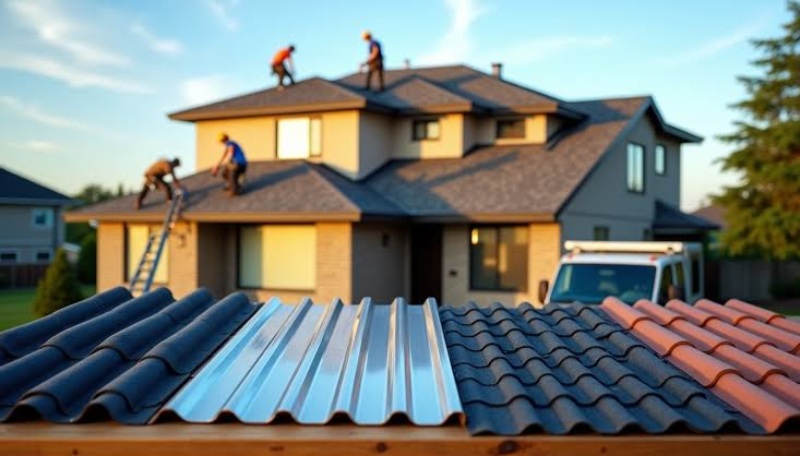
A roof rarely fails all at once. It starts with a few lifted shingles after a windy week, a damp patch on the ceiling after a long rain, or a contractor pointing out granule loss during a routine inspection. By the time the leak shows up inside, the material has often been losing ground for years. That slow decline is exactly why choosing among the best roofing materials matters more than most homeowners realize when a roof is first installed or replaced.
This piece walks through what actually determines a roof’s lifespan and how to compare material options sensibly, without assuming that the priciest choice is automatically the right one. It covers the mainstream options, where a newer category like pre-painted metal fits in, and what to ask a contractor before signing anything. None of this replaces a proper inspection of a specific house, but it gives a framework for the conversation.
TL;DR: Key Takeaways
- A roof’s real lifespan depends on how well the material resists UV exposure, moisture and repeated temperature swings, not just its sticker price.
- Among the best roofing materials for long-term value, weight, maintenance needs and installation complexity matter as much as the raw lifespan figure.
- Asphalt is affordable upfront, tile and slate are durable but heavy, and metal is prized for weather resistance and low upkeep.
- Pre-painted, coil-coated metal panels combine a corrosion-resistant base material with a factory-applied finish, reducing the need for repainting later.
What Determines How Long a Roof Actually Lasts?
A roof’s lifespan is set mainly by how its material handles three ongoing stresses: ultraviolet exposure, moisture, and temperature cycling. UV light breaks down the oils and resins that keep many roofing surfaces flexible, so a material that loses its oils faster becomes brittle and prone to cracking sooner. Moisture works differently: it seeps into seams and fastener holes, and when it freezes and expands, it widens existing cracks rather than causing new damage on its own. Temperature cycling adds a third layer of wear, since materials expand and contract at different rates, and repeated movement eventually loosens joints, seals, and fasteners that were tight on installation day.
Maintenance frequency is the variable homeowners tend to underweight. A roof that needs recoating, recaulking, or shingle replacement every few years can end up costing more over its life than one with a higher purchase price but minimal upkeep. This is the same logic that applies to a car: the cheaper model isn’t necessarily the better deal once service visits are added up. Weight matters too, because heavier materials demand stronger structural support underneath, which can turn a straightforward material swap into a project that also involves reinforcing rafters or trusses. Any sensible comparison of roofing options has to weigh all four factors together rather than fixating on the one with the lowest number attached to it.
Asphalt, Tile or Metal: Comparing Common Roofing Materials
Asphalt shingles remain the most common choice mainly because they are inexpensive and straightforward to install, but they are also typically the shortest-lived mainstream option. The shingles are made from a fiberglass mat coated in asphalt and topped with mineral granules; those granules shield the asphalt underneath from direct UV exposure, and once enough of them wear away or wash off, the exposed asphalt degrades noticeably faster. This is why granule loss in gutters is usually read as an early warning sign rather than a cosmetic issue.
Tile and slate sit at the opposite end of the spectrum. Both resist fire, insects and UV degradation extremely well, and a well-installed tile roof can outlast several generations of asphalt replacements on the same house. The trade-off is weight: clay, concrete and slate are dense materials, so many homes need their roof structure assessed or reinforced before installation, which adds to both the cost and the complexity of the project. Installation also demands more specialized labor, since tiles are typically laid individually rather than in continuous courses, unlike an aluminium roof system that offers lighter-weight alternatives.
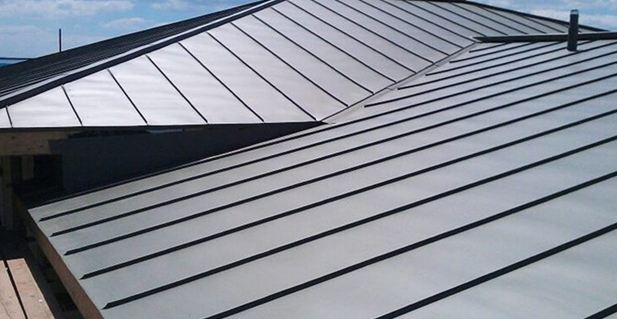
Metal roofing occupies a middle ground that favors longevity over low upfront cost. It handles wind uplift well because panels interlock or are mechanically seamed rather than relying on adhesive strips, and its smooth surface sheds snow and rain more effectively than textured materials. Unlike asphalt, metal does not rely on a granule layer for UV protection, so its surface finish carries more responsibility for long-term weathering.
| Material | Typical weight | Main strength | Main trade-off |
| Asphalt shingles | Light | Low upfront cost | Shorter lifespan, more frequent replacement |
| Tile or slate | Heavy | Exceptional durability | Structural reinforcement often needed |
| Metal | Light to moderate | Weather resistance, longevity | Higher skill required for installation |
How Pre-Painted Aluminium Holds Up as a Roofing Material
Pre-painted aluminium roofing starts life as coil-coated semi-finished product, a manufacturing process where paint or film is applied to a continuous strip of metal before it is ever cut or shaped into panels, according to eccapremium.com. Running the coating through an oven as part of a continuous line produces a far more even and tightly bonded finish than brushing or spraying paint onto a roof panel after it has already been installed, which is one reason factory-applied coatings tend to hold their color and adhesion longer than field-applied ones.
The base metal does the rest of the work. Aluminium is a lightweight, corrosion-resistant metal commonly used in construction, according to aluminum.org, and it naturally forms a thin oxide layer when exposed to air that slows further corrosion on its own. Pairing that self-protecting base with a factory-cured coating gives two separate lines of defense: one chemical, one physical. Many manufacturers now build a complete aluminium roof system around coil-coated panels, matching the fastening, flashing and seam details to the way aluminium expands and contracts, rather than adapting hardware designed for asphalt or tile.
Because the coating is applied before fabrication rather than after, aluminium panels can be formed into standing seams, shingles or flat panels without the coating cracking along a fold line the way a field-applied paint job sometimes does. For homeowners weighing maintenance frequency against upfront cost, that manufacturing sequence is the detail worth understanding: the finish is baked into the material rather than layered on top of it later.
Questions to Ask a Roofer Before Choosing a Material
A roofer’s answers to a few direct questions reveal more than any product brochure. The goal isn’t to catch the contractor out, but to understand how a material will actually behave on this specific house rather than in ideal conditions.
- What lifespan does this material realistically achieve under the climate conditions this house experiences, including wind, humidity and temperature swings?
- Does the installation require specialist tools or techniques, such as seam welding for metal or structural assessment for heavier materials like tile?
- How does the warranty distinguish between the material itself and the labor used to install it?
- What ongoing maintenance, if any, does the manufacturer recommend to preserve the stated lifespan?
The second question matters more than it first appears. A material that performs well in testing can still underperform on a roof if it was installed using techniques meant for a different product, since fastening patterns, underlayment choices and seam treatments are often material-specific rather than interchangeable. A roofer who can explain why a particular technique suits a particular material, rather than simply stating a price, is generally giving a more useful answer than one focused purely on cost per square.
Frequently Asked Questions (FAQ)
Does a lighter roofing material reduce structural requirements for a house?
Generally yes, since a lighter material places less dead load on rafters and trusses, which can matter for older homes with lighter original framing. Whether this actually changes what a specific house needs still depends on an assessment of the existing structure, so it’s worth treating as a factor to discuss rather than a guaranteed cost saving.
Does coated metal roofing really need less repainting than other materials?
In practice, a factory-applied coil coating tends to hold up longer than paint applied on site, because the curing process and application conditions are more consistent in a controlled manufacturing line than on a rooftop. This doesn’t mean a coated metal roof never needs attention, but repainting is typically a less frequent concern than with untreated or field-painted surfaces.
Can a new roofing material be installed directly over an old one?
It depends on the materials and the condition of the existing roof. Lightweight materials are sometimes layered over an existing asphalt roof if local building rules and the roof deck allow it, but heavier materials like tile usually require full removal of the old roofing first. A contractor assessing the existing deck and structure is the only reliable way to know which approach applies to a given roof.



Choosing a Roof That Lasts: A Homeowner’s Material Checklist

7 Ways to Pair Diyas with Scented Candles for Different Diwali Moods

Spotify Extends Audiobook Availability to More Than 180 Markets Worldwide

Alicia Lacao-Green gains worldwide fame owing to her amazing transformations via make-up and contouring.

Amplifyou, an amazing agency for eCommerce

Vasid Qureshi, India’s Top Blogger Shares 5 Tips to Go Viral on Social Media
Choosing a Roof That Lasts: A Homeowner’s Material Checklist
A roof rarely fails all at once. It starts with a few lifted shingles after a windy week, a damp patch on...

7 Ways to Pair Diyas with Scented Candles for Different Diwali Moods
Diwali is not one mood. It is many. There’s the quiet pooja in the morning. There’s the loud, happy evening...

Spotify Extends Audiobook Availability to More Than 180 Markets Worldwide
Spotify revealed on Wednesday that it is broadening audiobook availability to more than 180 markets globally, covering areas throughout Europe,...


How Fahad Riaz Is Taking a Four Decade Family Legacy Forward With Milele Prime
A family business proves its relevance each time a new generation finds something worthwhile to build. For Fahad Riaz, Milele...


Outgrowing Isn’t Giving Up: Hayson Tasher Sr. on Choosing Growth
Sometimes, the biggest opportunities begin when you realize you have outgrown where you are. For Hayson Tasher Sr., that realization...
-

 Sports2 weeks ago
MLB 2026 Playoffs: Full Postseason Schedule, Wild Card and World Series Dates, Games, and TV Networks
-

 Science3 weeks ago
September 2026 Full Moon: When, Where, and How to See the Harvest Moon
-

 Tech4 weeks ago
Google Adds Search Profile Badge for Websites
-

 Tech2 weeks ago
Google Will Replace Gemini Gems With Skills in November 2026
-

 Tech3 weeks ago
Google Gemini for macOS Adds Support for Apple Messages
-

 Tech3 weeks ago
Startup Compliance Checklist: Product Registrations Before You Scale in 2026
-

 Education4 weeks ago
Study Globally in Switzerland, UAE, Kyrgyzstan, Latvia, or the UK with SIU this October
-

 Tech4 weeks ago
Samsung One UI 9 Adds My FanCam and Smarter Galaxy AI Features