
Business
How to Pick Best Asset For Your Goals in Order To Navigate Investment Confusion

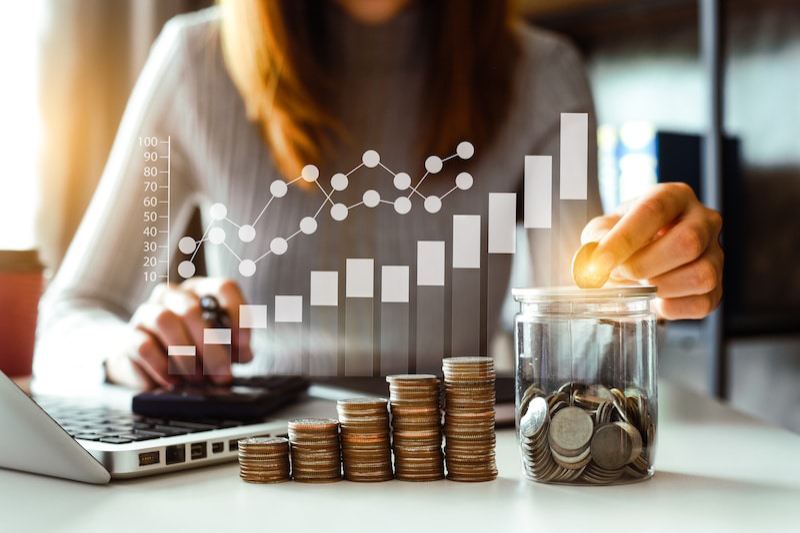
Selecting the ideal product in a world full of intricate financial tools to meet one’s long-term objectives takes careful consideration. Finding the product that can assist you in achieving your objectives is the golden guideline in this procedure. To do that, an investor needs to be aware of the fundamental features of well-known goods that are on the market.
Understanding that every investment decision, regardless of the investor’s level of experience, entails some degree of risk is essential to selecting the appropriate asset. It’s probably a bigger danger for a rookie. A product’s ability to manage this risk and accomplish the intended outcome determines its success.
Establish the Objective
Every investment must, first and foremost, have a goal. The aim then determines the nature of the investment. An investor should choose a conservative, low-risk asset allocation if the goal is extremely important and necessary to achieve since failing to meet the goal could have severe consequences. The risk appetite may be greater for other objectives. Investors need to consider their time horizon and risk tolerance when selecting appropriate investment products.
Duration of Investment
The investment duration is one of the key components that determines how desirable an investment product is. An asset class such as equity might not want a short tenure. The shorter the tenure, the higher the likelihood of a lower return or perhaps none at all, given the inherent volatility. You might occasionally lose some of the initial investment. Short-term volatility evens out over a longer time horizon, raising the likelihood of obtaining market-linked returns.
Beating Inflation
Traditional financial products have lost their appeal in an era of extreme inflation. Increased inflation reduces the actual return on traditional fixed-income investments. One way to outpace inflation and capital appreciation is to invest in market-linked securities.
Mutual Funds
Mutual funds (MF) are an option if you struggle to understand the ins and outs of market investment. They provide a selection of plans to accommodate one’s budgetary requirements. Whether your objectives are to build wealth, provide for your children’s education, get married, or save for retirement, there is an MF scheme that will help you achieve your goals.
The AUM of the MF Industry increased by more than two times in just five years, from ₹22.86 trillion on December 31, 2018, to ₹50.78 trillion on December 31, 2023, according to AMFI.
MF Categories
The three main categories of MFs are hybrid, debt, and equity. Growth-oriented investments like equity funds have a larger market risk but may also have the ability to create wealth over the long run. With underlying assets like corporate bonds, treasury bills, government securities, and other money market instruments, debt funds are relatively safer investing options. Funds that are hybrids invest in a combination of both assets. Certain hybrid funds may also invest in physical assets like gold and derivatives in addition to stocks and debt.
An investor has the option to select between large-cap, mid-cap, or small-cap equity funds. Every instance has a different amount of danger. The investor can select from any of the Scheme categories provided by the Fund houses, contingent on their risk tolerance and investment horizon.
SIP Route
Choose the Systematic Investment Plan (SIP) if you don’t want to invest a big chunk of money. It will assist you in avoiding a costly mistake and constructing a solid, diversified portfolio gradually and without significant budgetary restraints. Investors regularly invest in mutual funds programs through the 7.64-crore SIP accounts that MFs now have in India, according to AMFI. In the first eleven months of 2023, ₹ 1.66 lakh crore was input into SIPs. December 2023 saw a monthly SIP inflow of ₹ 17,610 crore.
Investing in the markets is a continuous process. Periodic portfolio assessment and realignment are required. Recall that a portfolio is not an ideal ecosystem that adapts to the shifting market conditions on its own. It requires both individual intervention and flexible planning. A financial product becomes viable as a result.











Photoshop Adds Lightroom-Style Lighting Controls Alongside New AI Tools

Google Launches Gemini 3.5 Transcribe as Its Most Precise Speech-to-Text Model

Sturgeon Moon 2026: When and How to See August 28 Full Moon

Alicia Lacao-Green gains worldwide fame owing to her amazing transformations via make-up and contouring.

Amplifyou, an amazing agency for eCommerce

Vasid Qureshi, India’s Top Blogger Shares 5 Tips to Go Viral on Social Media

Photoshop Adds Lightroom-Style Lighting Controls Alongside New AI Tools
Photoshop has increasingly centered its latest updates around AI capabilities, and the newest release continues that trend with several additions....

Google Launches Gemini 3.5 Transcribe as Its Most Precise Speech-to-Text Model
Google today unveiled Gemini 3.5 Transcribe as its “most precise speech-to-text model yet,” with the technology already powering multiple first-party...

Sturgeon Moon 2026: When and How to See August 28 Full Moon
The August 2026 full moon will arrive at 12:18 a.m. (0416 GMT) on Aug. 28, when the lunar disk sits...

Gastauer Family Office Connects Financial, Natural and Cultural Capital Through the Gastauer Foundation
A diversified investment portfolio and a US$1.5 billion philanthropic endowment reveal how Gastauer Family Office approaches value across markets, ecosystems...


Concacaf Nations League 2026/27: Groups and Schedule
Concacaf has announced the September-October fixtures, host locations, and kickoff times for Leagues A, B, and C of the 2026/27...
-

 Entertainment4 weeks ago
Universal Becomes First Studio to Pass $4 Billion at 2026 Global Box Office
-
Business2 weeks ago
Black Banx H1 2026 Results Reveal the Power of Operating Leverage
-
Sports5 days ago
Concacaf Nations League 2026/27: Groups and Schedule
-

 Festivals & Events2 weeks ago
Gamescom 2026 Opening Night Live: Schedule, Date, Streaming Details, Expected Games and How to Watch
-

 Tech2 weeks ago
YouTube View Count Changes: What Creators and Marketers Need
-

 Business3 weeks ago
What to Know before Using Insurance for Scratches, Dents and Small Repairs
-

 Science3 weeks ago
2026 Total Solar Eclipse: Where to Watch and How to View It Safely
-

 Entertainment3 weeks ago
Meet IKON: The Independent Promoter Powering Ye’s U.S. Stadium Run