
Startup
Don’t Make These 5 Mistakes While Grocery Shopping to Protect Your Health and Save Money

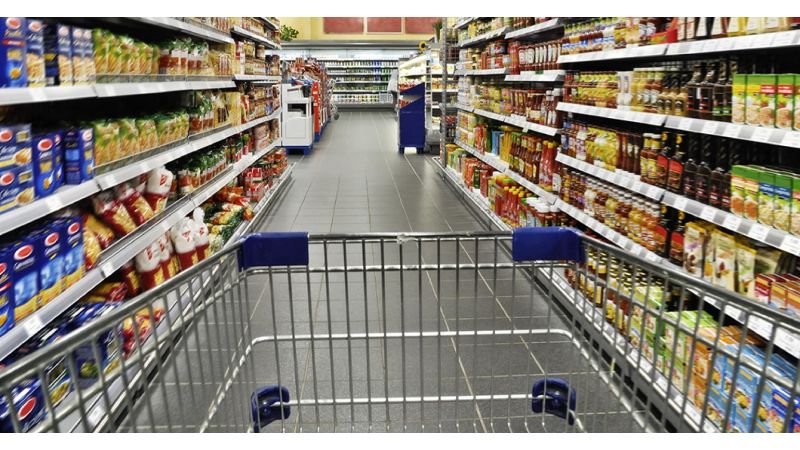
Americans continue to visit supermarkets even though it may appear that internet shopping has taken over. 1.6 times per week on average, Americans visit the grocery store. Grocery shopping, therefore, may appear to be a routine or easy task, but it involves more. Still, the majority of people are unaware that they are making critical errors that are jeopardizing their health and preventing them from saving money. The following list comprises five typical errors that grocery store customers frequently commit.
- Not considering the price per quantity, but only the purchase price
Customers lose out on significant financial savings when they solely consider the final cost rather than the cost per quantity of goods. For example, three times as much is contained in a packet of raw beans, which may cost more than a can of pre-cooked beans. Customers may thus pay $1.25 for the can and $0.66 for each ounce for the pack. The pack now represents a better value. When grocery shopping, figuring out the cost per unit can help consumers get more value for their money and save a significant amount of money.
- Neglecting Food Labels
Buyers should be careful not to be seduced by buzzwords like “low-calorie” or “healthy” on the front of the packaging. The true story behind the label must be revealed to consumers in order to ensure a healthy purchase. Information about nutrients that are necessary, such as dietary fiber, vitamins, and minerals, as well as information about harmful substances like sodium, saturated fat, and added sugars, are provided on the nutrition facts panel. As a result, consumers need to consider all available nutritional information when making decisions.
- Buying Mishandled Seafood or Meat
Most seafood purchases are made raw for cooking. So, the only fish that should be purchased for sashimi or ceviche is that which is labeled as “sashimi grade” and is refrigerated or kept on ice. Seafood should also be frozen right away or consumed as soon as possible. This also applies to non-fish items, like shellfish, which must be kept frozen or extremely cold in order to be safe for eating. Moreover, the same holds true for meat.
- Disregarding Prepared Food Temperatures
In the deli section of several supermarkets, prepared food is kept. If you are thinking about purchasing these, exercise caution and pay special attention to the items’ temperature and preparation. The case’s face should read 135 degrees Fahrenheit for hot food and less than 41 degrees for cold food, and the prepared food should be visibly hot or cold. Furthermore, in order to preserve their integrity, quickly perishing items need to be kept colder.
- Purchasing Only Organic
Although organic food is touted as being healthier, it may not always make sense to buy organic and can be pricey when purchasing it at the grocery store. It’s critical to understand which produce items are worth purchasing organic and which can be purchased without compromising quality. Products that require a lot of pesticides or that accumulate a lot of them should be purchased organically; for greater savings, avoid purchasing items at the supermarket that are readily available in the neighborhood market.



Outgrowing Isn’t Giving Up: Hayson Tasher Sr. on Choosing Growth

Apple Pay Launches in India With Axis Bank as First Banking Partner

Google Will Replace Gemini Gems With Skills in November 2026

Alicia Lacao-Green gains worldwide fame owing to her amazing transformations via make-up and contouring.

Amplifyou, an amazing agency for eCommerce

Vasid Qureshi, India’s Top Blogger Shares 5 Tips to Go Viral on Social Media

Outgrowing Isn’t Giving Up: Hayson Tasher Sr. on Choosing Growth
Sometimes, the biggest opportunities begin when you realize you have outgrown where you are. For Hayson Tasher Sr., that realization...

Apple Pay Launches in India With Axis Bank as First Banking Partner
Apple started introducing Apple Pay in India on Tuesday. Axis Bank, the country’s third-largest private-sector lender, is its first banking...

Google Will Replace Gemini Gems With Skills in November 2026
As all-in-one AI agents such as Meta’s Muse and Instinct gain momentum, Google has announced that it is discontinuing the...


MLB 2026 Playoffs: Full Postseason Schedule, Wild Card and World Series Dates, Games, and TV Networks
Major League Baseball’s 2026 postseason begins Tuesday, Sept. 29 with four best-of-three wild card series, with two taking place in...


The Beauty of Being Yourself: Brigitta Würfl’s Approach to Timeless Aesthetics
A Career Built on Authentic Beauty For more than 30 years, Brigitta Würfl has built her career around a simple...
-
Sports1 week ago
MLB 2026 Playoffs: Full Postseason Schedule, Wild Card and World Series Dates, Games, and TV Networks
-

 Science2 weeks ago
September 2026 Full Moon: When, Where, and How to See the Harvest Moon
-
 Tech3 weeks ago
Google Adds Search Profile Badge for Websites
-
Tech1 week ago
Google Will Replace Gemini Gems With Skills in November 2026
-

 Health4 weeks ago
How to Use Corporate and Personal Health Insurance Together
-

 News4 weeks ago
Best Commodity Trading Platforms in India for Trading Crude Oil and Natural Gas Derivatives
-

 Business4 weeks ago
Personal Accident Insurance for Daily Commuters and Two-Wheeler Riders
-

 Tech2 weeks ago
Startup Compliance Checklist: Product Registrations Before You Scale in 2026