
Business
Chase Norton talks about being an entrepreneur

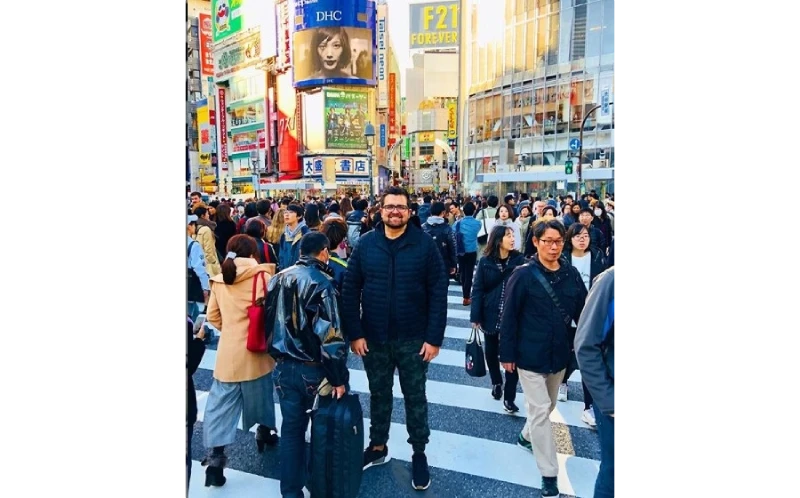
In 2007, Chase Norton came across a water crisis charitable foundation online based on the east coast. Norton was deeply affected after learning about the worldwide water crisis and seeing pictures of the billions of people who do not have access to clean drinking water. Growing up in a neighborhood of Newport Beach, drinking VOSS, Smart Water, Fiji and Acqua Panna was an everyday occurrence. Norton wanted to create a premium, consumer goods brand of bottled water delivery service that by its substantially higher price point would help build wells for people in third world countries who do not have access to clean drinking water. The water delivered is in fact described as “ultra pure”: MEND water goes through a rigorous 11 hour, 13 step purification process. It is tested, retested and recorded along each step of the way. Norton started MEND after quitting his job as a Series 7 Licensee Bond Broker for Finance 500.
The company is now delivering to all of Southern California and has a clientele that includes athletes, celebrities, high-profile executives, doctors, wellness centers, health-conscious families and more. With the right choices, we can make both our bodies and the world a healthier place to live in.
Bottled water has become a $4-billion-a-year industry in the U.S., according to the Natural Resources Defense Council (NRDC). The organization estimates that people spend 240 to 10,000 times more per gallon of bottled water than tap. Dietician Robin Kaiden says many in the medical community question whether bottled water can be bad for us, as it’s contained in plastic that may leak into the water if left in the heat. Drinking tap instead will save you about $200 a year, and if you’re still concerned, a basic faucet filtration will save you $150.
Bottled water is America’s most popular beverage category by volume. In recent years, sales of bottled water have surpassed those of carbonated soft drinks, and companies are increasingly seeking ways to add value to bottled water through flavorings, fortification and other price-altering attributes.
The federal government helpfully defines “bottled water” as water sealed in bottles or other containers without added ingredients. As additional water beverages enter the market, the FDA must determine how these new products will be regulated. Applying common sense, the regulations contemplate “bottled water” as an ingredient of “flavored bottled water.” The regulations apply when the term “water” is highlighted on the water beverage’s label. A carve-out to this general rule is that FDA considers soda water, tonic water, seltzer, and water with added carbonation as soft drinks, rather than as “bottled water.”
The FDA regulates bottled water as a food and imposes national safety and labeling requirements. Bottled waters need to pass safety requirements, particularly compliance with good manufacturing practices.



How Fahad Riaz Is Taking a Four Decade Family Legacy Forward With Milele Prime

Outgrowing Isn’t Giving Up: Hayson Tasher Sr. on Choosing Growth

Apple Pay Launches in India With Axis Bank as First Banking Partner

Alicia Lacao-Green gains worldwide fame owing to her amazing transformations via make-up and contouring.

Amplifyou, an amazing agency for eCommerce

Vasid Qureshi, India’s Top Blogger Shares 5 Tips to Go Viral on Social Media
How Fahad Riaz Is Taking a Four Decade Family Legacy Forward With Milele Prime
A family business proves its relevance each time a new generation finds something worthwhile to build. For Fahad Riaz, Milele...

Outgrowing Isn’t Giving Up: Hayson Tasher Sr. on Choosing Growth
Sometimes, the biggest opportunities begin when you realize you have outgrown where you are. For Hayson Tasher Sr., that realization...
Apple Pay Launches in India With Axis Bank as First Banking Partner
Apple started introducing Apple Pay in India on Tuesday. Axis Bank, the country’s third-largest private-sector lender, is its first banking...

Google Will Replace Gemini Gems With Skills in November 2026
As all-in-one AI agents such as Meta’s Muse and Instinct gain momentum, Google has announced that it is discontinuing the...

MLB 2026 Playoffs: Full Postseason Schedule, Wild Card and World Series Dates, Games, and TV Networks
Major League Baseball’s 2026 postseason begins Tuesday, Sept. 29 with four best-of-three wild card series, with two taking place in...
-
Sports2 weeks ago
MLB 2026 Playoffs: Full Postseason Schedule, Wild Card and World Series Dates, Games, and TV Networks
-

 Science2 weeks ago
September 2026 Full Moon: When, Where, and How to See the Harvest Moon
-
 Tech3 weeks ago
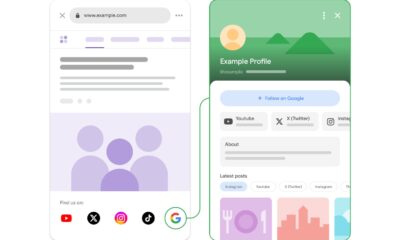
Google Adds Search Profile Badge for Websites
-
Tech2 weeks ago
Google Will Replace Gemini Gems With Skills in November 2026
-
 Tech2 weeks ago
Startup Compliance Checklist: Product Registrations Before You Scale in 2026
-
 Tech2 weeks ago
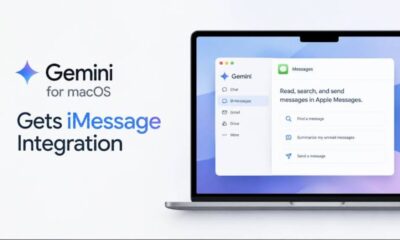
Google Gemini for macOS Adds Support for Apple Messages
-
 Tech3 weeks ago
Samsung One UI 9 Adds My FanCam and Smarter Galaxy AI Features
-
 Gadget2 weeks ago
How to Customize AirPods Settings in iOS 27