
Politics
Japan PM Fumio Kishida Aims to Enhance Trilateral Cooperation Through Seoul Visit

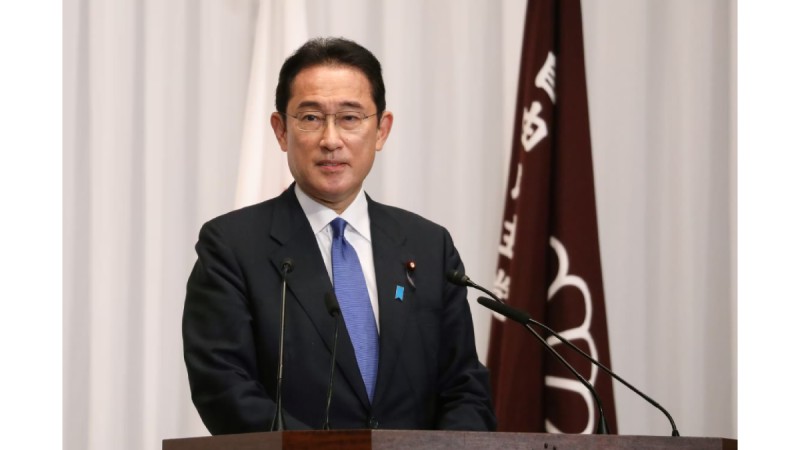
In what appears to be an effort to gain an upper hand over Seoul in trilateral relations between South Korea, Japan, and the United States, Japanese Prime Minister Fumio Kishida is scheduled to visit South Korea later this month.
Japan’s Yomiuri Shimbun reported on Sunday, citing multiple South Korean and Japanese government officials, that the prime minister will visit Seoul from May 7 to 8. Since taking office, this will be his first trip to South Korea.
According to the newspaper, the visit is meant to respond to President Yoon Suk Yeol’s March trip to Japan, during which the South Korean leader demonstrated his willingness to warm bilateral ties.
This was not confirmed by the South Korean presidential office, but it was acknowledged that “consultations are ongoing” regarding the visit of the prime minister to South Korea.
If the visit takes place, it will be the first by a Japanese prime minister since Shinzo Abe made one to PyeongChang for the Winter Olympics in February 2018. However, in terms of bilateral diplomacy, this will be Yoshihiko Noda’s first trip to Seoul since October 2011, when he met with South Korean President Lee Myung-bak.
At first, Kishida was expected to visit Seoul around the summer after the Group of Seven summit scheduled for May 19 to 21 in Hiroshima, in which Yoon will take part as the leader of an invited country.
In any case, the visit is by all accounts happening sooner than expected coming about because of an obvious push from the U.S. for prompt improvements in Seoul-Japan relations.
Despite strong domestic opposition to his administration’s plan to have a South Korean foundation cover the compensation costs of Korean victims who were forced to labor by Japanese companies during World War II, U.S. President Joe Biden hailed Yoon’s political “courage” to take a step forward to mend ties with Japan during a summit last week in Washington, D.C.
“Thank you for your political courage and personal commitment to diplomacy with Japan,” Biden told Yoon during a joint press conference after their summit. “I’ve worked on these issues for a long time, and I can tell you, it makes an enormous difference when we all pull together.” Biden made similar remarks in the opening speech of his summit with Yoon.
In order to control North Korea’s nuclear threats, deal with challenges the United States sees in the Indo-Pacific, and facilitate greater economic security, the United States has been supporting and advocating for increased dialogue and consultations between South Korea and Japan.
Yoon has made the political decision to endure domestic criticism for rapprochement despite Japan’s stubborn stance on historic issues in order to facilitate stronger trilateral security cooperation between Seoul, Tokyo, and Washington. Yoon has taken proactive steps to improve bilateral relations with Japan.
Experts believe that Kishida’s anticipated early visit to Seoul is a response to this, as it has made South Korea appear to have an advantage over Japan in the dynamics of the trilateral cooperation.
“It is clear that South Korea is now holding the upper hand in Seoul-Tokyo relations and Kishida is showing a response to Yoon’s rapprochement gesture,” said Choi Eun-mi, a research fellow at the Asan Institute for Policy Studies.
“Improved Seoul-Tokyo relations is what the U.S. has been seeking and it is quite certain that [South] Korea made proactive gestures first. We saw Washington giving credit to Yoon during his summit with Biden.”
Choi noticed that there has been analysis in the U.S. over Japan’s absence of reaction to Yoon’s actions, subsequently, Japan is presently moving to show its signal toward working on the relations through Kishida’s initial visit.
“From the U.S.’ perspective, the upcoming Group of Seven meeting is important, because the three countries are almost certain to hold a trilateral summit there and announce something important,” she said. “However, if Kishida does not visit Seoul before Yoon visits Hiroshima, it will be Yoon making a visit to Japan twice before Kishida makes one. This is pressure for Kishida as well.”
Japan’s intention to strengthen ties with South Korea is demonstrated by Kishida’s earlier-than-expected visit; however, the prime minister’s subsequent stance on historical issues remains uncertain.
During the March summit with Yoon, Kishida said his organization acquires the previous Japanese Cabinets’ position on the awareness of historical issues, without making an extra expression of remorse on the constrained labor issue.
Given the consensus in Japan that all wartime compensation issues were settled under a treaty between the two countries that normalized diplomatic relations in 1965, Choi stated that chances are low that Kishida will make rapprochement remarks that go further than the earlier statements.
“It is unlikely for Kishida to make an additional apology during his visit to Seoul and Yoon even noted in a recent interview that he cannot accept the notion Japan must kneel because of our history 100 years ago,” Choi said. “What can be possible or desirable is Kishida’s sympathetic or comforting remarks for the victims.”













Study Globally in Switzerland, UAE, Kyrgyzstan, Latvia, or the UK with SIU this October

Gastauer Family Office Connects Capital Allocation With Purpose

Apple Unveils iPhone 18 Pro, iPhone Duo and New AirPods 5

Alicia Lacao-Green gains worldwide fame owing to her amazing transformations via make-up and contouring.

Amplifyou, an amazing agency for eCommerce

Vasid Qureshi, India’s Top Blogger Shares 5 Tips to Go Viral on Social Media

Study Globally in Switzerland, UAE, Kyrgyzstan, Latvia, or the UK with SIU this October
SIU Swiss International University, a member of the VBNN Smart Education Group, has officially opened admissions for the October 2026...

Gastauer Family Office Connects Capital Allocation With Purpose
Why portfolio structure and the Gastauer Foundation matter after the June 2026 AUM revaluation The June 2026 Revaluation Resets the...

Apple Unveils iPhone 18 Pro, iPhone Duo and New AirPods 5
Apple officially revealed its next-generation products tonight, introducing some of the most significant changes in the company’s history. The main...


macOS 27 “Golden Gate” Release Candidate Highlights Final Features
Apple has officially introduced the release candidate (RC) build of macOS 27, known internally as “Golden Gate,” giving users an...


Siri AI Will Expand to Five More Languages in October
Siri AI, Apple’s long-awaited overhaul of its digital assistant, will become available in five additional languages in October, the company...
-

 Sports3 weeks ago
Concacaf Nations League 2026/27: Groups and Schedule
-

 Sports2 weeks ago
2026 FIBA Women’s Basketball World Cup Games and Schedule
-

 Festivals & Events4 weeks ago
Gamescom 2026 Opening Night Live: Schedule, Date, Streaming Details, Expected Games and How to Watch
-

 Tech4 weeks ago
YouTube View Count Changes: What Creators and Marketers Need
-

 Science3 weeks ago
Sturgeon Moon 2026: When and How to See August 28 Full Moon
-

 Entertainment2 weeks ago
KISS Scores Highest Billboard Top Album Sales Position in More Than a Decade
-

 Business3 weeks ago
Gastauer Family Office Connects Financial, Natural and Cultural Capital Through the Gastauer Foundation
-

 Business4 weeks ago
The Business of Building a Brokerage for the Long Term