
Tech
YouTube Introduces New Phone-to-TV Casting Features

Casting YouTube from a smartphone to a television has been possible since Google introduced its Cast protocol more than a decade ago. While YouTube’s standard TV interface has become quite capable over the years, casting remains the preferred option for many longtime Chromecast users. For those viewers, there is good news: Google is redesigning the way the YouTube app-to-TV experience functions.
According to an announcement published on the YouTube support forums, Google is introducing significant changes to the way YouTube on your phone communicates with your television. The company is now referring to your smartphone as a “companion” and is even replacing the familiar Cast icon with a more generic alternative. Based on discussions on Reddit, the change appears to have entered testing earlier in 2026 and is now prepared for a wider rollout.
However, the update involves more than simply changing the terminology used when connecting devices. Under the new system, sending videos from your phone to a television should involve considerably less friction, partly because Google is moving toward account-based device management. The changes include:
- No longer requiring both devices to be connected to the same Wi-Fi network for casting. Instead, users will have to be logged into the same account on both devices.
- Users can like videos, post comments, and subscribe to channels while the video continues playing in the background.
- Users can browse YouTube Shorts on their phones while another full-length video is playing on their television.
- A built-in “Play on different device” option will appear in the menu button for every video shown in the homepage feed.
There are, naturally, a few limitations to these changes, with the biggest concern being Google’s move toward mandatory account-based pairing between devices. This approach should be particularly convenient for private viewing — such as sending a video from your personal phone to your own television to watch alone or with someone else in the room — but it remains uncertain whether it will completely eliminate the option to cast through Wi-Fi. That capability can be genuinely valuable at larger gatherings where several people are participating. Since that is a fairly common way of watching YouTube on a television, hopefully standard Cast functionality will remain available in some form. Otherwise, the update could feel like a notably anti-social move from Google.
For the most part, however, the changes appear to move the experience in a positive direction by taking familiar Cast functionality and simplifying it for a more modern second-screen setup. The new “Play on different device” feature, for instance, seems comparable to the existing casting menu, but users will no longer need to start playing a video on their phone before sending it to the TV. Personally, watching a full-length video on television while simultaneously browsing Shorts on a phone sounds somewhat overwhelming, but it does represent Google adapting to how many people already consume content today.
Google’s announcement did not provide a precise timeframe for the rollout, although the company indicated that the updated experience should begin reaching mobile devices very soon.








Choosing a Roof That Lasts: A Homeowner’s Material Checklist

Spotify Extends Audiobook Availability to More Than 180 Markets Worldwide

How Fahad Riaz Is Taking a Four Decade Family Legacy Forward With Milele Prime

Alicia Lacao-Green gains worldwide fame owing to her amazing transformations via make-up and contouring.

Amplifyou, an amazing agency for eCommerce

Vasid Qureshi, India’s Top Blogger Shares 5 Tips to Go Viral on Social Media

Choosing a Roof That Lasts: A Homeowner’s Material Checklist
A roof rarely fails all at once. It starts with a few lifted shingles after a windy week, a damp patch on...
Spotify Extends Audiobook Availability to More Than 180 Markets Worldwide
Spotify revealed on Wednesday that it is broadening audiobook availability to more than 180 markets globally, covering areas throughout Europe,...
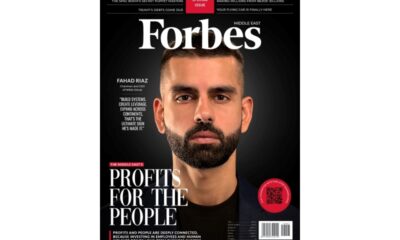
How Fahad Riaz Is Taking a Four Decade Family Legacy Forward With Milele Prime
A family business proves its relevance each time a new generation finds something worthwhile to build. For Fahad Riaz, Milele...


Outgrowing Isn’t Giving Up: Hayson Tasher Sr. on Choosing Growth
Sometimes, the biggest opportunities begin when you realize you have outgrown where you are. For Hayson Tasher Sr., that realization...
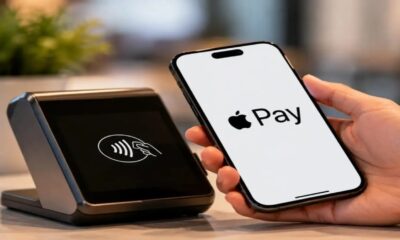

Apple Pay Launches in India With Axis Bank as First Banking Partner
Apple started introducing Apple Pay in India on Tuesday. Axis Bank, the country’s third-largest private-sector lender, is its first banking...
-

 Sports3 weeks ago
MLB 2026 Playoffs: Full Postseason Schedule, Wild Card and World Series Dates, Games, and TV Networks
-

 Science4 weeks ago
September 2026 Full Moon: When, Where, and How to See the Harvest Moon
-
 Tech3 weeks ago
Google Will Replace Gemini Gems With Skills in November 2026
-
 Tech4 weeks ago
Google Gemini for macOS Adds Support for Apple Messages
-

 Tech4 weeks ago
Startup Compliance Checklist: Product Registrations Before You Scale in 2026
-
 Gadget3 weeks ago
How to Customize AirPods Settings in iOS 27
-

 Business3 weeks ago
Gastauer Family Office Gives Nature Finance A Longer Time Horizon
-

 Health3 weeks ago
The Beauty of Being Yourself: Brigitta Würfl’s Approach to Timeless Aesthetics