
Business
Mediterranean hydrogen pipeline project will include Germany

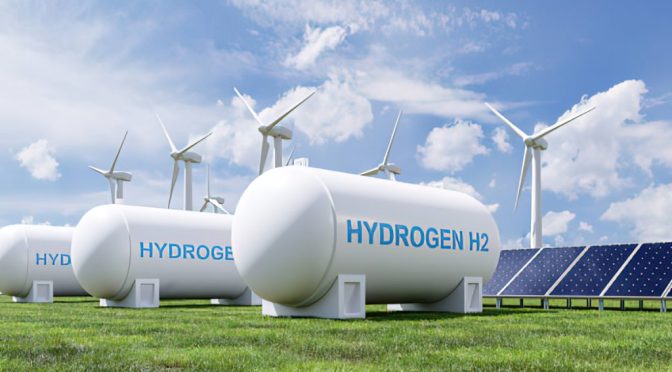
The Franco-German declaration made on Sunday, the 60th anniversary of the Elysee Treaty, states that Germany will join a new project to build a hydrogen pipeline between Spain, Portugal, and France.
By 2030, the H2Med project, which will connect Portugal, Spain, France, and now Germany, will supply approximately 10% of the hydrogen demand for the European Union.
Green hydrogen, produced through electrolysis with renewable energy, will be transported via the pipeline under the Mediterranean Sea.
H2Med is expected to be able to provide approximately two million metric tons of hydrogen annually, according to the Spanish government.
It comes at a time when Europe is rushing to switch from fossil fuels to cleaner energy and reduce its reliance on Russian energy.
Germany and France made a commitment to expanding the production of hydrogen
“Stepping up our investments in the technologies of tomorrow, particularly renewable and low carbon energies,” said German Chancellor Olaf Scholz and French President Emmanuel Macron.
At the end of April 2023, a joint working group comprised of representatives from both nations will issue “recommendations on our strategic choices regarding hydrogen development.”
“We started to talk about a strategy for what we want to do from an energy point of view,” Macron said after hosting Scholz in Paris.
“We want hydrogen to be available in large quantities and at affordable prices as the gas of the future,” Scholz stated.
“This is a technological advance that we can only achieve together. And we have also agreed closely that we want to achieve this together,” Scholz continued.
Germany’s inclusion is welcomed in Spain
The announcement was well-received by Spanish Prime Minister Pedro Sanchez, who tweeted that it “definitely strengthens its pan-European dimension.”
He added a muscle emoji to his message to show his support for European energy sovereignty.
It was anticipated that the pipeline would cost €2.5 billion ($2.6 billion) when Madrid, Paris, and Lisbon agreed in December to construct it. However, the cost increase resulting from Germany’s inclusion was not immediately apparent.





International Day of Light: History and Significance of the Day

Instagram Instants Guide: Turn Off the Feature and Delete Sent Photos

Supercar Advocates Expands Into Global Motorsport

Alicia Lacao-Green gains worldwide fame owing to her amazing transformations via make-up and contouring.

Amplifyou, an amazing agency for eCommerce
Vasid Qureshi, India’s Top Blogger Shares 5 Tips to Go Viral on Social Media
International Day of Light: History and Significance of the Day
The International Day of Light, observed annually on May 16, marks the anniversary of Theodore Maiman’s first successful laser operation...

Instagram Instants Guide: Turn Off the Feature and Delete Sent Photos
Yesterday, Instagram rolled out a new feature globally called “Instants,” which is designed for sharing disappearing and authentic photos. While...
Supercar Advocates Expands Into Global Motorsport
For years, Supercar Advocates has built a reputation centered around some of the world’s most extraordinary performance machines. Now, under...


Spotify Launches Free Managed Accounts for Young Listeners in Six Markets
Spotify announced on Wednesday that it is expanding managed accounts to its free, ad-supported tier in six markets, allowing parents...


FIFA World Cup 2026 Performers: Complete Lineup for Opening Ceremonies and Final Halftime Show
The FIFA World Cup 2026 will bring together not only football teams from around the world, but also major music...
-
 Business2 weeks ago
How to Protect Your Ad Campaign from Common Budget Drains
-

 Startup2 weeks ago
How to Use These Great Ideas to Improve Your Leadership in 2025
-

 Business2 weeks ago
How to Maximize Your ROI From Every Business Event
-

 Startup2 weeks ago
4-Step Plan Marketers Can Use to Drive Business Growth With Email Marketing
-

 Business2 weeks ago
How Benefits Administration Can Grow Your Business
-

 Tech3 weeks ago
Global Supply Chain Redistribution: Otto Media Grup Rapidly Builds a More Effective Growth System Between Singapore and Indonesia
-
 Health4 weeks ago
Compassion Meets Vision: The Work of Dr. Sunil Kapoor Bhopal
-
 Tech2 weeks ago
Organic SEO in 2026: From Digital Growth Engine to Brand Survival in the Age of AI