
Tech
Wi-Fi 7 Requires Windows 11 Only, According to Intel Doc

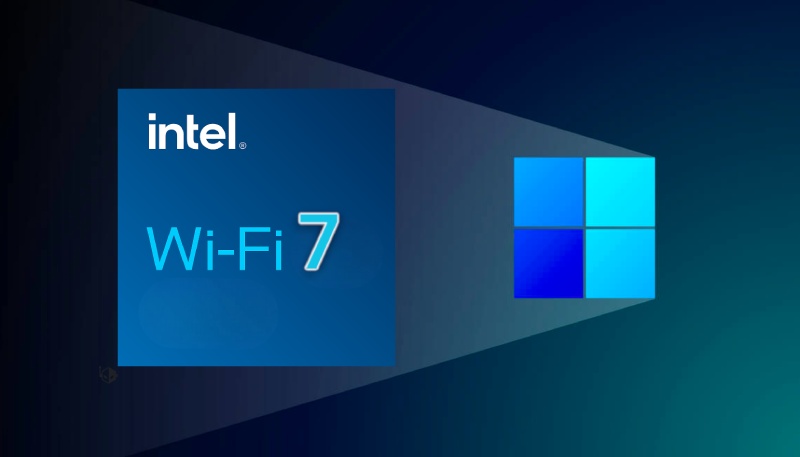
Since the release of Windows 11 in late 2021, users of Windows 10 don’t appear to be as eager to update as they have in the past. The new OS isn’t necessarily awful; it’s just not much of an upgrade, and some may even call some of the changes a downgrade. However, Microsoft still wants everyone to upgrade, and it should be commended for adding many fantastic features since its release to persuade users to do so. However, it appears like the firm is exerting pressure, as a recent whitepaper from Intel states that the upcoming Wi-Fi standard will only be compatible with Windows 11.
The Intel document was discovered by a Twitter account we’ve seen before (we won’t call it X), which is well-known for leaks and sneaky hardware pre-release practices. The text makes it extremely clear that only Windows 11, ChromeOS, and Linux will support Wi-Fi 7. Microsoft’s refusal to certify a driver for Windows 10 is cited as the justification. Therefore, Microsoft is putting a line in the sand, crossing its arms across its chest, and refusing to support its outdated OS with the most recent Wi-Fi standard.
Although the firm has no technical reason for not supporting Wi-Fi 7, we must keep in mind that Windows 10 will stop receiving security upgrades on October 14, 2025. Because of this, even if Microsoft were gracious enough to permit it in Windows 10, it would only be available for about a year before users would have to upgrade. Everyone advises against running an OS that isn’t receiving security updates unless the computer is air-gapped. Microsoft’s decision is a little bit more understandable given the timing.
The tweet indicates that neither Qualcomm nor MediaTek’s Wi-Fi 7 chips will support Windows 10, so it appears like Redmond will need some assistance in converting users to the new operating system. Although Wi-Fi 7 routers have already been released, few client devices still support it, so it won’t become the new standard for at least another year, if not longer. It could not even be widespread until two years from now when Windows 10 starts to die.
Although it’s obvious that Microsoft wants consumers to move away from the older operating system and is using every available tool to achieve that goal, the company’s choice does make some sense overall. Furthermore, not everyone needs Wi-Fi 7. Most of us are perfectly content to continue using the current standards for a while. Although it doesn’t excuse Microsoft’s actions, Wi-Fi 6 is supported by Windows 10, so it’s not the end of the world.












Google Health 5.11 Brings Expanded Fitbit Tracking and Health Features

Juan Monteverde on Appraisal Rights and the Pursuit of Fair Value After a Merger

How Manufacturers Can Find the Source of Repeated Material Flow Disruptions

Alicia Lacao-Green gains worldwide fame owing to her amazing transformations via make-up and contouring.

Amplifyou, an amazing agency for eCommerce

Vasid Qureshi, India’s Top Blogger Shares 5 Tips to Go Viral on Social Media

Google Health 5.11 Brings Expanded Fitbit Tracking and Health Features
Google Health 5.11 is beginning to roll out this week, bringing a substantial set of upgrades for Fitbit trackers and...

Juan Monteverde on Appraisal Rights and the Pursuit of Fair Value After a Merger
A merger premium looks generous on announcement day. The offer sits well above the prior close, and the board recommends...

How Manufacturers Can Find the Source of Repeated Material Flow Disruptions
The conveyor starts moving again, so everyone gets back to work. Twenty minutes later, the same section slows down. Production...


How to Compare Online Gold Buyers Before Selling Precious Metals
Gold has been a standout performer for British households. Gold price hit a record £4,068.11 on 2 March 2026, and...


The Words Behind Msb Mario’s Spoken Word
An interview on the writing behind selected works. Msb Mario, also known as “El Niño de la Pili,” is a...
-

 Sports4 weeks ago
MLB 2026 Playoffs: Full Postseason Schedule, Wild Card and World Series Dates, Games, and TV Networks
-
 Tech4 weeks ago
Google Will Replace Gemini Gems With Skills in November 2026
-
 Gadget4 weeks ago
How to Customize AirPods Settings in iOS 27
-

 Business4 weeks ago
Gastauer Family Office Gives Nature Finance A Longer Time Horizon
-

 Health4 weeks ago
The Beauty of Being Yourself: Brigitta Würfl’s Approach to Timeless Aesthetics
-

 Business3 weeks ago
Outgrowing Isn’t Giving Up: Hayson Tasher Sr. on Choosing Growth
-

 Tech4 weeks ago
AirPods Get Custom EQ and Other New Features With Latest Update
-

 Tech4 weeks ago
Apple Pay Launches in India With Axis Bank as First Banking Partner