
Business
Japan Mobility Show: Nissan, Honda, and Toyota will showcase their electric cars to prove their worth in the rebranded Tokyo Motor Show’s successor

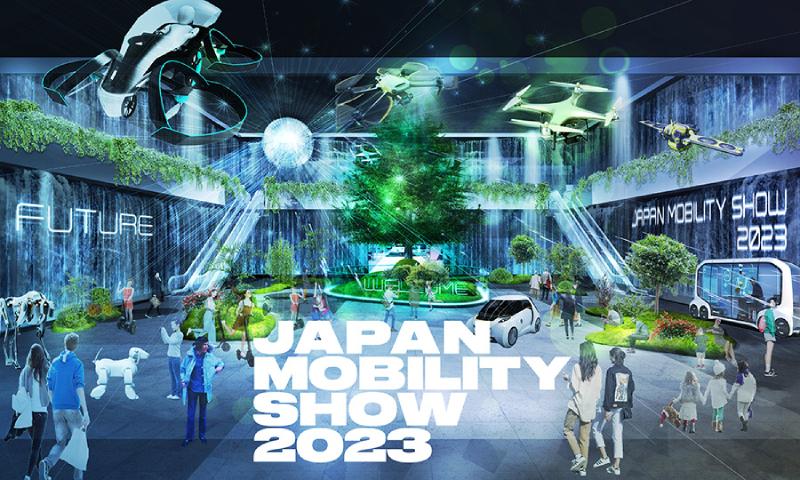
Japan Mobility Show, the rebranded Tokyo Motor Show’s successor, opens to the public on Thursday with the goal of attracting one million visitors.
This week’s Japan Mobility Show puts pressure on domestic automakers to demonstrate that they are committed to not just becoming carbon neutral but also to completely transforming the way that goods and people are transported.
It has long been a point of criticism for Japanese automakers such as Toyota Motor Corp., Honda Motor Co., Nissan Motor Co., and others not to quickly phase out gasoline-powered vehicles.
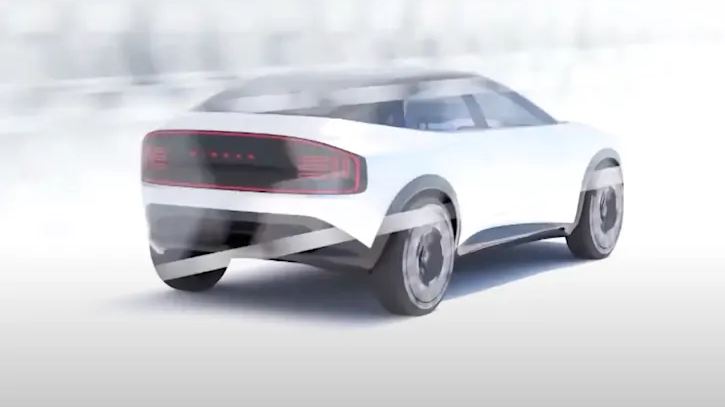
To demonstrate that they are prepared and able to increase the frequency of battery-powered car sightings on the nation’s roads in the years to come, they will be sprinkling the show floor with electric vehicle concepts this week.
According to BloombergNEF, battery-electric cars made up only 1.5% of new car sales in Japan in 2022, far less than in other developed nations. In contrast, nearly one in five newly sold vehicles in China—which earlier this year overtook the United States as the world’s largest auto exporter—were battery-electric.
The rebranded Tokyo Motor Show, which debuted in 1954 and lasted until 2019 with 1.3 million visitors before taking a break due to the pandemic, opens for business this Thursday. One million visitors is the target this year, according to the organizers.
For an extended period, Japanese automakers such as Toyota, Honda, Nissan, and others have faced criticism for their reluctance to gradually phase out gasoline-powered vehicles. In an attempt to demonstrate their willingness and ability to increase the frequency of battery-powered car sightings on the nation’s roads in the years to come, they will be sprinkling electric vehicle (EV) concepts throughout the show floor this week.
According to BloombergNEF, battery-electric cars made up only 1.5% of new car sales in Japan in 2022, far less than in other developed nations. In contrast, China, which earlier this year emerged as the world’s leading automobile exporter, saw nearly one in five of the new cars sold there be battery-electric.
“There’s a strong concern that the growing costs of energy and labour will make it difficult to manufacture in Japan, let alone sell cars,” said Masami Tanaka, director general of the Japan Automobile Manufacturers Association’s Next-Generation Mobility Division. “Key industries need support for the sake of the country’s economic growth.”
The leading automakers in Japan were among the first to employ gas-electric hybrid powertrains; however, they now believe that regional variations and a longer timescale will be required for the global EV transition. They have supported a variety of strategies for cutting emissions, which has incensed environmental advocacy groups.
Though nearly 500 companies have registered for the event this week, just three foreign automakers—China’s BYD Co., the leader in electric vehicles, and Germany’s Mercedes-Benz Group AG and BMW AG—will be on display.
Non-Japanese automakers are not exempt from the lack of EV adoption in Japan; despite the introduction of fully electric vehicles by Mercedes-Benz, BYD, and Hyundai Motor Co., early sales have been slow. Tatsuo Yoshida, senior auto analyst at Bloomberg Intelligence, finds little room for Chinese brands like BYD to expand in the nation.
According to Yoshida, “The mobility show is a good opportunity to better understand their business strategy.”
In keeping with its position as the centerpiece of the automaker’s electrification strategy, which was unveiled earlier this year, Toyota’s luxury brand Lexus will present a lineup of battery-electric concept cars. Concepts for electric vehicles under the Toyota brand will include the FT-3e, a sporty SUV, and the FT-Se, a sports car with shared major components.
Four EV concepts—the Hyper Urban crossover, Hyper Adventure off-roader, Hyper Tourer minivan, and Hyper Punk compact—whose angular, outlandish designs have been revealed by Nissan.
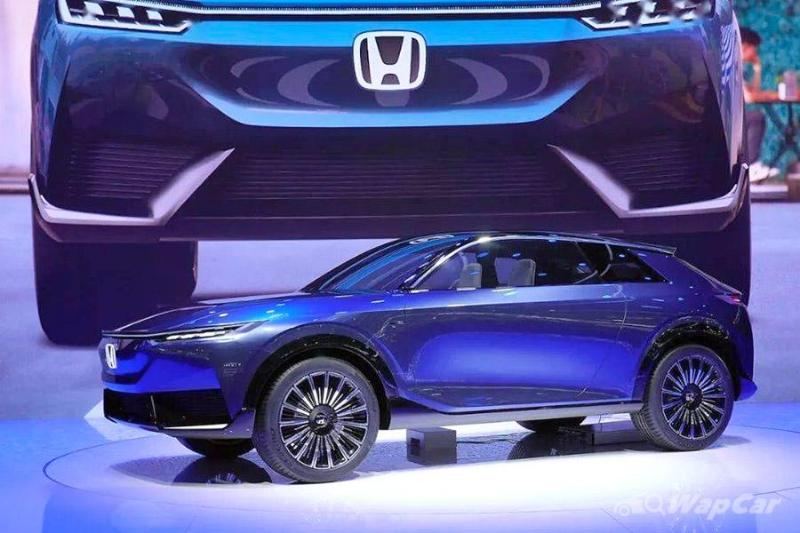
Suzuki Motor will unveil a compact electric wagon, and Honda, Subaru, and Toyota will all showcase their electric sports car concepts.
The majority of Japanese automakers have pledged to boost EV production and lower the emissions of their lineup, but they haven’t yet created high-volume models to rival Tesla or BYD. It’s unlikely that these cars will go on sale in large quantities until at least 2025.






2026 Total Solar Eclipse: Where to Watch and How to View It Safely

Ella Langley and Morgan Wallen Score Country Airplay No. 1 With “I Can’t Love You Anymore”

Aspiring Galaxy Traveler: Raphael Chudaitov on Evolution, Responsibility, and the Future of Humanity

Alicia Lacao-Green gains worldwide fame owing to her amazing transformations via make-up and contouring.

Amplifyou, an amazing agency for eCommerce

Vasid Qureshi, India’s Top Blogger Shares 5 Tips to Go Viral on Social Media

2026 Total Solar Eclipse: Where to Watch and How to View It Safely
The total solar eclipse on Aug. 12, 2026 will travel across sections of the Northern Hemisphere, giving millions of people...

Ella Langley and Morgan Wallen Score Country Airplay No. 1 With “I Can’t Love You Anymore”
Ella Langley and Morgan Wallen claim their fifth and 22nd Country Airplay No. 1s, respectively, as “I Can’t Love You...

Aspiring Galaxy Traveler: Raphael Chudaitov on Evolution, Responsibility, and the Future of Humanity
Reaching the stars sounds glamorous. Surviving each other on Earth is the harder mission. Raphael Chudaitov calls himself an aspiring...


What to Know before Using Insurance for Scratches, Dents and Small Repairs
Scratches, dents and small repairs can look minor, yet the decision to claim deserves careful thought. Insurance may help when...


Covering Unexpected Expenses When Payday Feels Too Far Away
Life has a way of sending you a bill at the worst possible moment. Your car breaks down on a...
-

 Entertainment3 weeks ago
Post Malone Debuts New Song During FIFA World Cup 2026 Final Closing Ceremony
-

 Entertainment3 weeks ago
Shakira and Burna Boy’s “Dai Dai” Continues Global Chart Reign After FIFA World Cup 2026
-

 Entertainment6 days ago
Universal Becomes First Studio to Pass $4 Billion at 2026 Global Box Office
-

 Entertainment3 weeks ago
Future Earns 12th Billboard 200 No. 1 Album With The Real Me
-

 Science2 weeks ago
How to Watch the Perseid Meteor Shower 2026 and Other July Meteor Displays
-

 Entertainment3 weeks ago
Daytime Emmy Awards 2026: Talk Show Nominees Announced
-

 Sports4 weeks ago
Argentina vs Switzerland, 2026 FIFA World Cup – Preview, Prediction, Head to Head, Predicted Lineups, Team Squads and More
-

 Entertainment4 weeks ago
Madonna and Michael Jackson Reunite in Billboard 200 Top 10 After Nearly 25 Years